Following a special cabinet meeting, the government announced a package of measures described by Taoiseach Micheál Martin as “a significant response to real pressures being felt here and globally”.
They include an extension of the temporary energy support measures unveiled last month to reduce excise duties on petrol and diesel, as well as the further postponement of the increase in the carbon tax.
Last month the government announced excise duty cuts of 22 cent per litre of diesel and 17 cents per litre of petrol. This latest support will see petrol and diesel further reduced by 10 cent per litre and marked gas oil by 2.4 cent per litre.
The cuts will come into effect from midnight tomorrow, subject to Oireachtas approval.
A planned increase in the carbon tax, originally due to come into force next month, has been deferred until Budget Day in October, in a move seen as a significant concession to protestors.
At yesterday’s announcement, Tánaiste Simon Harris said the government had engaged with the democratically elected, national representative organisations over the measures but warned that they could not be expected to “reasonably or rationally” engage with “self-appointed spokespeople, unelected bodies and those who would instigate an illegal blockade of some of this country’s most critical infrastructure at a time of a global energy crisis.” – an admonishment that came amid warnings that it could take days or weeks to assess the full extent of the damage caused to supply chains.
Chief Executive of Fuels for Ireland Kevin McPartlan warned that it would be at least 10 days before supplies returned to normal with business groups reporting ‘widespread economic damage’.
Protestors blockaded the Whitegate Refinery – the country’s only oil refinery – as well as other key supply points such as terminals and ports, temporarily restricting fuel movements and creating immediate operational challenges for distributors and forecourts. Rolling protests on some of the country’s major routes added to the disruption.
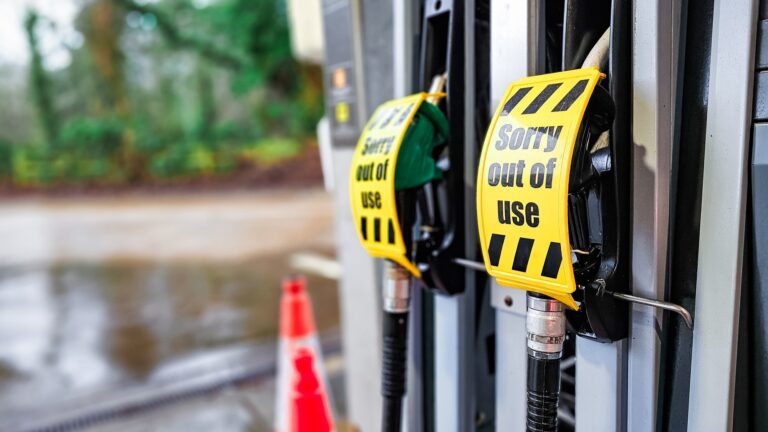
Earlier today (Monday), 650 forecourts were still without any fuel and efforts are ongoing to move supplies around the country.
Cordons are now in place at Whitegate, as empty tankers under Garda escort are steadily making their way to the Oil Refinery in the coastal village.
Price frustration
The protests reflected growing anger over recent increases in the cost of road and agricultural fuels and home heating oil. However, the blockades mark a significant escalation – demonstrating how quickly pricing frustration can translate into direct disruption of critical infrastructure.
For the sector, this has exposed a key vulnerability: reliance on a limited number of supply points means that even short-term disruption can have rapid and widespread consequences.
On the frontline
Fuel oil distributors (FODs) and forecourt operators have found themselves at the sharp end of the disruption. Already managing volatile wholesale prices, businesses have had to contend with delivery disruptions, increased customer demand amid supply concerns and heightened pressure on stock management.
This has further intensified the operational and reputational pressures facing the sector.
The role of tax in the debate
A significant driver of frustration lies in the structure of fuel pricing – particularly the role of taxation. For road fuels in Ireland, the pump price typically includes:
- Excise duty (a fixed charge per litre)
- Carbon tax
- VAT, applied on top of both the product cost and duty
Together, these elements can account for more than half of the final retail price, meaning that even as wholesale costs fluctuate, taxation remains a substantial component.
A wider sector challenge
The events in Ireland highlight the increasingly complex environment and broader challenges facing the fuel distribution sector. For FODs and the wider industry, the focus now turns to the immediate task of rebuilding supply and restoring normal operations following days of disruption.
Yet while the €505 million package represents a significant intervention, there are clear concerns that its impact could prove short-lived. With global markets still volatile and geopolitical tensions continuing to influence wholesale fuel costs, there is a risk that external pressures will outpace domestic policy responses.
The events of the past week serve as a stark reminder that the sector is operating at the intersection of global energy dynamics and local expectation – where maintaining supply is critical, but increasingly challenged by forces far beyond the control of distributors, suppliers or indeed government itself.
And, as recent findings from the Competition and Consumer Protection Commission have already underlined, these pressures are rooted in market realities rather than sector failure – a distinction that remains central to understanding both the causes of the current crisis and the limits of any short-term response.
Image from stock