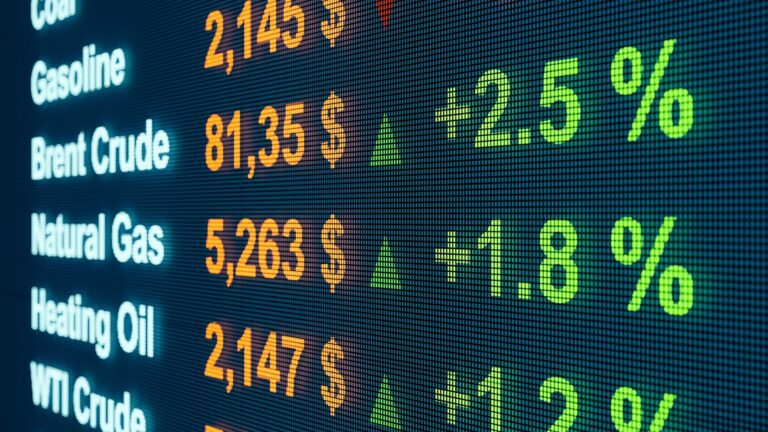
The Iran conflict has sent shockwaves through global energy markets, pushing prices higher and disrupting supply chains.
Across the UK and Ireland, heating oil prices have surged far faster than crude – fuelling public anger, political accusations and sector scrutiny.
A global crisis reaches rural homes
When tensions in the Middle East escalated, global oil markets reacted instantly.
Shipping through the Strait of Hormuz – a critical oil transit route – was disrupted, tanker movements slowed and traders priced in supply risks.
While crude oil dominated the headlines, the most dramatic movements were in the kerosene market.
For around 1.7 million UK households relying on heating oil, the result has been an immediate jump in energy costs.
The surge has also triggered a heated public debate. Politicians have accused suppliers of profiteering, regulators are being urged to investigate the market, and customers are frustrated.
Why Northern Ireland is particularly exposed
The political pressure has been especially intense in Northern Ireland, where heating oil remains the dominant form of home heating.
Around two-thirds of households in Northern Ireland rely on kerosene, compared with 6% of homes across the UK overall. That dependence amplifies price volatility in the region.
As prices have surged, consumer groups and politicians in Northern Ireland have been among the most vocal in calling for investigations into the heating oil market.
However, industry representatives say scrutiny will ultimately confirm that distributors are simply reflecting wholesale costs.
Kevin McPartlan, Chief Executive of Fuels for Ireland, said the industry welcomes investigations into fuel pricing, expressing confidence that they will show the sector is not profiteering.
He pointed out that the global wholesale price of kerosene had risen significantly more than other fuels – around 74% compared with 48% for diesel and 15% for petrol – reflecting pressures specific to the kerosene market rather than abnormal margins.
He added that previous investigations into fuel pricing during the Covid period ultimately found no evidence of systematic profiteering by distributors.
Why kerosene has surged faster than crude
One of the most common questions is why heating oil has risen so much more sharply than crude.
The answer lies in the nature of refined products.
As a kerosene product, heating oil is driven by the global aviation fuel market rather than crude benchmarks.
In a consumer advice note, UKIFDA confirmed that the wholesale price of jet fuel has more than doubled, reaching a three-and-a-half-year peak.
Europe is particularly exposed to supply disruption in this market. In 2025, at least 40% of Europe’s jet fuel imports came from the Middle East via the Strait of Hormuz, which is, at time of writing, effectively closed.
Analysts warn that European refiners may struggle to fully replace these lost imports in the short term, while shipping freight rates and insurance costs are rising sharply as tankers avoid the region.
The result has been a rapid rise in wholesale kerosene prices – which feeds directly into the price distributors pay for heating oil.
What began as a crude shock has become a middle-distillate supply crisis, where kerosene sits at the most constrained part of the market.
A market moving faster than distributors can quote
The speed and scale of wholesale price movements have created major operational challenges for distributors.
Speaking in the early days of the Iran conflict, Eugene Dalton, Chief Executive of Irish fuel distributor Corrib Oil, said the volatility had been exceptional.
“At one point benchmark wholesale market prices were more than 90% higher than they had been just four days earlier,” he said.
Prices have also been moving multiple times within a single day, making it difficult to quote for deliveries several days ahead.
Eugene described how Corrib Oil received supplier price increases averaging around 57% in a single week, forcing the company to temporarily stop taking new orders while it worked through existing commitments.
Despite the volatility, he said the company honoured prices on existing orders – even though that meant making losses on some deliveries.
As Marcus Dandy of Compass Fuels commented: “It’s been a brutal couple of weeks across the supply chain.
“Many distributors had already taken customer orders before the wholesale market moved. When the price jumps overnight, we’re left honouring those deliveries at the agreed price, which in many cases has meant delivering fuel at a loss.
“At the same time, lifting allocations often tighten when markets get volatile, which means distributors suddenly have to chase replacement product on the spot market at much higher prices.
“So, while it can look like everyone is simply putting prices up overnight, the reality is that distributors are caught in the middle of a fast-moving commodity market.”
Working with price volatility
Speaking with Fuel Oil News, one domestic customer described their frustration: “We are currently on our last oil reserves and have had to top up locally at the petrol station because we can’t get a delivery for three weeks.
“The company we usually use say they can’t give us a price until the day before it is delivered, even if we pay for it now.
“We challenged this and asked why we can’t just buy the oil they have in reserve now. We think they are just profiteering.”
In reality, most distributors have little or no storage with many holding no more than two days’ supply. Any fuel stored is working stock that must be continually replaced at current wholesale market prices.
Distributors are effectively price takers, largely buying at daily market prices, and are now quoting much closer to delivery because volatility makes forward pricing dangerous and risks supply continuity.
With limited stock, distributors have more orders than available stock at any given time. Heating oil prices reflect the price the distributor pays on the day they collect it. Sell at yesterday’s price and businesses can quickly run short of both cash and product
Panic buying
Market psychology can also play a significant role during price spikes. Somewhat counterintuitively, rising prices can trigger panic buying behaviour, as households and businesses rush to fill tanks before further increases.
As James Spencer of Portland Fuel noted in a recent industry podcast, any attempt to keep prices artificially low during a period of panic buying risks emptying storage quickly and leaving distributors unable to meet customer demand.
Another challenge emerging during the current price surge is the impact on credit and working capital.
Much of the downstream fuel industry operates using trade credit insurance and supplier credit limits. These limits are typically set based on the value of fuel purchases rather than physical volume.
When wholesale prices rise sharply, the same credit limit buys significantly less fuel.
If wholesale prices double, distributors may be able to purchase only half the volume of fuel within existing credit limits, potentially tightening supply further unless additional financing or revised credit terms are secured.
Political pressure intensifies
While this may explain the surge in kerosene pricing, it does not make consumer anger unreasonable. Far from it. For households dependent on kerosene, this is an immediate cash-flow shock, not an abstract market event.
With customers having to absorb the full increase at point of order, the rapid rise in heating oil prices has also become a political flashpoint.
The Government has warned companies not to exploit the crisis, while Conservative leader Kemi Badenoch has called on the Competition and Markets Authority (CMA) to investigate the heating oil market.
Ministers in Ireland have also spoken in inflammatory terms of ‘possible price gouging’ and the issue has quickly become part of the wider cost-of-living debate.
This may generate political mileage, but risks reducing a complex market issue to a question of morality with distributors unfairly in the firing line.
Government message: appreciation and scrutiny
Alongside the political criticism, ministers have made efforts to acknowledge the essential role played by distributors.
In a joint letter to UKIFDA, Energy Secretary Ed Miliband and Energy Minister Michael Shanks thanked the sector for the work it does supplying off-grid households.
However, the letter also emphasised the importance of maintaining consumer trust – a point reinforced by UKIFDA’s response which indicated support for the CMA’s approach and confirmed that “Despite the very large price swings and demand, distributors are honouring orders as quickly as they can.”
“WHAT BEGAN AS A CRUDE SHOCK HAS BECOME A MIDDLE-DISTILLATE SUPPLY CRISIS.”
A sector caught between geopolitics and perception
The current heating oil price spike illustrates how quickly global geopolitical events can ripple through local energy markets.
For households dependent on kerosene, the surge has been immediate and deeply worrying.
For distributors, the challenge is navigating unprecedented wholesale volatility while ensuring that fuel continues to reach customers who depend on it.
This is not simply a crude price story, but one of jet fuel markets, supply disruption and market structure, and the rapid impact of geopolitical developments on the supply chain.
The fuel distribution community is being squeezed from both sides. Customers are frightened and angry. Distributors are being asked to absorb global volatility they did not create. And politicians, sensing a live cost-of-living issue in rural communities, are turning up the heat.
The danger is that in the scramble for culprits, the industry’s actual role, and the real mechanics of the market, get lost.
It is also important not to confuse operational triage in a broken market with excess profit. Rapid wholesale price rises can compress margins and increase working capital requirements, leaving businesses focused on managing risk rather than increasing profit.
Reflecting on customer abuse directed at her sales team, Leanne Hardy of Par Petroleum added: “Unfortunately, that’s just one of several abusive comments they’ve had to endure.
“Our staff are working incredibly hard in an exceptionally challenging market. Oil prices may be high, but kindness costs nothing. Behind every call is real person doing their job.”
Describing it as “a horrible time in the industry for distributors and customers”, Joe Clarkson-Hall of Hall Bros added: “It’s a shame when people don’t realise all the effort you put into trying do right by them.”
As scrutiny intensifies, ensuring that the public debate reflects how the heating oil markets actually works may prove as important as managing the volatility itself.
Lessons from previous fuel crises
While the current surge feels unprecedented for many customers, the downstream sector has experienced similar volatility before.
Markets move fast
Oil markets react to geopolitical events within hours, with impacts flowing quickly into wholesale fuel prices.
Price spikes are usually temporary – but of unpredictable duration
Shocks typically ease as supply stabilises but predicting when remains difficult.
Product markets diverge from crude
Refined products can move far more sharply than crude during supply disruption. (see page 47)
Demand can amplify volatility
Rising prices often trigger panic buying, increasing short-term pressure on supply.
Working capital pressures increase
Higher prices mean more capital is needed to purchase the same volume of fuel.
Transparency matters
Previous investigations found no systemic profiteering but highlighted the importance of clear communication.
Supply strategies are critical
Balancing fixed and flexible purchasing can help manage risk during volatility.
Closing
If anything, the current crisis illustrates how exposed the heating oil market remains to global geopolitical shocks – and how quickly those shocks impact both rural households and distributors.
After an initial surge in demand – with the industry estimated to have handled around four times the usual order volume in one weekend – demand is beginning to normalise, though the market remains far from stable.
The challenge now is to protect customers, preserve supply and keep the debate anchored in how heating oil pricing really works.
Image credit: iStock