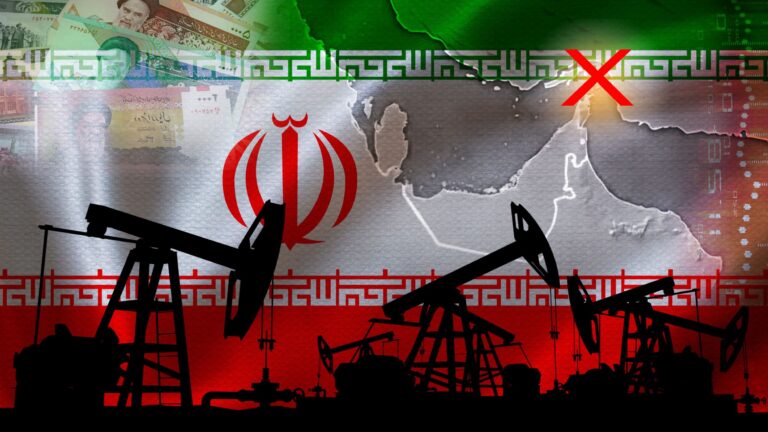
Markets up by 13 pence per litre (ppl) on 2nd April, then down 20ppl on 8th April and back up 10ppl the following day. These wild fluctuations in price currently revolve around the whims of religious fanatics whose stated aim is to “obliterate” Israel and a man who is happy to announce the “annihilation of a civilisation”, whilst standing next to a human-sized Easter Bunny.
The attention of this unprecedented energy crisis has been focussed largely on the Middle East itself, but in fact, the region that has suffered the most widespread economic impacts is Asia. For the last 20 years, Asian demand for oil products has grown faster than any other part of the world and most of that growth has been fuelled by Middle Eastern energy.
Prior to the US and Israel attacks on Iran, most of the crude that flowed through the Strait of Hormuz was destined for Asia. In the Philippines, 90% of energy imports came from the Middle East. Bangladesh relied on ME imports for 95% of its energy needs and South Korea imported 70% of its oil from the Gulf region. Two thirds of India and Pakistan’s LNG came from Middle Eastern producers and Qatar alone, supplied 30% of China’s LNG in 2025, 45% of India’s and 99% of Pakistan’s!
“THE REGION THAT HAS SUFFERED THE MOST WIDESPREAD ECONOMIC IMPACTS IS ASIA”
The result of the current situation then, has been massive price rises. Vietnam saw a 40% rise in the cost of fuel in March, whilst in the Philippines, prices shot up by over 75%. Myanmar experienced a staggering 100% rise! Singapore Gasoil (the manufacturing base grade for the region’s diesel) had surpassed $180 per barrel by April 14th – up 95% since February 2026.
Low reserves
One of the key factors behind these market spasms is the lack of supply resilience that exists across Asia. As we know, the US and Europe hold around 90 days of stock for release (or partial release) in times of crisis and the developed countries of Asia have similar arrangements; China holds around 115 days, South Korea has almost 200 days and Japan holds a staggering 250 days of emergency reserves.
At the other end of the scale however, things don’t look quite so rosy. The Philippines, Thailand and Vietnam all hold about 3 weeks of reserves (based on average demand), whilst the emerging economic super-power of India only has around 15 days!
“AT THIS POINT THERE ARE NO GOOD OUTCOMES”
As a result, many Asian governments have been quick to introduce fuel conserving measures. Bangladesh has imposed daily limits on fuel sales, whilst four day working weeks and working from home orders have been mandated in Vietnam, Malaysia and Thailand. Even China with its plentiful reserves, acted quickly by banning exports of refined products to protect domestic supply.
Other countries have lent on fuel subsidies, which whilst appeasing an unhappy populace, is a curious approach to dealing with product shortage. Both South Korea and Indonesia have put caps on consumer prices, whilst Pakistan, India and Bangladesh already have them in place, meaning that the general public buys fuel at normal levels, whilst their governments foot the bill of higher prices.
Carrying on regardless
In effect, consumers are carrying on buying their fuel as if there is no crisis to consider, at a time when the tough reality of a supply crunch, is that only high prices will suppress demand and maintain stock levels. In addition, subsiding fuel normally has serious ramifications on national debt levels and tends to weaken local currencies, as $ reserves are raided to pay for the (oil) subsidy.
Of course, there is one clear winner here and that is Russia. Very much on its uppers after 4 years of war and, prior to March 2026, an oil price that could not sustain its military operations. All that is now changed, as desperate Asian nations queue up to take Russian product.
The Philippines, Vietnam and Sri Lanka have all now taken Russian cargoes, something they have avoided doing since the Ukrainian invasion of 2022. This process has been facilitated by the 30-day (now extended) US sanction waiver on Russian imports, which was implemented in an attempt to cool down prices.
At this point, there are no good outcomes from the US and Israel’s monumental misadventure. Even environmentalists who sought solace in the fact that the events of the last 2 months would further push Asian countries towards a battery-powered vehicle future, now fear that the more likely outcome is the return of Old King Coal to meet the energy needs of countries like India, Pakistan and Indonesia.
“ONLY HIGH PRICES WILL SUPPRESS DEMAND AND MAINTAIN STOCK LEVELS”
Meanwhile, as we write this report, the US President has come up with a new scheme which smacks of more economic self-harm. The plan is to prevent Iranian Oil from travelling through the Strait of Hormuz – an action which (as the events of the last 6 weeks have surely demonstrated) will only compound product shortages and drive prices higher.

www.stabilityfromvolatility.co.uk
Image credit: iStock, Portland