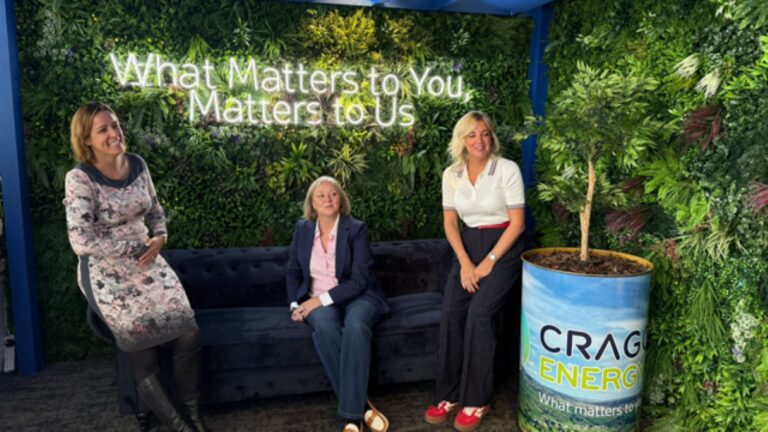
“What matters to you, matters to us”
A new chapter for Craggs and Moorland means a new all-female leadership team appointed to steer the business into the future.
In this second part of our ‘In Conversation’ feature with the new leadership team, Claudia Weeks, Community Content Lead, spoke with Lisa Bennett (Managing Director), Abby Turner (Regional Director South-West), and Julie Stephens (Regional Director North-West) to discover how they are settling into their new roles and to hear their thoughts on the industry.
A dynamic new team
First, Claudia spoke with Lisa, to discover more about her new role. Lisa has over 20 years’ leadership experience across FMCG, manufacturing, SaaS, and energy, building a reputation for delivering transformation in business performance, culture, and operations.
“I’m the Managing Director of Craggs Energy,” Lisa began. “Every aspect of the role matters – setting and executing our long-term strategy, delivering growth, expanding renewable fuels, and keeping our distribution strong.
“But just as important is carrying the baton of our culture – making sure our people feel part of the journey and the community we’re building together.
“We’re an employee-owned business, which means leadership isn’t about one person at the top. It’s about creating ownership and accountability, a sense of pride, across the whole team. And what a team it is.
“Every single role matters equally here – drivers on the road, schedulers, customer service, engineers, finance, and the teams behind the scenes. I’m proud of the empathy and professionalism they show every day, especially when supporting customers who may be struggling. That care is what builds trust.
“Going out with the drivers on the truck for a day, was genuinely eye opening. Seeing the effort, the challenges, and the pride that goes into every delivery gave me a whole new perspective. It reminded me how important it is that we all try to walk in each other’s shoes — a “day in the life of” approach. It’s the only way to understand and respect what each team does.
“Being an MD is about balance, executing on strategy and growth while making sure our people feel heard, valued, and supported. When our people feel that way, our customers don’t just get fuel – they get reliability and consistency.”
Where is the fuel distribution industry heading?
“Liquid fuels will always have a role, especially in rural and hard-to-electrify areas. But we all have a responsibility to make them as sustainable as possible and to keep driving innovation. That really is the key to sustainability.
“Campaigns like Future Ready Fuel bring this to life. For many rural households, moving to a heat pump just isn’t realistic, it’s too expensive and the homes aren’t always suitable. People need choice. That’s where renewable liquid fuels like HVO are such a powerful option, they can be dropped straight in with minimal disruption. Government Policy needs to back that choice, rather than forcing one-size-fits-all solutions.
“At Craggs, we see our role as being right alongside customers on that journey, helping them understand the options and bringing them real, workable solutions they can adopt today.”
What’s your strategy for the next 3 years?
“We’ve got three priorities: strengthen our distribution network, expand renewable fuels like HVO, and grow into wider carbon-reduction services. But none of that works without strong supplier partnerships. If supply breaks down, we can’t deliver for our customers.
“Learning of the closure of Prax’s Lindsey refinery really brought that home. What saddened me most was the impact on people and communities; hundreds of jobs lost, families disrupted, livelihoods shaken. And then of course there’s the knock-on effect on fuel supply and security. It’s a reminder that resilience in our sector isn’t just about trucks on the road, it’s about the strength of the whole supply chain.
“Our strategy is as much about building resilience with suppliers as it is about serving customers. It’s also about strengthening local infrastructure and community ties; our #ourhouse approach – because if we don’t serve the communities we operate in, we can’t truly grow.”
How is fuel demand changing?
“The perception of domestic demand is that it is slowly declining as more homes look at electrification, but that is not the case. Heating oil is still essential, it is the buying pattern that has changed, and consumer behaviours around cost saving initiatives e.g. turning on boilers later and weather patterns changing driving usage downwards.
“One cold winter and we are back to the same levels seen in previous years. Agriculture remains steady, and it’s encouraging to see OEMs like New Holland exploring alternatives, they showcased a hydrogen tractor concept back in 2009 and now have methane-powered models. The fact these aren’t mainstream yet shows how challenging the infrastructure and cost barriers are.
“On the commercial side, it’s a more mixed picture. Some industries are adopting alternatives quickly, while others still rely on liquid fuels. A great recent example is Chiltern Railways running parts of their fleet on HVO, proof that mainstream transport providers could make the switch. That’s exciting, but it also shows adoption depends heavily on cost, supply, and infrastructure.
“Our role is to balance these realities, to help customers choose the right fuel at the right time, and to be ready with practical advice as the options grow.”
What additional services are popular?
“Tank monitoring, telemetry, automated top-ups, and carbon-saving audits are all growing fast. Renewable fuels like HVO are driving the most excitement, but services like telemetry are game changers.
“Telemetry isn’t just about technology, it’s about partnership. It helps us understand our customers’ usage, to plan with them, and make sure they’re never left without supply. Carbon calculators and energy efficiency audits are also important because they help customers understand the impact.
“These services position us as a trusted adviser, not just a fuel supplier which is exactly what we want to be.”
How do you service outlying customers profitably with declining order sizes and rising delivery costs?
“It comes down to efficiency, technology, and understanding. Route optimisation and tank telemetry reduce wasted trips, and smart scheduling lets us do more with less.
“But it’s also about mindset. Through #ourhouse, we see ourselves as part of the communities we serve, not just a business making deliveries. Even in the most remote areas, we’ll work to find sustainable ways of keeping people supplied. And we’re always exploring new technology, new models, and new partnerships that can make serving those areas more efficient in future.”
Where will business grow as fossil fuel demand falls with electrification?
“The growth is in renewable fuels, hybrid solutions, and wider carbon-reduction services. Education is also a big part of it, helping customers understand the costs, the options, and the carbon impact so they can make confident choices.
“Because we’re employee-owned, we can take a long-term view. That means putting customers and communities at the centre of what we do and investing in innovation to support them through the transition.”
What do you think of the RFAS scheme extension?
“I think extending the RFAS is a really positive step. It gives customers confidence that what they’re buying is genuinely sustainable and independently verified and that trust matters, especially for businesses reporting on ESG.
“It also ties in with what campaigns like Future Ready Fuel are saying: we need affordable, practical ways for households and businesses to decarbonise. RFAS helps, but it can’t stand alone. Policy needs to support adoption in a positive way, duty relief, grants, or incentives rather than feeling punitive in what is already a costly environment.”
What unique perspectives do female leaders bring to this sector?
“Throughout my career, I have worked in more male-dominated industries. Along the way I’ve met incredible women, and what inspires me most is how they don’t just focus on business, but also on the systems that both women and men must navigate. Within this sector I believe that these learnings can only support and develop a stronger environment.
“Collaboration has improved so much in the last decade in this arena, but there’s still a way to go. Initiatives like FutureWomenX show how women can help reshape those systems for the better and that has to be a positive influence in any sector.
“For me, it’s not about men versus women, it’s about bridging strengths and working in harmony. And as female leaders, we also have a responsibility to mentor and lift others up, to create more pathways into leadership. That’s how resilience and innovation will thrive.”
Who would you invite to a dinner party about the future of energy?
“I’d love to have Christiana Figueres there. She led the Paris Agreement and has such a powerful way of balancing ambition with realism. But I’d also want my father-in-law at the table. He’s full of wisdom and always challenges the norm, and I think he’d really liven up the conversation. And who knows — maybe it would even change his perspective on EV cars, which I’m not sure even Christiana could do!
“And perhaps I’d include someone from the next generation too because ultimately, it’s their future we’re talking about.”
What’s the best piece of business advice you’ve been given?
“The best advice I’ve ever had is to never stop learning, and to surround yourself with people who can enhance your journey. For me, it boils down to three values I try to live by: trust, own, deliver. You have to be true to yourself.
“I’ve carried those values into every business I’ve worked in, and I try to pass them on to my team too. Because if you live by them, you don’t just build strong businesses – you build strong people.”
Regional Directors
Abby Turner and Julie Stephens are now Regional Directors for Craggs and Moorland, both bringing years of experience. Abby joined Moorland Fuels in 2003, after several years in the US working in public relations, where she gained a broad experience across a range of industries.
Moorland Fuels, founded by her parents in 2003, has always been close to Abby’s heart. Prior to Moorland Fuels joining the Craggs Energy Group in 2020, Abby had already built a good working relationship with the Craggs team through sharing best practice and industry insights.
Julie is new to Craggs, but has spent over 20 years in the fuel distribution industry with both independent and larger distributors. Beginning her career in sales, she has worked closely with customers and over time, extended her responsibilities, developing into managerial roles with an added focus on operations, compliance and customer service.
Congratulations on your new roles! Please tell us more about them.
Abby – “My own role hasn’t changed significantly, but what is new – and really exciting – is the strength we’ve added to the leadership team. I now can work closely with both Lisa and Julie, who each bring a wealth of experience and fresh perspective.
“Together, we’ll be focused on driving the business forward, building on our strengths, and continuing to live out our commitment that “What matters to you, matters to us.”
Julie – “My role as Regional Director involves me delivering operations and sales performance for Craggs Energy and creating an energy to deliver results.
“There will be a strong focus on driving sustainable growth working within a one team culture, establishing and building robust partners and customer relationships and I’ll bring my passion for leadership and continuous improvement to the business.”
Where is the industry heading, in your view?
Abby – “In the short term, the increased tensions globally have led to uncertainty among our customer bases. We’re seeing smaller order volumes, changes in buying patterns and our customers are increasingly value-driven, so our role is to deliver reliability, transparency, and efficiency at a local level.
“In the medium term, we’ll start to see the noise surrounding renewable liquid fuels increase as an alternative to traditional bulk fuel – not an overnight change, but steady growth in alternative fuels and efficiency measures. I believe distributors like us will play a key bridging role: making sure customers have security of supply today, while helping them explore lower-carbon options for tomorrow.
“In the long term, the industry will inevitably become more diversified. Whether that’s renewable liquid fuels, hydrogen carriers, or supporting EV infrastructure, companies like ours will need to pivot from a single-fuel mindset to a customer-energy mindset. I don’t think traditional bulk fuels will die, but the demand for them will decrease as we all try to meet the crucial targets for Net Zero and decarbonisation.”
Julie – “In the short term there is certainly unrest with supply and demand with disruptions and refinery closures, all of which creates operational challenges, but all are manageable as we put in secure sold supply partnerships.
“Order patterns in domestic markets are starting to get back to normal after covid, but it has been noticeable that the amount of fuel each domestic customer has been ordering has reduced so it is essential that we ensure operational efficiencies.
“Medium term we will continue to hear a great deal about the requirements regarding the drive towards net zero and this is something we cannot ignore; hence we are always looking at what the opportunities will be to help, guide and ease the customers journey on their transition.
Traditional fuels as we know it are here for a while but being part of the change, delivering change and being known as experts in the bridge to alternatives will be key.
“In the long-term net zero is very much a goal for all of us both in business and the way we live day to day. Whilst fossil fuels are not going away soon, contributing to the decarbonisation journey and being on the cusp of the curve for change is essential as we move the business forwards. Whether that be hydrogen, renewable fuels, EVs, or innovative recycling methods, we are certainly in an exciting place to ease that journey.
“However, it is still forecast that by 2050, there will be a large percentage of liquid fuels to deliver in some form so we still have a job to do, and we will look to adapt and evolve to ensure we ease the customers journey to cleaner energy.”
What is happening with fuel demand?
Abby – “Domestic: demand is softening and buying behaviours are shifting. With the ongoing cost-of-living pressures, many customers are purchasing smaller volumes and being more cautious with how they manage their fuel use. We’re seeing orders placed later, often when tanks are already running low, which creates an increased expectation for rapid delivery to avoid run-outs.
“Agricultural: Demand across our agricultural customer base has remained more stable, and in fact, we’ve seen growth in this sector over the past year. That said, the realities of farming in the South West – with drier summers, wetter winters, and rising core temperatures – continue to put pressure on farm businesses, which inevitably shapes fuel usage patterns and future resilience.
“Commercial: Demand has been steady, but we are noticing a shift in behaviour. More commercial customers are actively considering their environmental impact, which is influencing how they approach energy and fuel procurement. We’ve also observed a move toward smaller on-site stock holdings, with businesses opting to manage fuel more tightly as part of their operational planning.”
Julie – “Domestic Markets: This market has not been like the previous years and has not been consistent in many ways from order patterns, seasons, pricing, volumes and market share is noticeably dropped and discussed, but we have seen more signs of consistent volumes over the last 12 months.
“Agricultural Markets: We have seen this grow in our areas, and it continues to do so as we head into this new year. The demand is there, the business is there, and management of these customers is key for the market share.
“Commercial: Year on year we are seeing several commercial sectors struggle in the marketplace and a huge number of businesses folding year on year, so being adaptable and providing value for key service and chosen sectors will be key for us.
“Cash flow, stock holdings and theft are also challenges for the commercial base of customers, as businesses order just in time to avoid holding high stock tying up cash, and as theft has risen, some bulk customers explore the use of fuel cards.
“There is still appetite for customers to go green and embrace renewable fuel, but with no consequences for not doing so and higher costs to each business, the growth is steady and not expediential at the moment. However, there are benefits so the sales as such become a consultative approach to guide them rather than transactional.
“This is a lively market and knowing our place in the market sees us continue to grow, due to delivering on service levels, and demand remains high. Many larger, so-called blue-chip companies are happy to trade with us for a higher price and paying to receptible payment terms as service means more, however, the challenge remains credit risk and appetite as certain sectors are experiencing tough times.”
With declining order volumes and rising delivery costs, how do you continue to service outlying customers profitably?
Abby – “It’s a challenge, but it comes down to smart logistics and customer loyalty. We try to maximise efficiency and avoid unnecessary miles, and we encourage customers to use monitoring and planned delivery services – so we can fill tanks at the optimum time rather than making multiple small runs.
“Equally, being employee-owned helps, because our team genuinely cares about doing the right thing for customers – and customers recognise that. It builds loyalty, which means repeat business and a stronger long-term relationship, even when margins are tight.”
Where do you see business growing as fossil fuel demand reduces with increasing electrification?
Abby – “Our growth will come from diversification. I see opportunities in:
Renewable fuels: HVO and other sustainable liquid fuels are still in their infancy but will grow.
Energy services: monitoring, resilience planning, and energy efficiency support.
Infrastructure support: as electrification grows, rural areas still need backup and hybrid systems — and we’re well placed to support those.
“We’ll evolve from being “just a fuel supplier” to being an energy partner for our customers.”
Will the RFAS scheme extension allay customer concerns over sustainability?
Abby – “Yes, but only if it’s matched by real-world supply and affordability.
Customers want to do the right thing environmentally, but they need clarity, consistency, and cost-effectiveness
If customers know that renewable heating oil, HVO, or other biofuels are verified through a transparent, audited scheme, they are far more likely to adopt them so expanding schemes like RFAS is a positive step.
“But distributors will have to work hard to build trust, making sure customers can access these products without excessive complexity or cost.”
In your experience, what do female leaders bring to the drive for innovation and resilience – especially as the sector evolves?
Abby – “I think female leaders often bring a collaborative, empathetic, and long-term perspective. In industries like fuels and energy, which have traditionally been very operational and male-dominated, that difference can be powerful.
“We’re good at listening to what customers really need, balancing short-term commercial realities with long-term sustainability goals, and leading teams through change with resilience.
“For me, it’s not about gender in isolation – it’s about diversity of thought. But I do believe women leaders often bring a fresh perspective that drives both innovation and trust.”
Julie – “Over the years, working in a sector where senior leadership has traditionally been male dominated, I have had to be strong and resilient – quite often, more than I realised.
“As female leaders, we bring an inclusive leadership style, allowing everyone to be listened to and creating opportunities for wider contribution. Both logic and empathy are key as this often opens solutions which others have missed or overlooked.
“It is not about gender; it is about having the right people in the right jobs. However, within this industry women leaders can bring a balanced culture approach ensuring values are lived.”
Who would you invite to a dinner party about the future of energy?
Abby – “Juliet Davenport, Winston Churchill and Emma Pinchbeck.”
Julie – “James Dyson, such an innovative human I’m sure he would have great opinions for discussion.”
What is the best piece of business advice you have been given?
Abby – “Decide fast, adapt faster as indecision kills momentum.”
Julie – “Over the years I have gained lots of advice, however, a couple that resonate with me are:
“‘Never be afraid to speak up and challenge the status quo,’ the other being ‘Feel the fear and do it anyway.’”
Image credit: Craggs Energy, Moorland Fuels