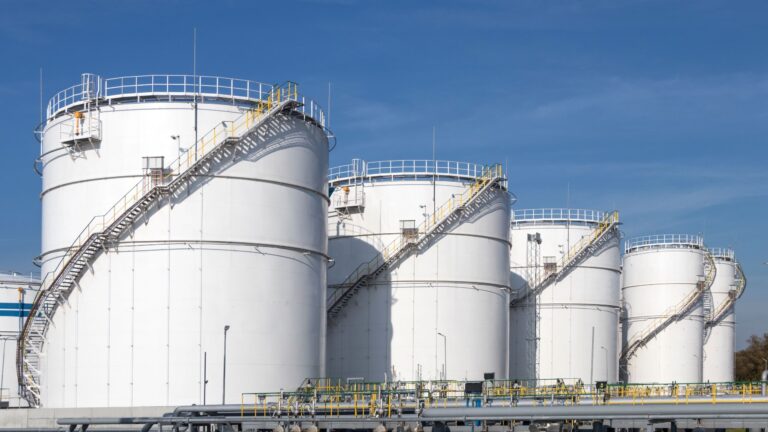
The figure, taken from the Tank Storage Association’s (TSA) 2026 Annual Review published this week, represents an increase on the £1.5 billion identified in last year’s review, indicating continued confidence in the long-term role of storage and logistics infrastructure.
It is a report that paints a picture of a sector that increasingly sees itself as a strategic enabler of both energy security and the transition to lower-carbon fuels.
That shift is reflected in one of the report’s most notable findings: more than 600,000 cubic metres of storage capacity is now being used for lower-emission fuels, including biofuels, methanol, ammonia, liquid organic hydrogen carriers and sustainable aviation fuel (SAF). This is a notable increase of around 20%, on the previous year’s report, suggesting there is continued investment in the adaption of existing infrastructure to support emerging energy markets.
Strategic importance
The report also reinforces the growing strategic importance of storage infrastructure within the UK’s energy system. Around 22 terminals operated by TSA members are designated by Government as Critical National Infrastructure (CNI), meaning roughly one in every thirteen terminals in the association’s network plays a recognised role in supporting national energy resilience.
Given current concerns around geopolitical tensions, supply resilience and import dependence, that designation comes at a time when storage infrastructure is becoming increasingly important in balancing supply and demand, supporting strategic reserves and providing flexibility across fuel supply chains.
The emphasis on resilience runs throughout this year’s review, reflecting the growing importance of storage infrastructure in maintaining secure fuel supplies during a period of significant change across the UK’s energy landscape. With the decline in domestic production capacity, the TSA report focus has shifted from lower carbon fuels and future energy carriers to the sector’s role in energy security and resilience.
In his foreword to the report, TSA President Arun Sriskanda describes the sector as a critical link connecting supply to demand for products that remain essential to everyday life.
“The sector plays a vital role in connecting supply to demand for products that are essential to our daily lives and will continue to do so in the future, driving growth, fostering innovation and unlocking new opportunities,” he said.
The scale of that contribution is reflected in the wider economic impact highlighted by the report. TSA member companies and their supply chain partners collectively support more than 6,400 jobs across the UK and generate annual revenues of around £5.5 billion.
Storage is no longer simply a supporting function
While the report presents a wide range of operational statistics, its broader message is that storage terminals are evolving beyond their traditional role as fuel depots. Increasingly, they are being positioned as multi-product energy hubs capable of handling both conventional fuels and the lower-carbon alternatives playing a growing role in the UK’s energy mix.
As the UK becomes increasingly reliant on imports and new fuel pathways emerge, terminals, tanks and logistics networks are no longer a supporting function instead they are assuming a more prominent role within the energy supply chain.
The review suggests that as the UK continues to reshape its energy infrastructure, investment in storage capacity, logistics networks and terminal facilities will be just as important as investment in fuel production.
For the downstream fuels sector, the report offers a clear indication that terminals and storage infrastructure are likely to become an increasingly important part of the UK’s future energy landscape – not despite the transition, but because of it.
Image provided by the TSA