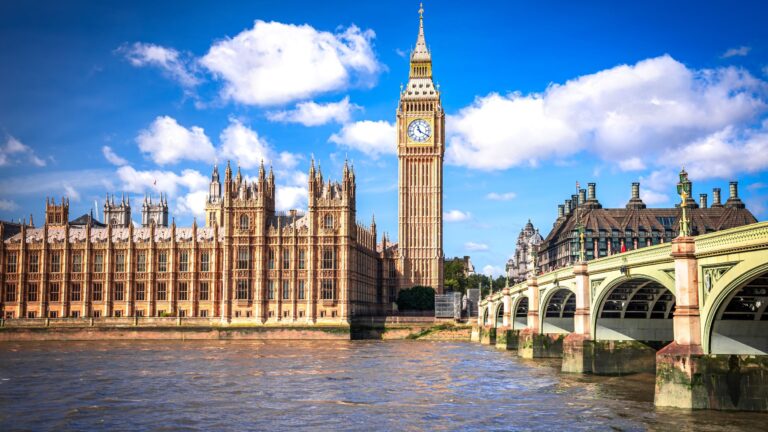
The debate on government support brought together MPs from rural and off-grid constituencies across England, Wales and Northern Ireland, all raising concerns over sharp recent price rises and the impact on off-grid households.
For the industry, the debate offered a clear picture of how heating oil is being discussed in Westminster in 2026: not simply as a fuel source, but as an affordability issue, a rural fairness issue, and an energy transition issue.
Off-grid homes are no longer politically invisible
The debate was opened by Steff Aquarone, Lib Dem for North Norfolk, who highlighted that around half of his constituency is not connected to the gas grid, with many homes relying on heating oil or LPG.
He told MPs: “We seem to be punished or penalised for rurality.” – a phrase likely to resonate well beyond Norfolk. Across many rural parts of the UK, households already face higher transport costs, weaker public services and older housing stock. The recent surge in heating oil prices has sharpened the sense that off-grid consumers face additional disadvantages still.
A two-tier energy support system?
Several MPs argued that households using heating oil are disadvantaged compared with mains-gas and electricity customers, who benefit from Ofgem-regulated markets and visible price-cap mechanisms.
Aquarone said: “That feels completely inconsistent and unjust” and argued that “Heating oil customers need to stop being seen as an afterthought in energy policy.”
Calls were made for measures including a temporary VAT cut on heating oil and the exploration of a price cap or stronger consumer protections.
Whether such proposals are practical or desirable is open to debate. Heating oil markets are structurally different from utility billing models, with wholesale costs, storage and logistics and seasonal demand patterns all playing a role.
Market scrutiny
Earlier parliamentary answers confirmed ministers had written to distributors reminding them of commitments under the UKIFDA Code of Practice, while the Competition and Markets Authority was reviewing evidence of potential unfair practices and anti-competitive behaviour following the March price spike.
That does not imply wrongdoing across the sector. But for distributors, it does mean that reputation, communication and transparent pricing matter more than ever when markets are volatile.
Support now, reduce later
Perhaps the most striking theme is the tension now emerging at the heart of policy.
On one hand, ministers are recognising that millions of households still depend on heating oil and need support when prices surge.
On the other, the same government has simultaneously increased Boiler Upgrade Scheme grants for oil- and LPG-heated homes to £9,000, clearly signalling a desire to accelerate movement away from delivered fossil heating fuels.
In short: help households now, reduce dependence later. That twin-track approach is likely to define policy over the next few years.
As Steff Aquarone continued: “We will not win the argument on renewable energy by making struggling rural households pay the price of Trump’s illegal war in Iran. This is part of a wider debate about retrofitting and rural renewables.
“Well-insulated homes powered by renewable energy will prepare us for whatever volatile fossil fuel markets may do down the line.”
Short-term affordability measures may continue whenever markets spike. But long-term subsidy frameworks are increasingly designed to lower demand for heating oil through heat pumps, insulation and broader retrofit schemes.
What it means for the sector
Heating oil is increasingly viewed through the lenses of vulnerability, fairness, consumer protection and transition planning. That means future policy debates may focus as much on reducing litres consumed as on stabilising prices.
For now, ministers recognise the importance of heating oil to rural constituents and support for households may continue in the short term. But pressure to reduce reliance will build.
For distributors, understanding the implications of both approaches will be essential.
Image credit: iStock