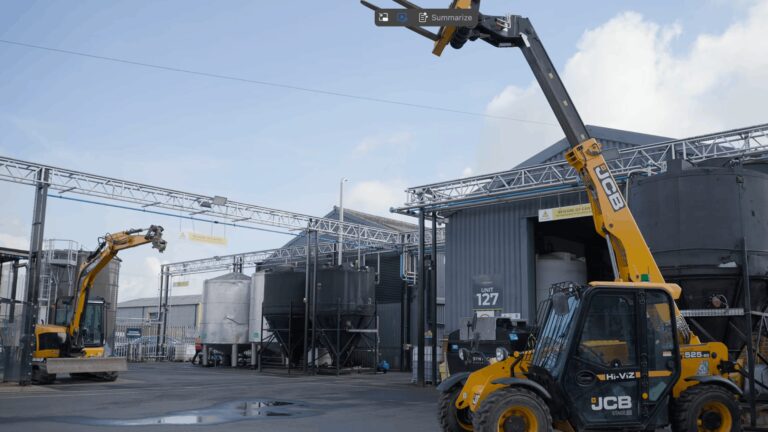
UK-based biofuel producer Syntech Biofuel has confirmed that its ASB B100 fuel has been successfully tested for use in X-Series excavators manufactured by JCB.
Following an extensive testing and evaluation programme, the validation demonstrates that Syntech’s waste-derived biodiesel can be used in heavy construction equipment without requiring modifications to existing machinery. The announcement provides a notable proof point for the role of biofuels in decarbonising the construction sector, where access to immediate, scalable alternatives to diesel remains limited.
Ready to deploy
Tom Bingham, CEO of Syntech Biofuel, said: “Following extensive testing and validation, it’s clear that high-quality biodiesel can play an immediate role in decarbonising construction equipment.
“What this demonstrates is that we don’t need to wait for future technologies or new infrastructure. Solutions like Syntech ASB B100 are already compatible with existing machinery and ready to deploy today.”
JCB confirmed that it is among a small number of manufacturers with machines capable of operating on B100 biodiesel. The company has worked in conjunction with Syntech Biofuel to carry out a comprehensive fuel testing and validation programme on its X-Series excavators. Compatibility is already being demonstrated in real-world environments, with Syntech’s fuel in use across major UK infrastructure and construction projects, including the Lower Thames Crossing, Sizewell C and Net Zero Teesside.
The development comes amid increasing focus on how the construction sector can reduce emissions from machinery and fleets in the near term. While longer-term solutions such as hydrogen and electrification continue to evolve, biofuels are positioned as an immediate pathway that can be deployed using existing equipment and supply chains.
Syntech Biofuel produces advanced fuels derived from waste feedstocks, including used cooking oil, supporting the transition to lower-carbon energy without requiring significant changes to infrastructure.
For distributors, developments such as this highlight both the growing role of drop-in renewable fuels in sectors where electrification remains challenging, as well as the potential to leverage existing supply infrastructure to support near-term decarbonisation.
Image supplied by Syntech