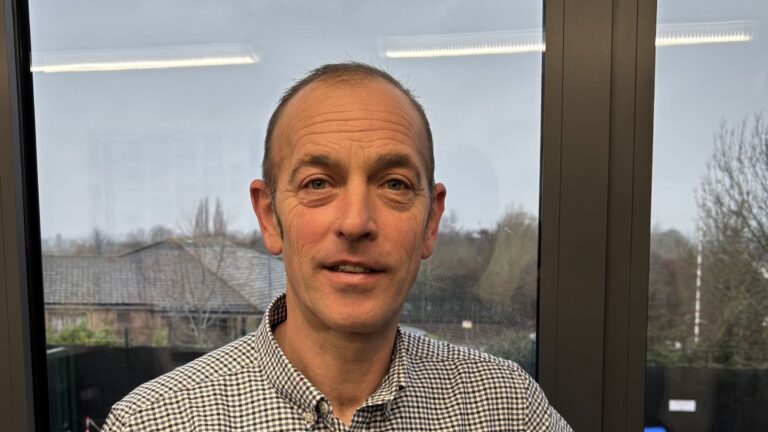
Claudia Weeks, Community Content Lead for Fuel Oil News, caught up with Simon Wainwright, Group Training Manager, to discuss his role at Barton, and explore why training is so critical to success in the fuel distribution industry.
You’ve spent 15 years in the British Army and 15 years in the civilian fuel industry – how has your military experience shaped your approach to training and safety in fuel transport?
Joining the Army at 16 instilled in me the importance of teamwork, discipline, and following tried-and-tested procedures – especially where safety is critical.
It also taught me to stay adaptable and respond calmly when plans change. That mindset has carried through into my work in fuel transport, where strict compliance and clear communication are essential to maintaining safety standards.
As a Group Training Manager specialising in ADR, PDP and CPC, what do you see as the biggest challenges drivers face when transporting dangerous goods today?
One of the biggest challenges for drivers is the way risks vary depending on location.
In rural areas, the challenges may be due to remote deliveries, difficult access, or weather-related issues – making adaptability and good training essential.
In urban environments, challenges may include route restrictions for dangerous goods, access limitations, and parking constraints when waiting to enter sites.
Strong ADR, PDP and CPC training helps drivers anticipate these risks and operate safely in very different environments.
ADR regulations can feel complex and daunting to some drivers. How do you ensure your training makes these requirements practical, relevant, and easy to apply on the road?
As an ADR instructor, my focus is on building confidence as well as competence. I make the regulations practical by delivering sessions as open discussions rather than just classroom teaching, encouraging drivers to share real-life experiences so we can learn from them.
I also adapt my approach to the individual, offering extra support where needed. When drivers feel comfortable and engaged, they’re far more likely to understand and apply the regulations safely on the road.
I strongly believe that if everyone is relaxed on the course learning can be fun as well as educational.
You deliver training across multiple ADR classes and tank packages. Are there any areas where you commonly see knowledge gaps or misunderstandings within the industry?
One common issue I see, particularly on five-year refresher courses, is that drivers can feel they’re just going through the motions. However, it often becomes clear that knowledge outside their day-to-day work hasn’t been used – and has faded over time.
My role is to refresh that understanding, bring the full ADR framework back to the forefront, and ensure their knowledge is current and applied correctly.
Practical training is a key part of delivery. How important is hands-on experience compared to classroom-based learning, and how do you balance the two?
We can teach theory to practically anyone in the classroom, but being hands-on is the place where we will learn in depth.
As human beings we learn by mistakes, candidates will learn the basics, but experience has taught me that they have learned the most by doing the job in the field.
With safety at the heart of fuel distribution, how does your IOSH health and safety qualification influence the way you design and deliver training programmes?
In every part of this industry, we all have a duty to look after our own safety and the safety of everyone around us. I encourage all candidates both new and existing employees not to be afraid to challenge anything that they feel is unsafe.
Involve and listen to everyone with new ideas, sometimes the simplest ideas can make the biggest impact.
The fuel delivery sector continues to evolve, from regulatory updates to new technologies. How do you ensure training keeps pace with industry change?
My own training is ongoing, to ensure I stay up to date with regulation changes, new technology and future proposals for the industry.
Being involved in meetings – not just at a company level but groups like the Flare meetings help everyone, from all companies, to talk about issues, discuss changes for the future and how we are all adapting.
Having trained both new entrants and highly experienced drivers, what differences do you see in how each group engages with ADR and safety training?
Both initial and refresher courses are often strange for the first hour or so. With first time courses it’s all about relaxing the candidates, helping them calm their nerves.
Experienced candidates will always learn new things, bringing this into play early will show them that the industry evolves and we all need to change.
From your perspective, what role does high-quality training play in improving not just compliance, but overall operational standards across a fuel delivery business?
Training will hopefully reduce the number of safety issues and encourage the industry to continue being a safe environment.
Sharing these procedure changes with all in the fuel industry has been successful but we still have work to do.
Looking ahead, what skills or competencies do you believe will become increasingly important for drivers transporting dangerous goods as the energy transition continues?
As the energy sector evolves, drivers will need greater adaptability and technical knowledge. Weather, changing regulations, and shifts in customer demand mean they must be able to adjust routes, manage different fuels safely, and respond to new delivery patterns.
Skills like situational awareness, risk management, and familiarity with security procedures are becoming increasingly important to ensure safe, efficient, and compliant deliveries in a rapidly changing environment.
Image credit: Barton Petroleum