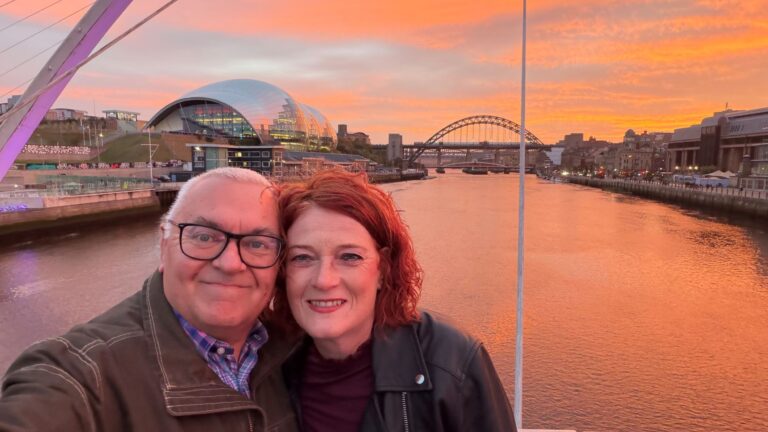
Jo joined WCF Ltd in 2004, as Financial Controller, joined the Board in 2007, as Finance Director and was appointed Managing Director in 2013, before taking on the role of Executive Chair in 2024. During her time at the company, she played a key role in strengthening WCF’s resilience, addressing the challenges of the fuel sector and reinforcing the organisation’s employee-ownership culture.
Claudia Weeks, Community Content Lead, spoke with Jo to reflect on her career in the industry, her time at WCF, and her plans for retirement.
Career reflection
What are some of your standout memories from your early days in fuel distribution?
My over-riding memory is just how helpful everyone I met was, and how welcome they made a newcomer feel. I am still in contact today with some of the people I met at my very first FPS show.
As diversified as WCF was, I have never worked in an industry where we are competitors but also friends, nor where people are genuinely happy and open to share their own learnings and experiences.
As a newbie, without any oil heritage, that was so refreshing and built my confidence and hopefully I have repaid that to others in more recent years.
The industry has always been blessed with some passionate personalities and it’s great to see that legacy being handed down across families.
How would you describe the biggest changes you’ve seen in the industry during your career?
At a BP dinner in 2009, news filtered in about a helicopter crash in the North Sea and, of course, the industry was still recovering from the Buncefield tragedy. Buncefield had a major, long-lasting impact on the oil distribution and fuel storage industry.
Its influence extended far beyond that site and reshaped how fuel depots are designed, operated, and regulated. Of course, for many of us, it was the start of the end of petrol storage. For directors it meant implementing authentic and meaningful H&S leadership and culture, something most of us had previously taken for granted.
What people do daily matters more than the booklets of processes we all had on a shelf, and I think most businesses have transformed because of Buncefield.
What are you most proud of?
As one of only a small number of oil distributors partly owned by its employees, I am proudest of the high autonomy and high engagement culture enjoyed by the people at WCF.
The teams are genuinely empowered to put customers first, which is reflected in the Feefo reviews and scores, as well as the employee engagement survey.
Were there any “turning point” moments in your career that shaped your path?
Personally, the acquisition of Chandlers Oil & Gas in 2012, was a huge moment both for me and for WCF. The Board delegated responsibility of the due diligence and subsequent integration to me which was a huge personal leadership opportunity and one which shaped my succession into the role of Managing Director in 2013.
Chandlers was a well-known business, and I know that it was a surprise in the industry that other operators had not been successful. I followed that with Allan Stobart Fuels in 2014 and am proud that both brands continue to be a hugely successful part of WCF’s legacy.
What were the biggest challenges you faced, and how did you overcome them?
Always the biggest challenge is getting your team motivated and engaged to trust you and to believe in themselves, united behind a common cause.
At WCF we spent considerable time with the teams building their strategic plans, so they had their own roadmaps over and above the “business as usual”. That was the “fuel” for their individual and collective successes.
For me, personally, it was always making sure that I did not let the “imposter syndrome” take over and I learned to trust my own instincts.
Is there anything you wish you’d known at the start of your career?
Being finance trained, I used to believe that if the numbers worked, the decision was sound, and I was adept at manipulating forecast models to give me the answers I wanted.
Through acquisition experience I’ve learned that the biggest risks – operational, safety, reputational, cultural – often sit outside any spreadsheet but need just as much, if not more, attention.
Now I would say I am adept at looking at the whole picture, as well as knowing when to play devil’s advocate to ensure that others have viewed things from a variety of angles.
Industry insights
How has fuel distribution in the UK evolved since you began?
We have discussed already how Buncefield was a defining moment in terms of depot infrastructure, process safety and regulation.
There have been multiple refinery closures since I started with WCF in 2004. The supply chain has altered significantly, with the oil majors being replaced by independent terminal operators.
The move to import terminals means the decision around when and where to purchase oil is one of the most strategic decisions made daily at every depot. I smile when I see businesses with policies that limit how much stationery someone can buy, but that allow individuals to trade millions of litres of oil.
Distributors began to recognise their role as a logistics provider, but we still have a way to go. The sector is being left behind with delivery technology such as timed deliveries selected by the customer. We currently tell the customer when they will get their oil, when it should be the other way round.
There has been substantial consolidation across the sector – it is hard to believe that Certas did not exist in 2004. It seems that there continues to be excess capacity, so it will be interesting to see what happens next.
What advancements or innovations made the most impact on your work?
Paperless routing was a game changer, although it was one of the improvements that took the longest to gain traction. Customers ordering fuel on the internet, and the start-up of price comparison websites like Boilerjuice, also challenged traditional sales channels and the familiar ways of doing business.
What misconceptions do people outside the industry often have about fuel distribution?
Fuel distribution is now. rightfully, recognised as part of the critical national infrastructure, not just a commercial activity.
Customers don’t realise the factors that influence oil supply and pricing, and it takes crises like Covid, driver strikes or the war in Ukraine to highlight this. Sadly, it then gets forgotten until the next crisis when the industry comes under pressure.
What do you think will define the downstream fuel industry over the next decade?
The industry will be defined less by growth, and more by how safely, reliably, efficiently and intelligently it manages long-term decline while supporting the energy transition. The winners will be those who combine operational excellence, resilience, and adaptability. The days of chasing volume to be successful are over. Technology will become central, not optional.
There appears to be over capacity in the industry, so I would expect additional consolidation as businesses not wishing to invest seek to exit. We need to attract younger drivers into the sector with all the benefits that the role brings.
In your opinion what is unique about fuel distribution as an industry compared to others you have had insight into?
The personalities and the people which enable the industry to operate both competitively and as a cohesive whole. How everyone came together to support the HVO trials was a great example of this.
Energy transition
How do you feel about the pace and direction of the energy transition in the UK?
The industry has done some great work on liquid renewables, but we need a wider, open door politically to ensure that it is priced and taxed fairly.
The industry needs to be flexible in terms of the numbers of products it stores and distributes as fossil and biofuels co-exist.
What role do you think traditional fuel distributors will play as the energy landscape changes?
Existing operators can use the trust and credibility they have with their customers to transition them onto bio alternatives. Distributors have proven they are adept and expert at managing different product types.
The industry voice is critical, so everyone needs to support UKIFDA in its representations to government. There is a danger that everyone adopts a “wait and see” approach and stops investing in their infrastructure, which could be a reputational risk for the industry.
Are there technologies or trends you believe the industry still needs to prepare for?
Taking an order, without being able to commit at the time to when you are going to deliver it, is out of kilter with supermarkets and retailers. Real-time inventory, advanced scheduling and demand forecasting will become ever more critical.
The customer databases are a huge strategic asset and need to be better leveraged, whilst not taking cyber-security for granted.
If you could give one piece of advice to those entering the industry during this transition, what would it be?
The drive for volume, which has dogged the industry since it was used to determine acquisition multiples, makes distributors their own worst enemies. Revenue and volumes are vanity, profit is sanity and cash is king. Why would you give something away you didn’t have to?
Invest in your assets and your people, and recognise that the price of the product you sell needs to support, not threaten, the value you bring.
How can distributors both play a meaningful role in decarbonisation and continue to operate successful businesses?
Distributors are expert at delivering liquid fuels at scale. Low carbon fuels are no different, so they can support both ends of the transition. This will require investment in existing depots. Distributors need to be thinking 5-10 years out, not just 12-18 months.
Everyone needs to play their part in improving efficiency through optimised routing, reducing waste, as well as educating customers to keep them on the journey.
All distributors should be responding to calls to action or requests for data from UKIFDA to ensure that the industry is consistently and cohesively represented no matter what size of distributor.
Personal reflections
What did you enjoy most about your work day-to-day at WCF?
The variety. I was very lucky to be able to travel round all the sites and develop meaningful relationships. No two days were ever the same.
I was given the freedom from my Board to diversify the income portfolio. I have never taken that trust or responsibility for granted.
What will you miss the most – and the least – about the industry?
The people, be it colleagues, suppliers or fellow distributors. My liver function will probably improve again over time.
Who were the biggest influences or mentors in your career?
The people who got the best out of me let me get on with it once the outcome and the direction was agreed. I hate to be micro-managed and hope that I have fed that down to my teams.
There were a couple of wise people who pushed me into roles I felt I wasn’t ready for, but they could see that I was. I will always be grateful to them for identifying talents I wasn’t even aware of myself.
The future
What are you most looking forward to in retirement?
The luxury of time – to travel, to spend with friends, family and people I met during my working career but never truly had the time to meaningfully invest in. Being an MD is all consuming. You never stop thinking and must be consistently alert. It’s a relief to be free of that.
I will be putting my strategic and leadership skills to good use as a non-executive director with a portfolio of employee-owned businesses and acting as mentor to a small number of female future stars.
What plans have you lined up?
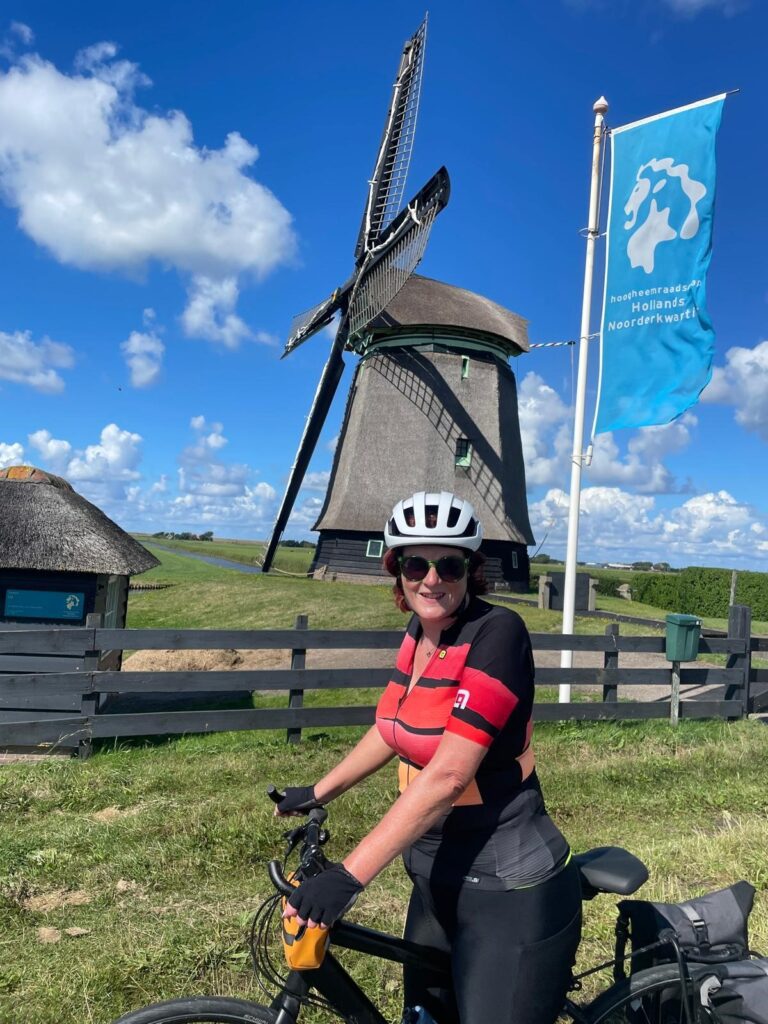
We have purchased a camper van and intend to spend large amounts of time outdoors hiking and cycling. I arrived in France less than a week after retiring and have booked a trip to Northern Spain for March.
I will smash the 1,300 miles I walked in 2025. I own a bass guitar and intend to play Seven Nation Army by the White Stripes to the family next Christmas!
What do you feel is your legacy?
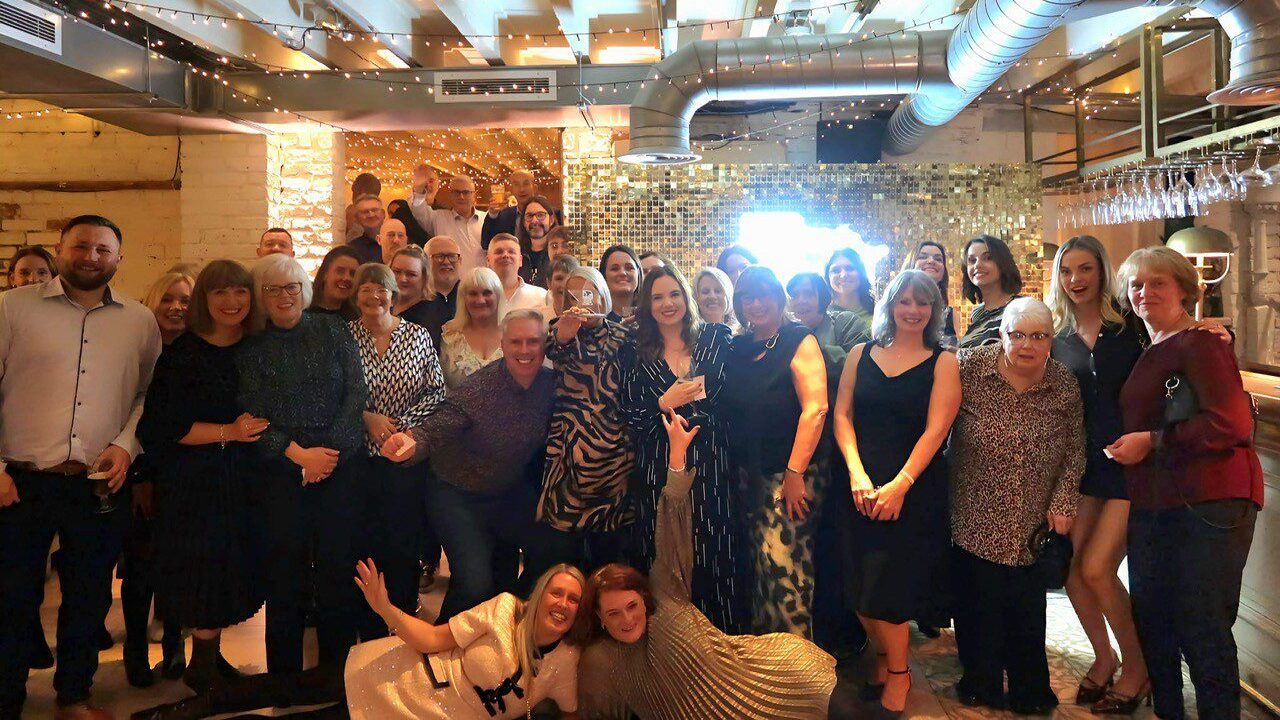
Everyone at WCF is tasked with leaving the organisation in a stronger place than when they inherited it. I hope I have successfully played my part in my 22 years.
The portfolio of acquisitions I identified, sourced and integrated leaves the company with a diverse future revenue stream that is much less reliant on the winter income generated by fuels. A focus on the databases as the biggest strategic asset and the digital transformation that is underway means that the next 5 years are going to be exciting.
Any words of wisdom you’d like to share with colleagues carrying the torch forward?
My mantra was always “you’re not saving lives” so have fun, don’t take yourself too seriously, understand what being part of a great team looks like, and you will deliver something amazing together.
If you are not motivated to give your best for the company, do everyone a favour and go elsewhere.
And finally, the best day to deliver bad news is never a Friday!!!
Jo’s impact on WCF has been significant, and her leadership leaves a legacy across the business and the wider industry. Everyone at Fuel Oil News congratulates Jo on her retirement and wishes her every success and happiness in the next chapter.
Image credit: Jo Ritzema