However, the entire sector is currently facing the challenges of maintaining profitability while also answering the urgent call for decarbonisation from upstream customers. This pressure to reduce Scope 3 emissions is no longer a future concern but an immediate reality, complicated by a sustainable fuel market that is becoming more and more expensive.
Hydrotreated Vegetable Oil, specifically HVO100, has long been championed as the ideal “drop-in” solution. While this high-quality FAME-free fuel drastically cuts fleet emissions, it also presents a challenging price point.
Many are now forecasting a volatile 2026, with some market reports predicting price increases of up to roughly 25p per litre on HVO100 vs Standard fossil grades – this cost increase is unsustainable for most operators.
A primary cause of this price appreciation is Germany’s recent introduction of the RED III initiative, which seeks to end the “double-counting” of carbon credits for certain biofuels. Previously, suppliers could meet GHG quotas using half the physical volume of specific sustainable fuels.
With RED III and the end of carbon credit multipliers, German suppliers must now purchase significantly more physical fuel, and some market analysis suggests that HVO demand could double in 2026 to satisfy legal mandates. This demand shock is compounded by other persistent market pressures, including high global feedstock costs for grains and used cooking oils; international tariffs; and rising freight and export costs, all of which constrict supply.
Reports from Argus Media and others have noted that this surge in demand, coupled with planned refinery maintenance, is constraining supply and elevating prices to nine-month highs. We expect this volatility to continue, especially into Q1 2026. For the distributor, haulier, or manufacturer, this creates a difficult choice: either absorb a prohibitive fuel cost or fail to meet the sustainability credentials that their customers demand.
Adding to this complex environment is the market forecast of a potential reduction in diesel prices in 2026, driven by a global supply surplus. While this may tempt some operators to revert entirely to traditional diesel fuel, the pressure to meet ESG and Scope 3 targets remains a non-negotiable component of modern supply chains.
Blending offers an ideal means to address these pressing issues. By combining lower-cost diesel with sustainable HVO or FAME components, operators can offer their customers a fuel that is both financially and environmentally sustainable. The solution lies not in abandoning emissions targets, but in adopting more strategic procurement methods.
Beyond ‘Perfect’: The pragmatic value of blending
The market’s focus on HVO100 is understandable given its track record but overlooks other viable options. With its environmental and cost-effective benefits, custom blending is the most pragmatic tool available for operators. For example, 100% renewable fuel proves cost-prohibitive for customers, a blend of 50% or 30% presents a viable alternative. Custom blends such as HVO50, HVO30, or HVO10 offer a significant reduction in net CO2 emissions, while also achieving decarbonisation goals.
HVO and HVO blending is not the only alternative fuel option available that can reduce costs and improve sustainability. FAME (Fatty Acid Methyl Esters) blended products can offer operators a route to efficiently achieve their decarbonisation targets. While subject to standard road duty, these established biofuels provide a more compelling ratio of cost-to-carbon-saved, especially for fleets seeking a large-scale and financially manageable emissions-saving strategy.
HVO blends and FAME products offer the ideal solution to lowering costs and improving environmental impacts. For example, a 30% carbon saving applied across an entire fleet offers a more substantial aggregate environmental and business benefit than a 90% saving on a small, cost-prohibitive fraction of vehicles. Opting for such solution-oriented strategies will ensure operators’ success against the challenges ahead.
The importance of strategic supplier selection
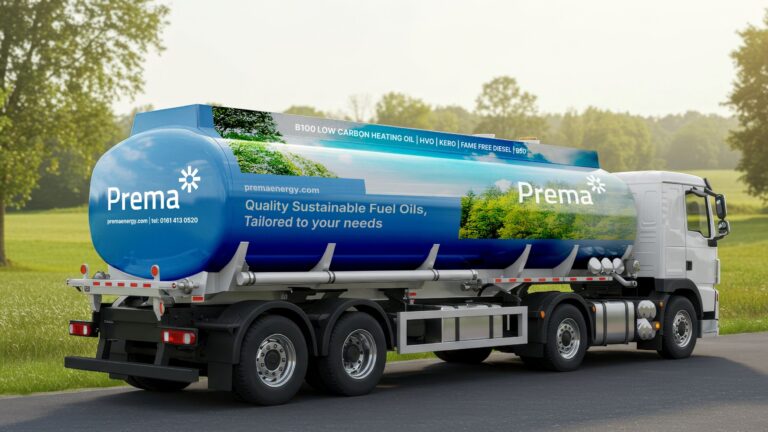
Navigating this complex market requires more than simple fuel procurement. A simple reseller cannot address the challenges facing the sector, and operators must strategically select a partner with deep, practical knowledge of the market. Stephen Fletcher, Managing Director of Prema Energy, explains:
“We are observing clients navigating the intersection of significant cost pressures and pressing ESG mandates… Our approach is not to advocate for a single product. It is to take a holistic view of a client’s goals – their cost-per-mile, their emissions targets, and their operational needs – and then design a custom fuel solution. In some cases, this may be pure HVO; however, the optimal solution is increasingly a bespoke blend that delivers a carefully calibrated balance of sustainability and profitability.”
Offering true flexibility is key for any potential supplier partners. Operators require a supplier that functions as importer, blender, and wholesaler, and can manufacture and supply a custom-blended HVO30 just as easily as they can source B100 or HVO100. Suppliers should have expertise in complex fuel logistics and be able to provide the infrastructure and insights for any challenge, from creating the right solutions for road transport to supporting their customers with fuel hedging. Your supplier should understand the entire energy landscape, not just one segment.
As we approach a challenging 2026, the operators who will thrive are those who move beyond the “HVO100-or-nothing” mindset. By embracing strategic blending, businesses can meet both their ESG and financial targets.
For those seeking to navigate this complex market and better understand their options – from incorporating standard blends to developing a bespoke fuel strategy – we invite you to contact Prema Energy for a consultation.
daniel.webb@premaenergy.com
+44 738 582 5041
0161 413 0520
premaenergy.com