For compliant distributors, they can be a powerful validation of standards and unlock competitive advantage.
We explore how enforcement is evolving to support safety, consistency and a level playing field across the sector.
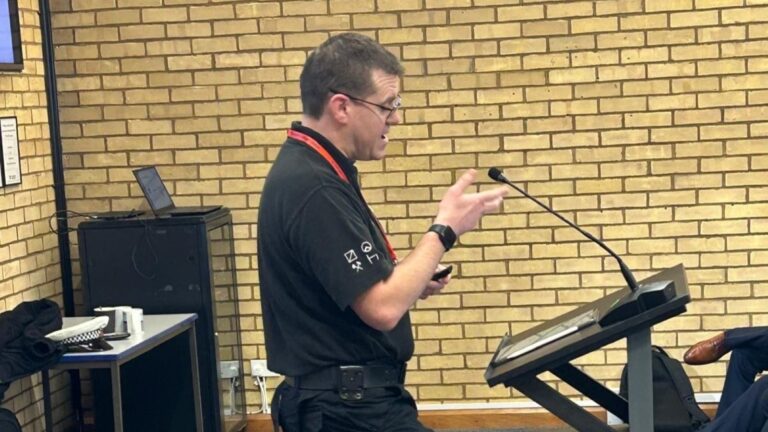
When Police Sergeant Jason Dearsley of Essex Police Commercial Vehicle Unit and Vice Chair of the National Carriage of Dangerous Goods Practitioners Forum (CDGPF) opened his session at the recent industry EXPO, he posed a simple but uncomfortable question: “Would your vehicle have passed an inspection if I’d stopped it on the way here?”
It’s a question that cuts to the heart of how roadside inspections are perceived across the fuel distribution sector. Too often viewed as disruptive, punitive or even adversarial, Jason’s message was clear: that mindset needs to change.
For compliant operators, inspections should not be feared – they should be welcomed.
Resetting the narrative
Drawing on nearly three decades in policing and extensive experience in dangerous goods transport, Jason emphasised that roadside inspections are not about “catching people out”.
Instead, they exist to uphold standards, protect lives and ensure a level playing field.
“There has to be high expectation because of the nature of the goods,” he explained – but that expectation is paired with an understanding of the operational realities faced by distributors.
In fact, a key theme of the session was the move towards greater consistency and professionalism in enforcement. With all officers now trained to a higher standard and the introduction of a national inspection framework, the aim is a more balanced, informed and transparent approach.
At its core, roadside inspection is about workplace safety – and about ensuring that those investing in compliance are not undercut by those who do not.
First impressions count
One of the most striking insights from the session was how much weight is placed on initial impressions.
Before a single document is checked, inspectors are already forming a view: Does this vehicle – and by extension, this operator – look like it is trying to do the right thing?
Vehicle cleanliness, visible maintenance standards and overall presentation all play a role. These are not superficial judgements; they are indicators of underlying culture and discipline.
Driver attitude is equally important. Inspectors assess not only technical compliance but also behaviours, awareness and even signs of stress or fatigue. In this sense, roadside inspections become a window into broader operational practices – from training and communication through to driver well-being.
The reality of the inspection
At the centre of the process is the standardised “10-500” inspection form – a structured, top-to-bottom checklist that ensures consistency across enforcement.
The inspection will typically cover:
- Transport documentation – accuracy, accessibility and driver understanding
- Load details – including precise volume on board and definitions such as “empty” or “nominally empty”
- Vehicle and equipment checks – PPE, safety equipment and fire extinguishers (a frequent area of non-compliance)
- Driver preparedness – confidence in locating documents and explaining procedures
A recurring issue highlighted was not the absence of procedures, but the failure to embed them.
“If it’s not written down, it’s not being done,” Jason noted, underlining the importance of documented training and consistent daily checks.
From enforcement to engagement
Enforcement powers remain wide-ranging – from advice and prohibitions, through prosecution, TCO referral and HSE involvement resulting in improvement notices and being placed on to a public register – but the emphasis is on proportionality and risk.
Inspectors are very able to distinguish between minor oversights and systemic non-compliance.
Crucially, the system is designed to target the latter.
For compliant distributors, this is where roadside inspections become a positive force. By identifying and removing “cowboy” operators, enforcement helps protect margins, reputations and safety standards across the sector.
Turning inspections into a positive
Perhaps the most compelling takeaway for distributors was Jason’s suggestion to actively incentivise compliance.
Rather than dreading inspections, drivers should be encouraged to approach them with confidence – even optimism.
Rewarding positive inspection outcomes, whether through recognition schemes or financial incentives, can help embed a culture where compliance is not just expected, but valued.
After all, drivers are ambassadors for the business. A successful inspection is not just a regulatory tick-box; it is visible proof of operational excellence.
Designing for compliance
The session closed with a simple but powerful message:
“Rely on design, not luck.”
Compliance should not depend on individual diligence alone. It must be built into systems, processes and culture – from documented training and daily checks to clear communication and leadership expectations.
For distributors willing to embrace that mindset, roadside inspections cease to be a risk and become a reassurance.
A reassurance that standards are being upheld, that professionalism is visible, and that those cutting corners are being held to account.
Inspections: A health check, not a hurdle
Speaking with fuel oil news, Jason shares further insight into how roadside inspections are evolving.
Changing perceptions
Are attitudes shifting?
“I hope so. Instead of a nerve-wracking encounter, inspections should be seen as a chance to prove just how professional the driver – and the company behind them – is!”
The biggest misconception?
“That the officers are not highly trained, or that breaches won’t be escalated. In reality, issues can lead to HSE involvement with operators finding themselves on a public register. This is before mandatory OTC referral and potentially prosecution with an unlimited fine. Training drivers well is never a waste of time or money.”
What good looks like
Most common avoidable issues
“Poorly filled out DG notes, out of date paperwork such as Instructions in Writing (IIWs), fire extinguishers out of service date, or even inadequate load security.”
A ‘best-in-class’ stop
“A knowledgeable driver, a Dangerous Load Card (if necessary) and a clear security plan in action – such as removing the ignition key and locking the cab when away from the vehicle.
Consistency and enforcement
“Since the move to a standardised, national approach, industry knows what we expect – there is no uncertainty around inspections.
“Non-compliance still exists, but greater alignment with Driver and Vehicle Standards Agency and HSE is in progress through a new Enforcement Sanctions Policy for police forces to ensure consistent outcomes.
“Importantly, the policy will also clarify when cases are handed over to the HSE for follow-up, recognising that issues rarely stop at the driver but often extend into depot operations and senior management.
Drivers and culture
Does driver attitude matter?
“We are well versed in dealing with poor behaviour in our day-to-day general policing. After all no one really wants to see us. We are either delivering sad news or responding due to someone’s poor life choices. We provide consequences for actions, and this is often the first time we meet.
“But we recognise that drivers are humans – as are the fantastic Tier 3 trained officers.
“So, we ‘check in’ with drivers to see if their ‘attitude’ is simply down to them having a bad day or if there is something bigger going on. “
“We don’t expect smiles and flowers; professionalism and efficiency work just fine.
Supporting drivers
“Operators invest thousands of pounds in vehicles with plenty of drivers aids to make the vehicle safer, yet the human behind the wheel can be virtually forgotten. A small investment in drivers pays back many times over.
“It ensures they are in the best mindset for their job of driving dangerous goods in the biggest vehicles on the road. They know they can say they are not ok without judgement and in confidence.
“On my visits to operating centres, I can feel when a company genuinely cares.”
Compliance as a business advantage
“Companies who do things properly will feel the benefit – particularly when they’re no longer undercut by ‘cowboy’ operators.
“I hope compliant businesses see enforcement and regulation teams as being on their side, and they feel listened to when raising concerns about those flouting the rules and putting people at risk.”
The power of incentives
“As human beings our nature is to enjoy praise. Being rewarded for good work leaves us feeling valued and recognised.
“Even small incentives or time off are another very worthwhile investment and a superb way to build a compliance culture. Often more effective than punishment alone.”
Looking ahead
“I expect a move to less paper and more electronic documentation as we evolve along with the industry.
“I also expect fewer complaints about delays, as inspections become more widely viewed as a ‘health check’ for a company’s training and processes.”
Emerging risks
Physical: theft and site security
Digital: cyber-attacks (with real business-ending consequences)
“General theft is a real issue. Criminals are opportunists who will target depots and vehicles without consideration for environmental or emotional damage. At the same time, increasing digitalisation raises the risk of cyber-attacks that can cripple a business.
“As well as investing in the best physical security, please also pay attention to your systems and software.
“A cyber-attack can cause a business to shut for good as we sadly observed with Knights of Old – a 158-year-old UK logistics and haulage company. This industry is vital to our economy and our way of life.
“Reassuringly, compliance rates are high – it is a small minority who think safety and caring for their teams are optional.
“Together we can, and will, continue to raise the bar, keeping road users, communities and the environment safe – while supporting a strong and fair market for compliant operators.”
At a glance
What inspectors are looking for
- Clear, accurate transport documentation
- Drivers who understand load andprocedures
- Roadworthy, well-presented vehicles
- Accessible, in-date safety equipment
- Evidence of daily checks and safety culture
Common avoidable failures
- Incomplete or incorrect DG notes
- Out-of-date fire extinguishers
- Missing or poorly maintained PPE
- Weak load security or stowage
- Drivers unsure where things are
What “good” looks like
- Confident, knowledgeable driver
- Documentation easy to locate and explain
- Clear security awareness
- Calm, professional interaction
Why it matters
- Protects staff, public and environment
- Removes non-compliant operators
- Reinforces credibility
- Supports a level playing field
Designing for compliance
- Write it down: if it’s not documented, it’s not happening
- Build routines: daily checks must be habitual, not optional
- Train for confidence: drivers should expect inspection, not fear it
- Reward success: recognise and incentivise compliant behaviour
- Think system-wide: issues rarely stop at the driver
Image credit: Jason Dearsley