For some, the biggest risk was moving too early. Increasingly, however, the concern is becoming whether waiting too long could leave businesses behind.
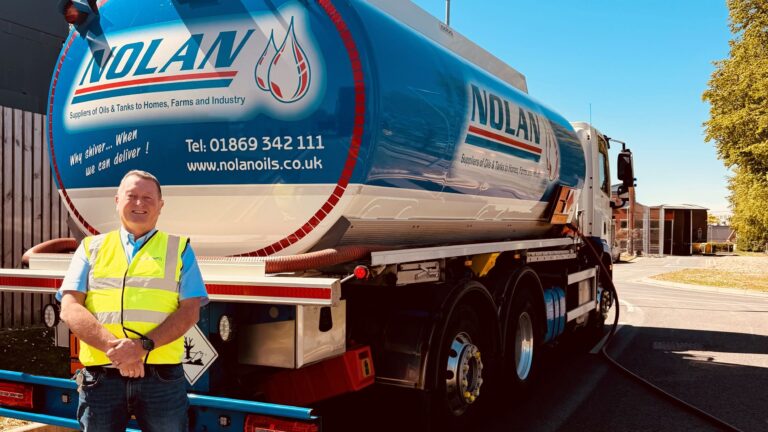
That tension sits at the heart of Nolan Oils’ recent decision to begin supplying HVO directly from its own depot. Having previously supplied the renewable diesel alternative through partners, the family-run distributor has now invested in dedicated storage and operational changes to bring the product fully in-house – a move driven not by ideology, but by a noticeable shift in customer behaviour.
“We wanted to see consistent demand before investing properly in HVO,” says Luke Nolan. “Like many independents, we took a measured approach. Then decided we can’t let the big boys have all the fun!”
That blend of pragmatism and humour reflects a wider mindset across the SME fuel distribution sector, where interest in lower-carbon fuels is growing, but decisions still need to stack up commercially and operationally.
Waiting for the market
For Nolan Oils, the move into direct HVO supply was not about chasing headlines or making a dramatic strategic pivot overnight. Instead, it was about responding to what the business was increasingly hearing.
“Customer interest had become much more serious over the last year,” Luke explains. “Mainly that we received more proactive enquiries from customers – them approaching us rather than us promoting HVO as an available product.”
It’s an important distinction.
Rather than being driven by supplier-led marketing, the business began seeing genuine pull from commercial customers actively looking for lower-carbon fuel options, particularly those facing sustainability requirements within procurement and tendering processes.
Demand has so far been strongest from the construction sector and public services, with applications including onsite generators used by building contractors, film crews and backup power generation on public sector sites.
“Most customers are driven by sustainability goals and are obligated to use it to meet their green credentials when tendering,” Luke says.
At the same time, he is realistic about the limits of the current market.
“Price is still a major factor.”
A measured transition
That commercial consideration runs throughout Nolan Oils’ approach.
One of the most striking aspects of the company’s response is its rejection of the idea that distributors must be all in or risk being left out.
“One of the biggest misconceptions before getting involved was the idea that you either fully commit immediately or get left behind,” Luke says.
“In reality, it doesn’t have to be an ‘all in’ decision overnight. Our approach has always been to take things one step at a time, learn as we go, and build capability steadily.”
That is likely to resonate with many independent distributors balancing transition planning with the day-to-day pressures of running a fuel business in a volatile market.
Rather than building entirely new infrastructure, Nolan Oils took advantage of an opportunity to repurpose an existing storage tank, allowing the business to introduce HVO supply in a measured and manageable way.
“Cleaning and preparing the storage were the main considerations, as well as updating our tanker metering and tablet system to add the product.”
But, while the move required operational changes, the emphasis throughout has been on controlled evolution rather than rapid transformation.
Bringing the team with you
Interestingly, Luke believes one of the most important elements of introducing HVO has little to do with tanks, logistics or price.
“My advice to other FODs considering investment in HVO capability would be to prepare thoroughly – not just operationally, but culturally as well,” he says.
“Make sure your team understands the reasons behind the investment, supports the direction of the business, and feels part of the journey. Having staff on board is just as important as having the infrastructure in place.”
That focus on internal culture reflects a broader challenge facing many FODs as the energy transition increasingly moves from distant policy discussion to business reality.
For smaller distributors especially, strategic change often depends as much on confidence, communication and operational buy-in as it does on capital investment.
Affordability remains the challenge
While interest in HVO is clearly growing, Nolan Oils is candid about the commercial barriers that still exist – particularly in the domestic market.
“It would be great to see the demand grow for domestic heating,” Luke says.
But he believes pricing, policy support and public awareness are all currently holding that back: “The average person isn’t really aware of HVO, and I believe when they do discover it, they are quickly discouraged by the current high price.”
That challenge has become even more pronounced amid recent fuel price volatility linked to geopolitical tensions and instability in global energy markets.
“Unfortunately, the huge increase in prices has meant some tough conversations with a lot of customers about affordability,” Luke explains.
“Some customers are also exposed to scaremongering, clickbait media that creates panic of further price increases and product shortages. In this current environment, it is difficult to promote a lower-carbon but higher-priced alternative.”
The comments highlight a reality increasingly facing distributors across the sector: balancing long-term transition ambitions with immediate affordability concerns for customers already under pressure.
Looking ahead
The company expects demand to continue growing steadily over the coming years, although Luke believes wider adoption will remain closely tied to pricing and government support.
He also praised ongoing industry engagement efforts around renewable liquid fuels.
“I know Ken Cronin for UKIFDA is doing great work pushing HVO with government and I think all members should support him in this endeavour for the future of our industry.”
For Nolan Oils, the move into direct HVO supply is not about abandoning traditional fuels overnight, but about future-readiness.
“At the moment, HVO is more of an addition than a replacement for traditional fuels,” Luke says. “We see it as an important future product as customer requirements evolve.”
Ultimately, Nolan Oils’ HVO journey is less about overnight transformation and more about pragmatic evolution.
And perhaps that is the clearest message for other independent distributors watching the market closely: transition does not have to mean sudden transformation. For many, it is about adapting carefully while remaining grounded in commercial realities.
Image credit: Nolan Oils