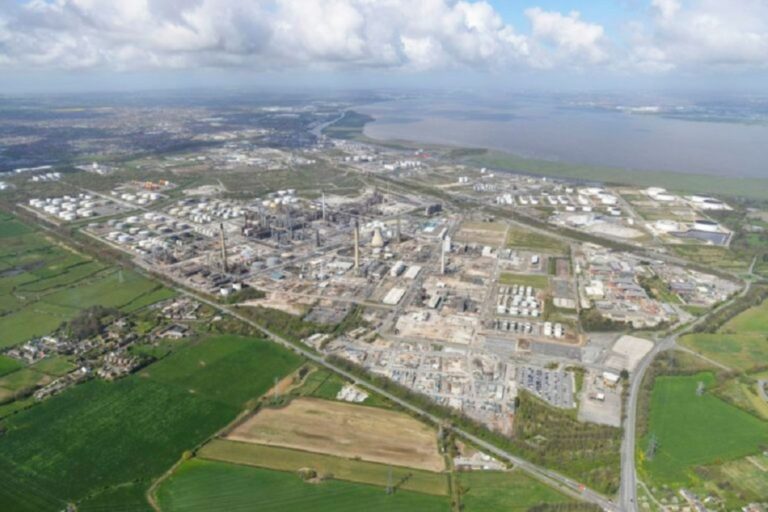
The project, which EET says was completed on time and on budget, is expected to produce more than 200,000 tonnes of SAF a year using around 550,000 tonnes of renewable e-methanol and bio-methanol feedstock.
Integrated within the Stanlow refinery, the facility would allow SAF to be blended on site with conventional jet fuel before being distributed through existing pipeline, road and marine infrastructure to UK airports and airlines.
The Pre-FEED study was part funded through a grant of up to £2.5 million from the Department for Transport’s Advanced Fuel Fund and delivered with Genesis. EET said the work confirmed Stanlow as an optimal site, with no material permitting barriers, strong methanol supply interest and integration opportunities to reduce cost and carbon intensity.
Built for scale
FEED is planned for later this year, with final investment decision targeted by the start of 2028. The project is also targeting participation in the UK SAF Revenue Certainty Mechanism process.
Ruth Herbert, managing director and chief business development officer, EET, said: “Completing Pre-FEED confirms that Stanlow MtJ is a leading UK SAF project; it is a fully integrated, delivery-ready solution built for scale.”
EET said the project supports its wider multi-billion-dollar energy transition investment programme in the North West and could help meet the UK SAF Mandate, which requires SAF to account for 22% of total jet fuel by 2040.
Image from EET