At petroleum terminals and truck/trailer repair workshops, overfill prevention and grounding systems are only as reliable as their last verified test. As compliance requirements tighten globally, the ability to validate tank truck safety systems has become operationally critical.
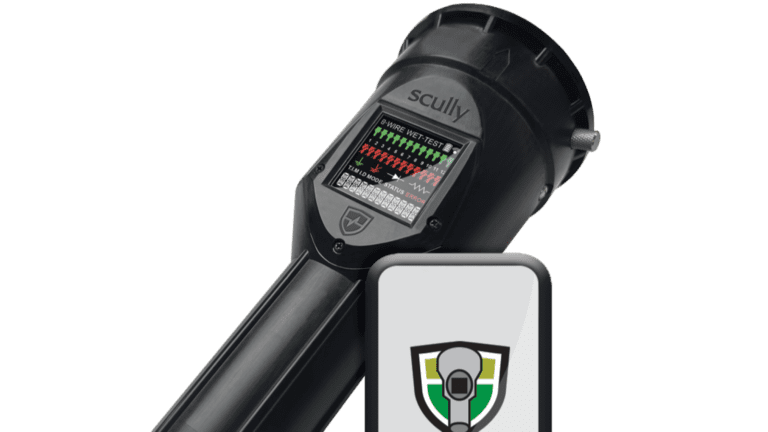
Celebrating 90 years of safety, reliability, and innovation, Scully Signal Company has expanded its capabilities by introducing its new Mobile Truck Tester 1000 (MTT 1000) with hazardous area approvals and enhanced digital functionality, positioning the unit not just as a workshop tool, but as a next-gen, field-ready instrument for modern fuelling operations.
Hazardous area approved for terminal use
The approved MTT 1000 for use in hazardous environments under ATEX and IECEx certifications. The tester itself is certified for use in Zone 2 environments with an intrinsically safe interface to the socket, enabling safe deployment in petroleum loading lanes and other classified areas where explosive atmospheres may be present under abnormal conditions.
This approval allows terminal operators and service technicians to conduct sensor wet-tests, verify grounding, and verifying Safe Loading Pass HLCO tests, minimising downtime and quickly identifying any issues while the vehicle is still in a hazardous location.
Comprehensive system validation
The MTT 1000 is designed to validate three critical onboard systems prior to loading:
- Overfill prevention
- Ground verification
- Truck identification
Compatibility includes 2-wire optic and 5-wire optic sensors, ensuring coverage across all fleets and varying equipment configurations commonly found in UK and European distribution networks.
Designed for true single-operator testing
A key operational benefit of the Mobile Truck Tester is its ability to support single-person wet testing. Using a phone or tablet (in a safe area), users can simulate a wet sensor without requiring a second operator.
The tester also supports individual sensor testing through a socket adapter and wire harness provided in the kit, enabling targeted diagnostics when troubleshooting. This reduces unnecessary component replacement and shortens repair cycles.
For fleet managers and independent repair facilities, the result is faster turnaround, clearer fault identification, and improved documentation.
App-driven documentation and traceability
The mobile application enhances both usability and record-keeping. Test results are displayed clearly and can be generated as shareable reports. Logs can be archived by truck ID, customer, or work order, creating a structured test history aligned with compliance expectations.
The app offers insight and access to options beyond what the tester itself offers:
- Advanced fault notifications provide detailed failure modes.
- Backup and restore capabilities protect historical data.
- Global real-time clock adjustments ensure accurate time stamping across regions.
Supporting compliance through practical innovation
For terminal operators, fleet managers, and service providers alike, the shift toward documented, repeatable field verification reflects a broader industry trend: compliance is continuous.
By combining hazardous area approval, multi-system compatibility, grounding verification, and structured digital reporting, the MTT 1000 supports a more disciplined approach to truck testing.
As the downstream fuel sector continues to evolve, tools that reduce downtime while strengthening safety integrity will define future best practices.
Image credit: Scully Signal Company