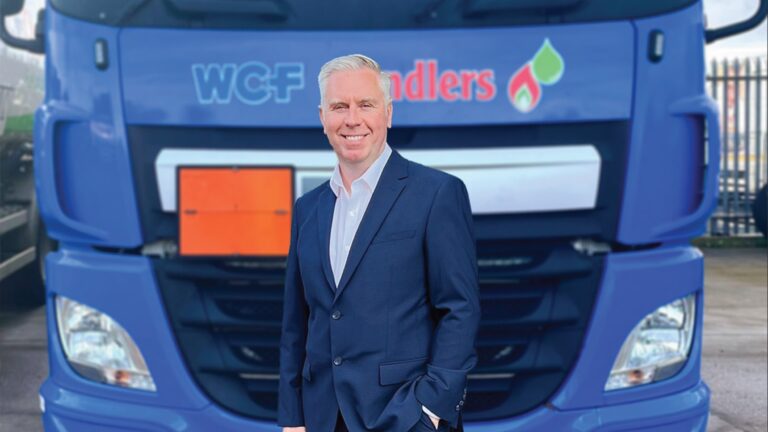
His perspective reinforces a key theme emerging across the sector: while structure, systems and governance are evolving rapidly, local depot leadership remains central – but increasingly redefined.
This follows WCF’s recent alignment of its North West operations under the Allan Stobart brand.
Phil begins with his thoughts on the future of the regional fuel depot model.
Over the past decade, fuel distribution has become materially more complex.
Margins are tighter. Compliance obligations are greater. Fleet and environmental standards continue to rise. At the same time, customers expect the same reliability and local responsiveness that has always defined our sector.
Against that backdrop, the regional depot model is not disappearing, but it is evolving.
As highlighted in last issue’s analysis of consolidation and depot leadership, this evolution is not simply structural – it is operational, cultural and strategic and, as WCF’s experience shows, it is already happening in practice.
Historically, independence alone was enough. A well-run depot with strong local relationships could thrive on service and reputation. That remains true.
What has changed is the infrastructure required behind the scenes.
Compliance reporting, procurement discipline, digital fleet management and energy transition readiness now require scale and coordination.
The question facing many of us is not whether local depots matter, they absolutely do. The question is how they are operated and supported.
In our case, bringing together WCF Fuels North West and Allan Stobart Lubricants & Fuels was not about removing local identity. Depot teams, drivers and customer relationships remain critically important. However, what we have simplified is the structure around them, aligning procurement, compliance oversight and leadership accountability at a regional level.
The strategy is relatively simple. Protect local service by strengthening the platform behind it.
The WCF approach directly reflects a wider shift already visible across the sector – where decision-making increasingly sits within systems and central frameworks, while accountability remains locally visible.
“Protect local service by strengthening the platform behind it.”
Operational reality: continuity at the front line, change behind the scenes
As regulatory demands increase and the UK’s energy mix evolves, sustainable margin becomes essential. Not for short-term return, but for reinvestment in fleet renewal, digital optimisation, renewable liquid fuels capability and depot infrastructure. Without that reinvestment capacity, the regional model risks becoming fragile.
There is also a cultural dimension. In employee-owned businesses such as ours, decisions are taken through the lens of long-term stewardship. When handled thoughtfully, consolidation can protect employment, strengthen operational clarity and secure the future of regional operations.
The drivers, operational managers and the customer service teams remain central.
What evolves is the governance and infrastructure that sustain them.
The future of regional fuel distribution will belong to businesses that can combine scale discipline with local trust, and balance operational efficiency with long-term investment.
Evolving to deliver operational resilience
At WCF, the core driver behind consolidation has been long-term stewardship.
WCF has operated for over 110 years, and our responsibility, particularly as an employee-owned business, is to leave the business stronger for the next generation.
Bringing WCF Fuels North West together with Allan Stobart was about simplifying our structure to ensure we have the resilience to continue serving our communities reliably in a changing market.
The decision was primarily operational.
However, the brand alignment reflects the need for greater consistency. Allan Stobart has deep roots in the region, and aligning under one name creates clarity while retaining the same drivers, depots and customer relationships.
In practical terms, resilience and operational sustainability mean:
- Clearer regional leadership accountability
- Consistent compliance oversight
- Stronger procurement leverage
- Better coordination of fleet and depot infrastructure
- Reduced duplication behind the scenes
Redefining the depot manager role
One of the clearest themes emerging from both sector analysis and WCF’s experience is the evolution – rather than erosion – of depot-level leadership.
Operational managers remain central to our model.
They continue to lead their teams, serve local customers and operate with clear accountability at site level. What has changed is that we have simplified the reporting structure above them to ensure consistency and support across our region.
Local leadership remains critical.
If anything, the depot manager role has been strengthened.
By streamlining systems and compliance oversight at regional level, our managers can focus more on customer service, people leadership and community relationships.
The role is evolving, making greater use of technology to manage processes but will always remain, first and foremost, people-focused.
This reinforces a central conclusion from last issue’s Delivering Insight feature: the real shift is not about removing depot managers but redistributing authority.
Centralisation vs. local delivery
Some support functions have been aligned regionally, particularly around procurement, marketing and compliance to ensure consistency and visibility across our fuel distribution businesses.
Modern fleet tracking, order management and compliance systems allow us to maintain high service standards while operating at greater scale.
Unified platforms improve accuracy, compliance and planning, but more importantly, they sit behind the service rather than in front of it.
Operational delivery remains local.
Digital infrastructure enables stability but doesn’t replace the vital importance of building and maintaining strong relationships.
In fuel distribution, service is built on trusted relationships with our valued customers – and protecting that continuity has been central throughout the consolidation process.
We understand that regional businesses carry pride, customer loyalty and brand identity.
Our approach is not to remove any of that, but to provide a stronger platform behind it. Heritage and scale are not opposites; they can coexist when handled carefully.
Systems may support decision-making, but they do not replace judgement – particularly where service reliability and trust are critical.
Cost reduction or long-term sustainability?
As an employee-owned business, transparency is central to how we operate.
We consulted openly, communicated early and made it clear that the changes were about long-term stability and enabling future opportunities rather than short-term cost reduction.
Consolidation improves structural efficiency by reducing duplication and strengthening procurement discipline.
Pull quote: “The sector is maturing rather than losing autonomy.”
However, our focus is not simply cost per litre, it is delivering a reliable service with sustainable returns, ensuring our customers receive the fuel they need, when they need it.
Consolidation strengthens our ability to invest in:
- Fleet modernisation
- Depot infrastructure
- Compliance systems
- Tank telemetry and digital capability
- Renewable liquid fuel readiness
- Digital assets to support both customer service and marketing activities
- Sustainable margin allows reinvestment and reinvestment sustains service quality.
For some distributors, the challenge will be striking the right balance between efficiency and local autonomy.
The bigger picture
The sector continues to evolve at a greater pace each year, so it is highly likely we will see more consolidation in our sector.
Regulatory demands, supply chain constraints, capital requirements and energy transition pressures mean scale and structure are increasingly important.
However, careful consolidation should be given to the impact on customers serviced in the areas affected.
Independent depots can continue to thrive, particularly where relationships and service are strong.
What is changing is the complexity of the operating environment. That requires either strong local differentiation or supportive infrastructure behind the scenes.
Depot-level authority is not disappearing – it is evolving.
Operational delivery remains local. Governance, compliance and strategic procurement are becoming more structured and automated.
This reflects a sector that is maturing rather than losing autonomy.
What this means for SME distributors
- Consolidation doesn’t remove depot leadership – it reframes it
- Systems centralise control – but not accountability
- Local knowledge remains a competitive advantage
- The risk is not change – but unmanaged role drift
Image credit: WCF