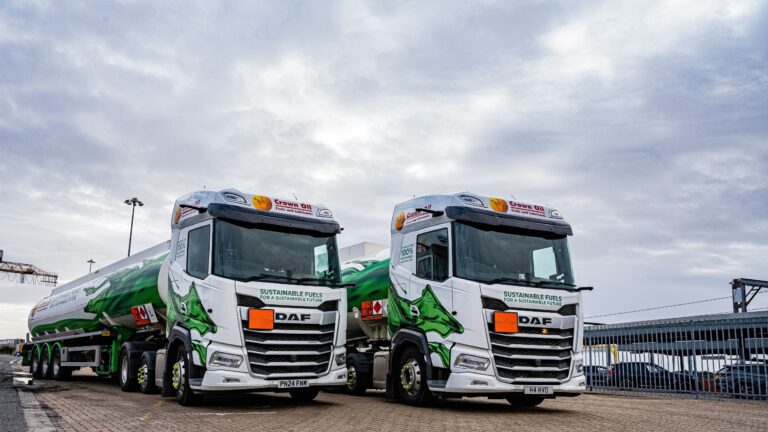
With the distributor becoming the first company in the UK to be certified carbon neutral under ISO 14068-1, with a verified pathway (BSI Net Zero) to reach net zero by 2050, we hear why, to Crown Oil, the transition is already proving a valuable opportunity.
1. The moment of realisation
What were the early signals that told you the traditional fuel distribution model would need to evolve?
For us, the signals appeared long before sustainability became a mainstream industry conversation. Our customers were asking deeper questions about fuel origin, emissions and futureproofing their operations, while regulatory direction and societal expectations were clearly tightening. It became obvious that the traditional “deliver and forget” fuel model would not stand the test of time.
Was there a specific moment, customer conversation or market shift that made the need for change unavoidable?
There wasn’t one single moment – it was a culmination of conversations. Customers began asking not just what fuel we were supplying, but how it was produced, where it came from and how it fitted into their own net zero plans. At that point, it became clear that we had a responsibility to lead, not follow.
How did you balance the commercial realities of today’s business with the need to plan for tomorrow?
We’ve always believed that sustainability and commercial success work together hand in hand. By embedding sustainability into our strategy early, we were able to make measured, commercially sound investments while continuing to deliver reliable fuel solutions. Planning for tomorrow has strengthened today’s business, not distracted from it.
2. The business case for transition
How did sustainability move from a ‘nice to have’ to a core business strategy?
Once we recognised that the energy transition was inevitable, sustainability became a strategic necessity rather than a marketing initiative. It now underpins how we operate, how we invest and how we support customers. It’s no longer an add-on, it’s fundamental to our long-term resilience.
What risks did you see in not acting early?
The biggest risk was irrelevance. Distributors who delay, risk losing customer trust, falling behind regulation and being unprepared for rapid change. Acting early allowed us to build credibility, capability and confidence ahead of the curve.
How have certifications like ISO 14068-1 and RFAS (Renewable Fuels Assurance Scheme) strengthened your credibility with customers and regulators?
Independent certification plays a vital role in building trust. Being the first UK fuel distributor to be certified carbon neutral under ISO 14068-1 proves that our environmental claims are robust, measurable and transparent. RFAS certification adds another layer of confidence by providing full traceability and assurance – something that our customers and regulators increasingly demand. Together, these frameworks remove ambiguity and replace it with genuine credibility.
What internal conversations were needed to align leadership and teams behind the transition?
The transition required openness, education, and honest dialogue. Through company-wide training and clear communications, we focused on explaining why the change matters, not only from an environmental perspective, but also commercially and culturally. Once teams understood the long-term opportunity, alignment followed naturally. The launch of our Sustainability Committee further strengthened collaboration between leadership and teams.
3. Customers at the centre
How have your customers’ expectations around fuel transparency and emissions changed?
Customers are far more informed and accountable than they once were. They expect verified data, transparent reporting and open, honest discussions about emissions. Many are facing increasing regulatory and stakeholder pressure themselves and are now looking to partner with suppliers that can help them make credible progress.
What reassurance do independent certifications give customers navigating their own net zero journeys?
They eliminate uncertainty. Independent certification allows customers to evidence due diligence, compliance and genuine progress without relying on unsubstantiated claims. That level of reassurance is invaluable during audits, tenders and stakeholder reporting.
Have these initiatives opened doors to new types of customers or partnerships?
Absolutely. We’re now working with organisations that may not previously have viewed a fuel distributor as a sustainability partner. Our approach has expanded conversations beyond supply into strategy. With sustainability now a core requirement in many tenders, proactive environmental initiatives are increasingly the difference between winning and losing new business.
How do you ensure sustainability improvements don’t compromise reliability or service quality?
Reliability remains non-negotiable. Every sustainability initiative we implement is rigorously tested against operational performance before implementation. Our customers depend on us and that trust is never compromised.
4. From ambition to action
What were the biggest operational challenges in achieving carbon neutrality and RFAS approval?
The most significant challenges were ensuring data accuracy, traceability, and strong governance, particularly given the complexity of measuring and reducing supply-chain (Scope 3) emissions. To address this, we partnered with an independent external agency to support our carbon reporting and ensure all claims were transparent, robust, and certified. Achieving this required detailed analysis across our operations, supply chains, and logistics, but the discipline it introduced has ultimately strengthened the business.
How did you bring your people along on the journey?
By actively involving our people at every stage. Through company-wide training and regular internal communications, we ensured everyone understood how their role contributes to the bigger picture. We also established a Sustainability Committee made up of senior leaders and colleagues from across the business, creating a space where ideas are shared, ownership is encouraged and progress towards our net zero goals is driven collectively.
What lessons did you learn that would help another distributor start today?
Start sooner than you think you need to. Build strong data foundations, seek independent verification and don’t wait for perfect conditions – progress matters far more than perfection.
What surprised you most once the transition was underway?
How positively it was received – internally and externally. The appetite for change was already there; it just needed clear leadership and direction.
5. Impact beyond the P&L
How do you see the distributor’s role evolving in the UK’s energy transition?
Distributors will become advisors, data providers and transition partners – not just suppliers. Our role is to help customers navigate the energy transition safely, efficiently and responsibly.
Why is independently verified fuel traceability important beyond transport?
Independently verified fuel traceability ensures transparency, accuracy and credibility across all sectors that rely on fuel, not just road transport. It allows businesses to confidently measure and reduce carbon emissions, comply with regulations and demonstrate sustainability commitments to stakeholders.
Beyond transport, it also strengthens supply chain accountability, mitigates reputational and regulatory risk, and supports broader energy transition goals.
What responsibility do established distributors have in shaping lower-carbon solutions?
Established distributors have a critical responsibility to lead the transition to lower-carbon solutions. This means not just supplying energy, but actively guiding customers, investing in sustainable technologies, and collaborating across supply chains to reduce emissions. By leveraging our expertise, data and market position, distributors can drive practical, scalable solutions that make the energy transition safe, credible and achievable.
How do initiatives like these contribute to wider trust in the fuel supply chain?
They bring transparency and consistency, which are essential for confidence across the entire sector.
6. Positive outcomes
What tangible benefits has Crown Oil seen since achieving these certifications?
We’ve seen enhanced credibility with customers and partners, stronger trust across our supply chains, increased engagement in tenders and greater confidence in our sustainability claims. Internally, the process has improved operational discipline, data accuracy and governance, while also fostering a culture of continuous improvement. Collectively, these benefits have strengthened both our business resilience and our market position.
How has this strengthened your brand, recruitment, or customer retention?
Achieving these certifications has reinforced Crown Oil’s reputation as a trusted, responsible partner, which resonates strongly with customers and helps retain their loyalty. It has also made the company more attractive to talent, drawing employees who value sustainability and purpose-driven work. Overall, it strengthens our brand credibility, supports long-term relationships and positions us as a leader in the energy transition.
Has it changed internal culture or employee pride?
Absolutely. The journey to certification has instilled a stronger sense of purpose and accountability across the business. Employees take pride in being part of a company that leads on sustainability, embraces transparency and makes a tangible impact – fostering engagement, collaboration and a culture of continuous improvement.
What does success now look like compared to five years ago?
Success today goes beyond financial performance – it encompasses verified sustainability, operational transparency and measurable progress in reducing emissions.
7. Looking ahead
What does leadership in fuel distribution mean in 2026 and beyond?
Leadership will be defined by more than scale or reliability – it will be about guiding the energy transition responsibly. This means delivering lower-carbon solutions, providing trusted data and insights, supporting customers through complex regulatory and sustainability challenges, and driving innovation across the supply chain. True leaders will combine operational excellence with measurable environmental impact and transparent, accountable practices.
What advice would you give distributors who feel the transition is too complex or risky?
Start early, focus on building accurate data and strong governance, and seek independent verification to build confidence. Taking disciplined, incremental steps matters far more than trying to get everything right at once. Engaging employees at all levels from the beginning is also crucial, as broad buy-in is a key driver of long-term success.
How can the industry collaborate to accelerate progress?
The industry can accelerate progress by sharing best practices, standardising data and reporting, and forming partnerships across the supply chain. By working together, the sector can drive innovation, build trust and make the energy transition both faster and more credible.
How will you evolve your business further to align with the government’s ‘electrification first’ strategy?
We recognise electrification will play a major role, but it won’t be universal or immediate. Our role is to support customers during this transition – providing lower-carbon fuels, verified data and flexible solutions where electrification isn’t yet viable.
If you could challenge one industry assumption, what would it be?
That sustainability and fuel distribution are incompatible. We’ve proven they can – and must – go hand in hand.
Image credit: Crown Oil