With the consultation closing on 10 February 2026, the industry stands at a pivotal moment – one that could shape rural heating choices for decades. And, once again, Mitchell & Webber is helping lead the charge.
A village that helped shape policy
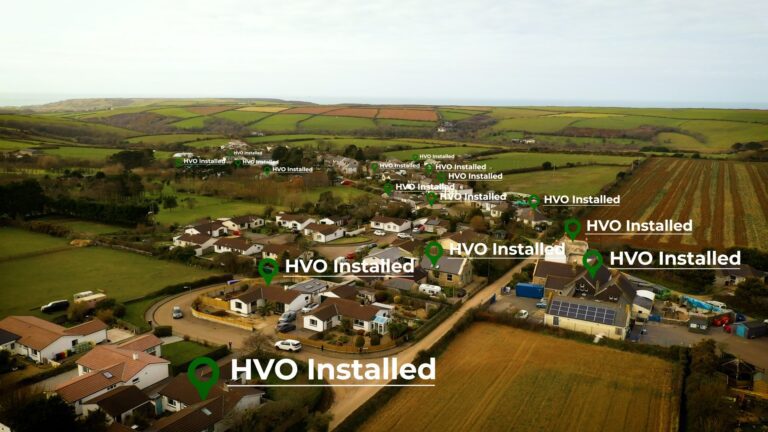
The Cornwall village of Kehelland has become a powerful example of a fair, customer-led transition. Its long-running, industry-driven HVO trials – made possible by the commitment of Mitchell & Webber and local residents – played a significant role in securing the 2023 amendment to the Energy Act. That amendment opened the door to a Renewable Liquid Heating Fuel Obligation (RLHFO), that would give low-carbon liquid fuels a viable route into the UK’s decarbonisation plans.
Now, the village that made a pivotal contribution to elevating debate on rural energy justice is stepping forward once more.
Presenting real-world evidence
Mitchell & Webber will present a comprehensive evidence document to DESNZ in Westminster in late January 2026. This follows the village’s earlier submission in 2023 and will again ensure that Kehelland’s lived experience is at the centre of government thinking.
Mitchell & Webber Directors, Robert and John Weedon confirmed to Fuel Oil News that the handover will be supported by MPs – including Perran Moon, who represents Kehelland – along with Ken Cronin ( UKIFDA) and Paul Rose ( OFTEC).
Fresh rounds of resident visits are already underway. “We aim to capture a range of data and experiences in order to submit a group response from Kehelland,” John explains.
The submission will highlight:
- Up to four years of reliable performance on 100% HVO
- No breakdowns reported across demonstration sites
- Older boilers running more smoothly and efficiently
- Over two years of successful 20% blends
- Strong, consistent feedback that residents “are adamant that they want to stay with HVO”
Together, this forms one of the most substantial real-world datasets available to policymakers on renewable liquid heating fuels in off-grid homes.
Why distributors must speak up now
John notes that Mitchell & Webber’s work reflects a broader truth:
“We distributors are the closest link to rural heating customers. If we don’t contribute, the consultation risks being shaped without the insight of those who understand both the technical realities and the human impacts of policy decisions.”
Distributors:
- Maintain deep, long-term customer relationships
- Understand the financial pressure on rural households
- See first-hand how emerging fuels perform in real homes
- Hold vital information on infrastructure, supply chains and operational readiness
This presents a unique responsibility – and opportunity – for distributors to ensure the transition to low-carbon heat is practical, affordable and fair.
Mitchell & Webber’s planned presentation is one strong example of meaningful engagement. But as Robert stresses: “The sector needs many voices, not just one.”
Make your customers’ voices heard
John describes the consultation as “the most important thing to happen with respect to the future of our industry since the Energy Bill change in 2023.”
When Mitchell & Webber stand in Westminster next January, they will not just be handing over data – they will be handing over the lived experiences of rural homeowners who want a low-carbon future but one that is sensible, affordable and technically viable.
As John says: “Every distributor serves communities just like Kehelland. Now is the moment to ensure those voices are heard. We must direct our customers to the Future Ready Fuel website as a matter of urgency!
The consultation closes on 10 February 2026.