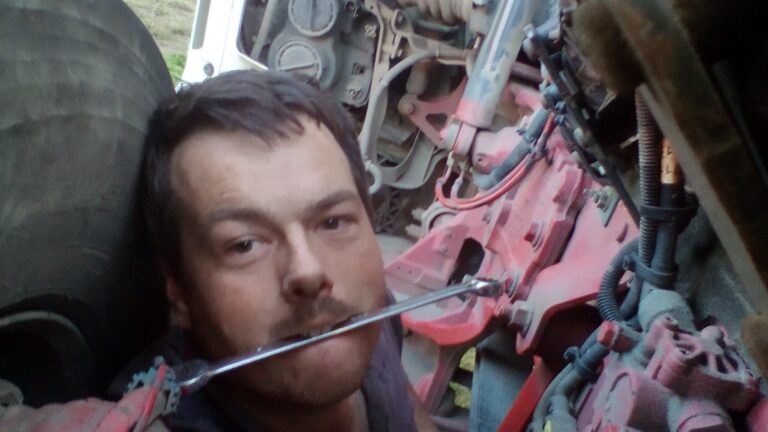
The weather was miserable, but customers were relying on him, and the repair simply couldn’t wait.
“I remember thinking: what on earth am I doing?” he says. “But you get on with it. People needed their oil.”
Moments like this capture what the past seven years have been for Jonathan – a mix of pressure, pride, and sheer determination. And they explain a great deal about the growth of JPS Fuels, the independent distributor business he founded in 2018 with a second-hand tanker, no business plan, and a determination to deliver the kind of service he believed customers deserved.
“It’s been a seven-year rollercoaster!” Jonathan Pinnock,
JPS Fuels
Margaret Major caught up with Jonathan to hear the full story of those seven rollercoaster years.
Family roots and early experience
Fuel runs deep in Jonathan’s family. He is proud to be a fifth-generation fuel merchant, with family ties to coal dating back to 1860. He grew up riding along with his father on deliveries, and fell in love with an industry that, as he puts it, he has worked “almost all my life in”.
Despite this heritage, he is the only one of his generation involved in fuel. His own journey began with oil tank fitting, before an accident – “I broke my foot collecting a tank” – saw him take a new direction as a driver. He worked first for Ford Fuel Oils, then Watsons, before a depot closure and his father’s terminal illness prompted him to rethink his future.
“I was 30, and having a bit of an early midlife crisis,” he says.
That’s when the yellow mini-tanker appeared.
An impulse purchase that changed everything
“I found this lovely mini-tanker up in Wales. They’re very rare, very sought-after. The truck fitter and myself went to see it on a Saturday morning. We stopped at services on the way home for an over-priced fried breakfast, and decided to buy it. Paid the deposit and handed in my notice on Monday morning.”
A month later on the 1st of August 2018, JPS Fuels officially began.
He rented a small office above a printing works in Tadley, Aldermaston, armed with industry knowledge, one tanker, and invaluable advice from Estuary Oils’ MD Andrew Mould, from whom Jonathan had bought his first tanker – support Jonathan still appreciates.
Following that advice, he focused first on building a customer base across rural West Berkshire and North Hampshire, before working on the company brand. Domestic heating oil remains the core of the business, along with some commercial customers and farmers who represent around 20% of the total business which he says is “very good for the summer when heating oil demand falls off”.
“I don’t aim to be ridiculously cheap,” he says. “I aim for great service at a fair price.”
Building the business
The distinctive bright yellow tanker quickly became a recognisable sight, and after a busy winter in 2019. Jonathan knew he needed to grow. He purchased a second yellow tanker in August 2020, again from Estuary Oils.
At that point, JPS consisted of two drivers – including Jonathan – and one member of office staff, with Jonathan managing all the route planning and paperwork.
Today the business runs three tankers from a dry depot, lifting predominantly from Theale Terminal.
JPS also works with BoilerJuice, describing it as: “A ready-made customer base”.
With no contracted supply, JPS Fuels relies on spot sales. “It does lead to occasional issues,” Jonathan acknowledges. “If there’s an issue with where we normally pick up, we have to work hard to fill the gap.
“We were very lucky with Puma – they were a very good supplier.”
If supply does become an issue, being able to turn off availability on BoilerJuice to ensure he can fulfil the demand from his loyal customers is a flexibility Jonathan welcomes. “You can set the time window and the price, and orders come in until you turn it off.”
Winter pressures and industry realities
Jonathan describes the winter surge in kerosene demand as driving “a dash for the cash” – a compressed period of intense pressure.
“You’re firefighting problems all winter, just keeping the lorries going.”
His hydraulic-pipe-in-the-puddle story is just one example. Larger distributors may rely on fleet management contracts, but independents don’t have the luxury of delays, he suggests.
“You can be waiting days for authorisation to fix a blown bulb. As an independent, you can just get stuff done.”
No two winters are ever the same and some have tested even Jonathan’s stamina.
“The winter before last almost broke us – margins were not worth getting out of bed for. Last winter was ideal, though: long cold spell but no big snap.”
Extreme conditions bring their own pressures, and Jonathan vividly remembers the winter storms of 2018: “The ‘Beast from the East’ was a nightmare. I ended up making emergency deliveries in awful conditions where the only real difference between heroism and stupidity is success or failure.”
Price shocks and customer impact
The Ukraine war brought one of the toughest moments Jonathan has seen.
“It put the price up by about 30p per litre overnight. People were crying down the phone because they couldn’t afford fuel.”
Customers subsequently shifted to 500-litre orders instead of filling tanks.
A practical, no-frills operation
“We’re a no-frills oil supplier,” he says. “We aim for five working days from order to delivery. If you order Monday, you get delivery by Saturday, at the latest.”
His approach to fleet management mirrors this pragmatism. Two years ago, Morrow Tanker Services remounted the barrel from a 2½-year-old six-wheeler he’d bought, onto a new chassis.
“I got myself a new mini-tanker with a £40,000 saving. Second-hand just makes sense.”
Cost control is vital because, in Jonathan’s view, “the market is in decline.”
Part of the decline, he believes, comes from fuel conversions, reducing domestic oil use over time, and while future fuels hold promise, he remains cautious about low carbon fuels. “The home heating market is a tiny part of daily kerosene use – most of it goes into aviation.
“The HMRC rebate changes mean HVO for commercial heating isn’t viable without major cost.”
The driver dilemma
At 37, Jonathan considers himself “a whippersnapper,” but his workforce tells a different story.
“One driver is already 60 and the other is getting close. I’ll need two new drivers soon and I don’t know where they’ll come from.”
“The job’s changed. It used to be the best of the best. To get the right drivers now, you either need to pay very well or be a very good employer.”
Local knowledge and communication skills are essential. “You’re customer-facing, representing the company. You need the right work ethic.”
He believes that there is a strong advantage to being a small business though: “Here you are a name, not a number.”
Technology and vulnerability
Jonathan values the tools he uses to make running a distributor business easier, naming Fuelsoft and Dreamtec among his valued system providers, particularly as someone with dyslexia, who needs processes to be as straightforward as possible.
But technology brings its own risks as Jonathan notes: “A cyber-attack would make it very hard to carry out business.” He also appreciates another key industry provider – highlighting the “excellent updates and representation” provided by industry body UKIFDA.
Looking ahead
Seven years after buying that yellow mini-tanker, Jonathan has built a recognisable brand, a loyal customer base and a business rooted firmly in service and reliability.
Looking ahead, he remains realistic about the challenges facing independent distributors – from tightening margins to an ageing workforce and the uncertainty around future fuels. But the drive that saw him buy a tanker on impulse in 2018 still powers JPS Fuels today. His focus is unwavering: delivering a dependable, personal service to the rural communities that rely on him.
“It’s been a rollercoaster,” he says. “But I wouldn’t change it.”
And with that resilience, it’s clear that JPS Fuels is well-placed to navigate whatever comes next.
Image credit: JPS Fuels