Meanwhile, a decision on the significant Rosebank oil development remains outstanding.
On 21 October, the government confirmed that production could proceed at the Jackdaw field in the North Sea, with gas expected to begin flowing as early as the end of the month. The government estimates that Jackdaw could increase domestic gas production by around 6% at its peak, supporting energy security and protecting hundreds of jobs.
Both Jackdaw and Rosebank were previously approved under the Conservative government, but their original consents were subsequently ruled unlawful following legal challenges over the failure to consider emissions from the eventual use of the oil and gas produced.
Following revised environmental assessments, Jackdaw has now secured approval, while Rosebank, one of the UK’s largest undeveloped oil fields, remains subject to a separate decision.
Industry welcomes approval but calls for Rosebank clarity
Charandeep Singh BEM, Chief Executive of Scottish Chambers of Commerce, welcomed the announcement, highlighting the importance of the North Sea industry to the wider UK supply chain.
“This isn’t just an Aberdeen story. The supply chain behind Jackdaw stretches the length and breadth of Scotland and the UK and today’s decision will be felt in workshops, yards and engineering firms right across the country.”
However, he stressed that the decision should not mark the end of progress on North Sea developments.
“But one approval is not the finish line and we now need to see Rosebank given that same approval to allow businesses across Scotland to plan with confidence rather than continued uncertainty.”
INEOS also welcomed Jackdaw’s approval but criticised the government’s approach to North Sea taxation.
An INEOS spokesperson said: “Approving Jackdaw is the right decision, but this does not stop the damage being done to the North Sea. And it appears Rosebank remains stuck in political limbo.”
The company called for changes to the Energy Profits Levy in the forthcoming Budget, arguing that the current 78% headline tax rate is deterring investment and contributing to declining domestic production.
Climate groups question government’s direction
Environmental organisations have expressed concern that approving further fossil fuel production sends the wrong signal about the UK’s commitment to decarbonisation.
Kate Norgrove, Chief Impact Officer at WWF, described the approval as disappointing and called on the government to demonstrate its commitment to the clean energy transition by rejecting Rosebank.
Tessa Khan, Executive Director of climate campaign group Uplift, warned that the government’s climate credibility was now at stake, describing Rosebank as the defining test.
Sonya Bedford MBE, partner at law firm Spencer West LLP, also questioned the benefits of the decision for consumers, arguing that domestic production does not shield households from international gas prices.
“Jackdaw should not be presented as a solution to high energy bills. We should be reducing our exposure to fossil fuels through renewables, storage, stronger electricity networks, warmer homes, and electrification.”
Rosebank decision still awaited
With the Jackdaw decision now made, attention turns to Rosebank, one of the UK’s largest undeveloped oil fields.
Bedford cautioned against assuming that approval of Jackdaw should lead to a similar outcome for Rosebank: “Jackdaw’s approval increases the political pressure to approve Rosebank, but it should not become an automatic green light.”
She called for Rosebank to undergo its own assessment of the climate implications and claimed benefits, alongside greater urgency in removing barriers to renewable and community energy development.Environmental organisations have expressed concern that approving further oil and gas production sends the wrong signal about the UK’s commitment to decarbonisation.
Kate Norgrove, Chief Impact Officer at WWF, described the approval as a disappointing decision and called on the government to demonstrate its commitment to the clean energy transition by rejecting Rosebank.
Tessa Khan, Executive Director of climate campaign group Uplift, warned that the government’s climate credibility was now at stake, describing Rosebank as the defining test.
Campaigners argue that further fossil fuel developments risk increasing emissions and prolonging dependence on oil and gas, while doing little to reduce energy bills. They have called for greater emphasis on renewable energy, energy efficiency and measures to reduce fossil fuel demand.
Labour’s commitment is to issue no new oil and gas exploration licences, whereas Jackdaw and Rosebank are developments under existing licences.
Rosebank decision still awaited
The contrasting responses highlight the competing pressures facing the government as it seeks to balance energy security, industrial investment and employment with its climate commitments.
For the North Sea industry, Rosebank represents a significant investment and future production opportunity. For environmental campaigners, its approval would raise further questions about the compatibility of new oil and gas developments with the UK’s decarbonisation ambitions.
Media reports have suggested that the government may be considering refusing consent for Rosebank, although no final decision has been announced.
While Jackdaw’s approval has resolved one major uncertainty, the future of Rosebank remains undecided, with its outcome likely to have wider implications for confidence in UK North Sea investment and the direction of national energy policy.
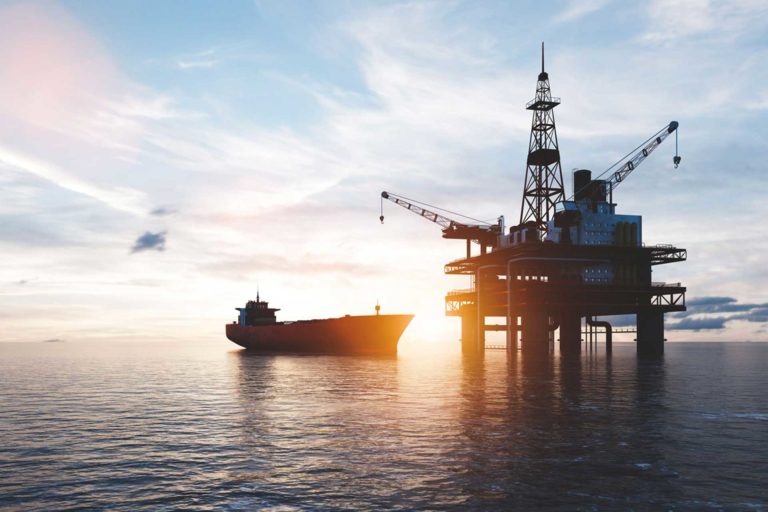
Image from stock