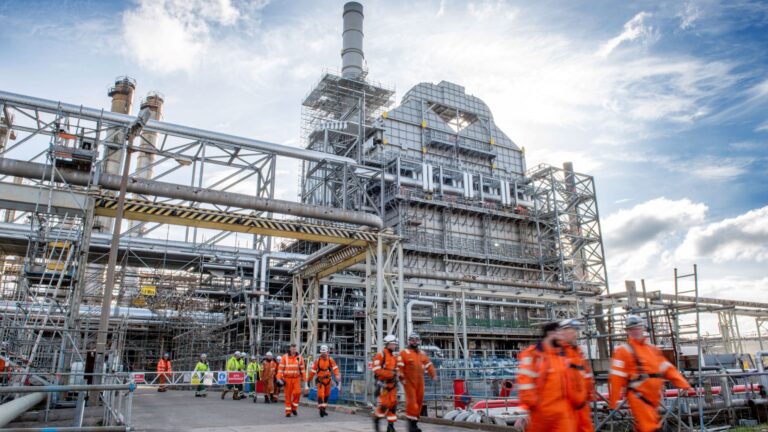
The report, prepared by FGE NexantECA, states that Stanlow currently supplies around 18% of UK road transport fuels and 12.5% of domestic aviation fuel demand, while supporting nearly 5,000 direct, indirect and induced jobs across the UK economy.
EET said the report also highlights the scale of its planned energy transition programme, with a £4.3 billion investment pipeline spanning hydrogen production, carbon capture, hydrogen-ready power generation and sustainable aviation fuel projects. According to the analysis, those projects could contribute £1.9 billion in annual Gross Value Added (GVA) to the UK economy and support nearly 10,000 jobs by 2035.
With Stanlow one of only four remaining operational UK refineries, the report argues that domestic refining capacity remains strategically important to national energy resilience.
Economic importance
EET said it collected £4.2 billion in VAT and fuel duty in FY2025 alone – equivalent to around 13% of all UK fuel duty receipts – underlining the refinery’s ongoing fiscal significance.
Deepak Maheshwari, CEO of EET Fuels, said the report demonstrates that the business is already “a vital national economic engine” while also highlighting the future opportunity created through decarbonisation investment.
Transition enablement
Among the projects highlighted are EET Hydrogen’s HPP1 and HPP2 developments, which together are expected to deliver 1.35GW of hydrogen production capacity, alongside planned carbon capture infrastructure and a proposed Methanol-to-Jet sustainable aviation fuel facility.
The report states that EET’s combined future projects could abate or avoid up to 4.1 million tonnes of CO2 annually.
EET also used the report launch to renew calls for refined products to be included within the UK Carbon Border Adjustment Mechanism (CBAM), arguing that UK refiners face a competitive disadvantage compared with higher-carbon imported fuels.
The report comes amid continued debate around the future role of UK refining capacity as policymakers seek to balance energy security, industrial competitiveness and long-term decarbonisation objectives.
Image from Essar