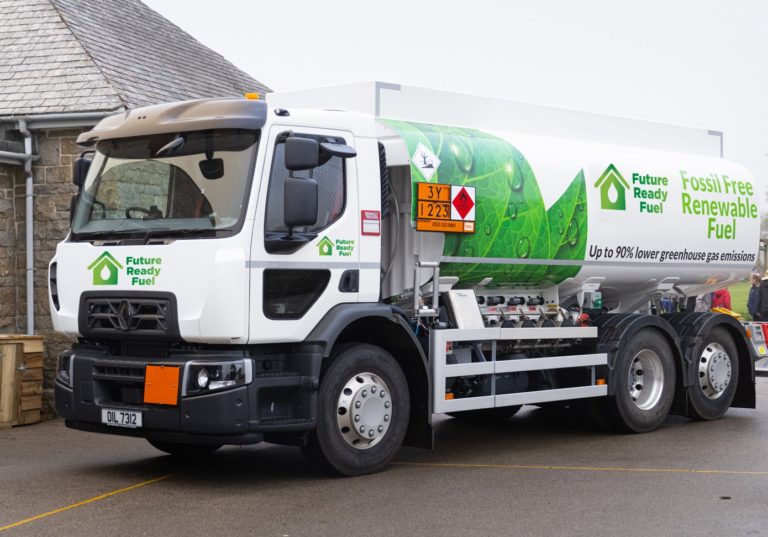
That growing presence signals progress. But it also changes market expectations.
Customers are no longer simply asking whether HVO can help reduce carbon intensity. Increasingly, they are asking whether it can deliver the same consistency, reliability and operational confidence as the diesel it is replacing. For suppliers and distributors, that shift marks an important next stage.
Looking beyond early adopters, we consider what comes next for HVO as it moves from niche alternative to mainstream fuel. We also speak with Tammy Coates, Fuel Additives Business Manager at SBZ Corporation, about the role premium additives may play in that wider uptake.
Why performance matters as markets mature
HVO has gained traction as a practical route to lower emissions with minimal disruption. Yet, like any fuel, it has characteristics that differ from conventional diesel.
Its paraffinic structure supports cleaner combustion, but certain factors may require closer attention depending on the application.
As more mainstream users adopt HVO, expectations naturally rise. Operators want assurance that vehicles, generators and plant will start reliably in winter, perform consistently under load and remain protected over time. They also want confidence in storage stability where fuel may be held for longer periods.
In short, HVO is increasingly being judged as a working fuel, not just a sustainability solution – a clear sign of a market maturing.
The role of treatment and specification
This is where additive chemistry and product specification enter the discussion.
Fuel treatments are designed to support performance in areas such as:
- lubricity protection for pumps and injectors
- injector cleanliness and combustion efficiency
- cold flow performance in lower temperatures
- oxidation resistance during storage
- consistency across varying supply conditions
For some, standard compliant HVO will be entirely appropriate. For others – operating in harsher environments, storing fuel longer-term, or relying on uptime-critical equipment – treated grades may provide additional reassurance.
That simply reflects the reality that different applications place different demands on any fuel product. Appropriate measures can stabilise, protect hardware, and improve operational consistency.
What this means for distributors
This presents a commercial opportunity.
]As HVO moves mainstream, differentiation may become less about simply offering renewable fuel and more about how well that fuel is supported. Product knowledge, storage advice, technical guidance and transparent discussions around performance become increasingly valuable.
That is particularly relevant for distributors whose competitive strength lies in customer relationships and service rather than scale.
Helping customers understand which grade is right for their operation – and whether enhancement offers real value – may become an important part of the conversation.
As Tammy notes: “Premiumisation is sometimes misunderstood as simply a commercial label. In reality, it is a technical response to a more complex fuel landscape.
“Premiumisation starts with consistency. Renewable and transitional fuels behave differently, and operators need reliability. The right chemistry stabilises fuels and protects the equipment that depends on them.”
Of course, for many customers price will remain the first consideration – any premium proposition must demonstrate clear operational value.
Conventional additives still have a role
Tammy also highlights that, even in lower carbon fuels, certain fossil-derived additive chemistries remain essential: “Lubricity improvers, detergents, cold flow enhancers, and stabilisers are often formulated using proven hydrocarbon chemistry because they deliver enhanced performance.”
A result she says is not contradiction but synergy: renewable base fuels enhanced with carefully selected additive technology that enables them to meet, or exceed, traditional diesel performance expectations.
Not every customer needs premium
Cost will, of course, remain a deciding factor.
Some users will prioritise carbon reduction and require a straightforward compliant product at the best price. Others may place greater value on reliability, storage confidence or reduced maintenance risk.
The likely outcome is a more segmented market, serving different customer priorities. That is typical of a fuel moving from early adoption into maturity.
Looking ahead
The early growth of HVO was driven by sustainability goals and early adopters. Its next phase may be shaped by aspects familiar to distributors: value, performance and trust.
Markets tend to ask different questions as products mature. The first phase is often about awareness. The second – adoption. The third – optimisation.
HVO appears to be entering that third phase.
The debate is no longer simply whether renewable liquid fuels can play a role. Across many sectors, they already are. The next question is how to supply them reliably, competitively and with required operational standards.
The right additive strategies can offer that practical bridge between new fuel chemistry and familiar operational confidence.
As renewable fuels become more widely available, they will increasingly be judged not only on emissions savings, but on how they behave in day-to-day operations.
For the industry, that is an encouraging sign. It suggests HVO is moving beyond early adopter status and becoming a mainstream fuel judged by the same standards as any established product.
That will be, for distributors, where the next opportunities – and expectations – begin.
Image credit: UKIFDA/OFTEC