In the third in our series of customer conversations, Claudia Weeks, Community Content Lead for Fuel Oil News, spoke with commercial agricultural fuel users from across the UK to understand what they really think of their fuel suppliers, what works well, what improvements are needed, and how they view the industry’s role in supporting farming through the transition to a greener future.
The customers
- David and Charlotte Platt – run a long-established family farm in Cheshire. Their 300-acre operation spans several parcels and combines traditional farming with diversified rural enterprises.
- Olly Harrison – runs a cereal farm, based near Liverpool in Merseyside, farming around 1500 acres of arable crops and combinable crops.
Claudia asked David and Olly to describe their farming operations, and to explain what role liquid fuels play in keeping the business running day to day as well as how important energy reliability is to them.
David responded: “We’re a family-run agricultural business based in Cheshire, with over 100 years of farming heritage in the local area.
“The farm has evolved over time from a traditional livestock and arable operation into a more diversified rural enterprise. Alongside core agricultural activities such as grassland management, arable production, and livestock, we also operate associated land-based businesses including leisure accommodation and wellness facilities that sit within the farm environment.”
Energy reliability is critical
David continued: “In total, we manage over 300 acres across multiple parcels, with a central yard that houses machinery, storage, and operational infrastructure.
“Energy reliability is critical. Farming is time-sensitive, whether that’s harvesting windows, livestock care, or land management and downtime simply isn’t an option.
“Liquid fuels remain the backbone of our operation because they’re dependable, energy-dense, and compatible with the machinery we rely on. Tractors, telehandlers, generators, and heating systems all depend on fuel being available when needed.”
“Energy reliability is vital,” agreed Olly. “Every wheeled vehicle is running on liquid fuel, so it is incredibly important that they are all kept topped up.”
Choosing a supplier
We were keen to establish what the main factors are for those in the agricultural sector when choosing a fuel supplier. (Cost, customer service, environmental factors, size of company, location, etc.)
“The level and efficiency of service and the quality of fuel and price,” replied Olly. “It is important that the range of products fits with the machinery that I use and are compatible. When ordering fuel for the business I like to talk to somebody, so I like the fact that I can pick up the phone to my local representative and get that personal interaction.
“Also, having the right fuel and lubrications for servicing and maintenance of the vehicles is important.
“Being able to order both things from Certas with one order has worked out to be very efficient for me and is an important factor when choosing a supplier for my business.”
David had similar views: “Reliability and service come first. Cost obviously matters, but consistency of delivery, communication, and trust in the supplier are more important long term.
“When you’re running a farm, you need confidence that fuel will arrive when promised, particularly during peak seasonal demand.
“Ordering fuel is generally straightforward, but like many commodities it can be frustrating when prices move quickly. Having a supplier that communicates clearly about timing and pricing helps reduce uncertainty.”
Volatility and long-term planning
We asked both David and Olly how fuel price volatility and long-term energy planning impact business confidence and investment decisions?
Olly replied: “We have been through some incredibly wild rides in the last few years in fuel price rises and drops. It is the new normal to learn to manage that. Bigger storage tanks help take out the peaks and troughs in the market.”
“Volatility definitely affects confidence,” reflected David. “Energy is a major input cost, and unpredictability makes it harder to forecast margins or justify capital investment. It reinforces the importance of efficiency and exploring ways to diversify energy sources where viable.”
Business challenges
When asked about the biggest challenges facing their businesses, the responses were immediate and telling.
Olly didn’t hesitate: “Two things that are out of our control – politics and weather!”
David pointed to a broader range of pressures: “Cost inflation across inputs, planning and regulatory complexity, labour availability and market uncertainty are probably the biggest challenges.
“Like many farms, we’re balancing traditional agricultural economics with diversification opportunities.”
Sustainability must align with economic sustainability
Claudia asked whether they were experiencing pressure from customers, processors, retailers, or supply chains to reduce carbon emissions, and was that influencing decision-making on their farms?
“We are experiencing pressure from all of the above,” replied Olly. “We are trialling HVO fuel from Certas in some of the vehicles because of this.
“I can only see the pressure increasing, and it is something that we must be aware of. An example of pressure from processors is that we are now receiving premiums for some of our wheat if we can produce it with a lower carbon footprint.”
David added: “Yes, there’s increasing expectation from supply chains and society more broadly. It’s influencing decisions, but the reality is that viable solutions need to be commercially practical. Sustainability must align with economic sustainability.”
“We’ve taken steps to reduce the carbon footprint of our fuel and energy use. We’ve focused on efficiency first, modern machinery, improved logistics, and reducing unnecessary fuel use.
“We’ve also looking to invest in renewable electricity generation where feasible, such as solar installations across the agricultural buildings that have been converted into commercial lettings.”
Alternative fuels
We asked David and Olly whether they had explored alternatives such as HVO or other biofuels, and what factors determined their viability – from cost and availability to infrastructure requirements and equipment compatibility.
Olly explained: “We have explored HVO. All we needed was an additional tank and confirmation from the manufacturers on compatibility. The cost difference is negligible relative to our output, so it doesn’t really influence my operational decisions.
David also sees potential, but with caveats: “We’ve looked at HVO and it’s promising from a technical perspective because it can often be used as a drop-in fuel. The main barriers now are cost and availability at scale. For many farms, the price premium remains the limiting factor.”
How realistic is electrification?
We asked David and Olly how viable they believe electrification is for agricultural machinery in the short to medium term and whether there are specific activities where low carbon fuels or electric power simply aren’t practical.
David sees significant limitations for now. “In the short term, electrification is limited. Smaller equipment may transition sooner, but heavy agricultural machinery requires high energy density and long operating hours that batteries currently struggle to provide economically.”
He added that certain tasks present challenges: “Heavy fieldwork, harvesting and other high-load operations require sustained power output over long periods, often in remote locations. Those are the main examples where electrification or some low carbon alternatives are not yet practical.
“Solar would be a practical option for us due to its lower complexity and planning risk. Larger projects like anaerobic digestion require significant capital and feedstock certainty, which doesn’t suit every farm model.”
Olly was more direct in his assessment. “Pie in the sky,” he said. “The energy needed to power tractors would be too high for batteries to be viable, making it near impossible at the moment.”
However, while sceptical about electrification, he noted progress elsewhere. “Electrification doesn’t seem practical, but the HVO I’ve received seems to be working for running the tractors on the farm. Also, we do use solar to power the grain cooling fans, and we use biomass to power the heat sources in our grain driers.”
Financing the transition and the role of suppliers
We also asked David and Olly about the financial realities of decarbonisation, the role fuel suppliers can play in supporting sustainability goals, and whether agriculture is being given realistic pathways to net zero.
For David, the primary concern is the economics. “The main pressure is capital cost versus uncertain return,” he explained. “Transitioning equipment or infrastructure is expensive, and support mechanisms don’t always bridge the gap sufficiently to justify investment.”
He believes fuel suppliers have an important part to play in easing that journey. “Suppliers can play a key role through education, offering lower-carbon fuel options, transparent information and flexible delivery. Trusted relationships matter here.”
When it comes to the wider policy landscape, David is cautious. “Not always,” he said, when asked whether agriculture is being given realistic decarbonisation pathways. “Targets sometimes move faster than technology or economics allow. Farming operates on tight margins, so transitions need to be practical and phased.”
Olly’s perspective is slightly different. While he acknowledges that some renewable energy solutions such as wind and solar can be costly, he feels the pressure is less acute when it comes to fuel choice. “HVO is only a small margin more than regular fuels, so I don’t feel too much pressure.”
He also highlighted the growing support from suppliers. “They’ve become increasingly helpful and tend to offer useful advice regularly. The telemetry systems provided by Certas also mean there’s an extra safeguard in place to stop us running out.”
On the pace of change, Olly feels attitudes have shifted. “Two years ago, I would have said expectations were moving faster than practical solutions. However, things have become a bit more realistic recently, and the push towards net zero feels more measured.”
Efficiency is the common ground
Claudia asked how they balance environmental responsibility with productivity and food security?
Olly responded: “Easily, by looking into available technology and new systems.
“Reducing carbon through renewable fuels means that we can keep our production levels high through use of man-made fertilisers which often do have a higher carbon footprint.
“If we reduced our use of fertilisers then our output of food would be down, so reducing the carbon on the fuel instead is much more productive for the farm.”
David added: “Efficiency is the common ground. Producing more with fewer inputs benefits both the environment and business viability. Stewardship and productivity shouldn’t be seen as opposing forces.”
A natural evolution
We asked David and Olly to look to the future, in 5-10 years, how did they expect their farm’s energy mix to change?
David gave a detailed and thoughtful response: “Looking ahead, I think farms have the potential to play a much bigger role in local energy systems. We’re located within a village setting, which creates an interesting opportunity – farms like ours could effectively become small local energy producers, supplying nearby homes and businesses alongside our own operations.
“Agriculture already has many of the ingredients needed for decentralised energy generation: land for solar or wind, buildings suitable for rooftop installations, organic material that could support bioenergy, and an existing need for power on site.
“With the right infrastructure and policy support, farms could act as local energy hubs, improving resilience and reducing transmission losses compared to large, centralised generation.
“For us, the most realistic pathway in the near term is likely a combination of on-site renewable electricity generation, energy storage, and continued use of liquid fuels for heavy machinery. Over time, there may also be opportunities to supply surplus power locally if grid connections and regulations allow.
“Farms have always been producers, historically food, now potentially energy as well and that transition feels like a natural evolution rather than a radical change.
“I would like policymakers and industry to understand that farmers operate in the real world of margins, weather, and biology. Transitions need to be economically realistic, technologically proven, and supported by stable policy frameworks.”
Olly added: “In the future, I can see us continuing to use HVO for the whole fleet. It’s a fantastic alternative. I would like policy makers and the industry to be more realistic about the profitability of the agricultural sector.
“If there is a drive to use technology and to use less carbon, it is more expensive for the consumer. There needs to be incentives for that – otherwise it is simply unaffordable for us all.”
Thank you to the industry
In discussions with David and Olly, it was clear that they value the support and professionalism of those in the industry, and that positive supplier relationships make a tangible difference on the ground.
- David: “Reliable delivery drivers and customer service teams are often unsung, but are essential to keeping farms running, particularly during busy periods. Good relationships with suppliers make a genuine difference so thank you.”
- Olly: “I’ve had lots of positive experiences with the industry. Even this week, I ran out of fuel unexpectedly on one of the farms. I called my Certas representative at 4.40pm, who picked up the phone, spoke to the transport team, sorted out the routing and arranged for a driver to deliver it to me on Saturday morning (the next day). That is exceptional customer service!”
Understanding the unique demands and requirements of the UK agricultural sector, will be core to the downstream industry as it moves forward through the energy transition.
Fuel Oil News will continue to engage with industry customers. If you have a customer that you would like us to speak with so they can share their thoughts and ideas on the industry, please do let us know:
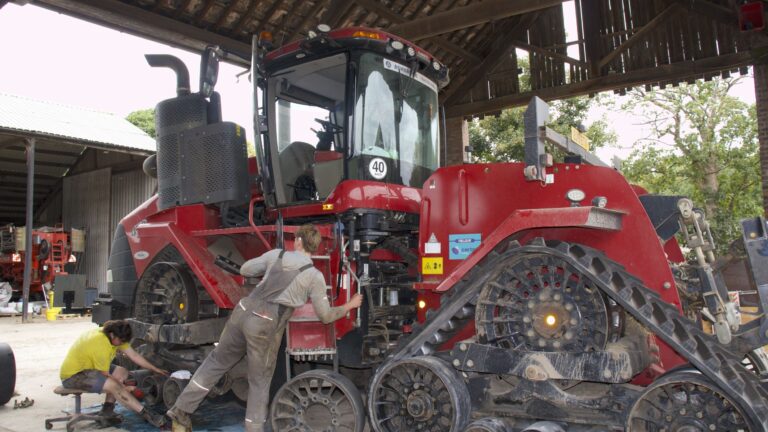
Image credit: Olly Harrison