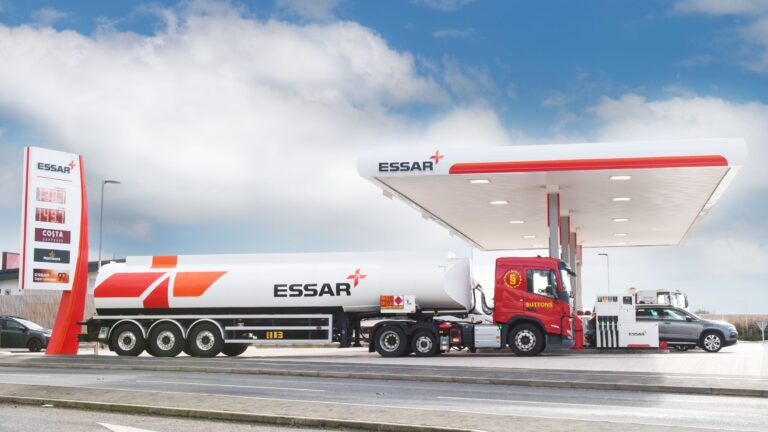
In the following piece, Arvan Ruia, CEO of EET Retail, examines how infrastructure readiness, strategic investment and partnership-led supply models are shaping the industry’s response to tightening domestic capacity and rising demand pressures.
The recent closure of Prax’s Lindsey Oil Refinery has reignited critical conversations about the resilience of the UK’s fuel supply chain. Any reduction in domestic refining capacity naturally raises concerns and underscores the importance of robust infrastructure and agile response strategies within our sector.
Fuel availability is not just a convenience – it is a lifeline for economic activity and daily life. When a major refinery closes, the ripple effects can be significant: transport networks, retail forecourts, and essential services all depend on uninterrupted supply. This reality makes infrastructure readiness more than a technical requirement; it is a strategic imperative for the entire energy ecosystem.
At Essar Energy Transition (EET) Fuels, the impact of Lindsey’s closure was immediate. As news broke, urgent supply requests poured in from public transport operators, commercial fleets, hypermarkets, and independent retailers – all seeking reassurance that their supply chains would remain secure. The ability to respond quickly and decisively was not a matter of chance. It was the result of deliberate planning and investment.
Building resilience through investment
Earlier this year, EET Fuels completed a $130 million investment in Stanlow Refinery. This was not simply about increasing output; it was about embedding flexibility and resilience into operations. The investment enabled logistics capacity to scale up, expanded the fleet by 30%, and streamlined terminal loading processes to handle higher throughput efficiently.
Our national terminal network – including Kingsbury, Oikos, Grangemouth, and Northampton – provided coverage across the UK, ensuring that even remote regions could be served without disruption. This infrastructure backbone allowed the business to absorb sudden demand spikes and maintain continuity for customers when uncertainty was at its peak.
Resilience beyond infrastructure
Physical assets alone do not guarantee resilience. Relationships and commercial agility play an equally critical role. During this period, flexible commercial terms were introduced to support customers under financial pressure – competitive pricing, extended credit lines, and tailored supply agreements that provided stability when it mattered most. These measures eased uncertainty and gave partners the breathing room they needed to stay steady in challenging conditions.
The recent agreement with Harvest Energy (Dealerships) Limited further demonstrates this commitment. Through EET Retail, fuel delivery responsibilities have been taken on for around 47 dealer-owned, dealer-operated forecourts across the UK. This strategic move strengthens Harvest network, ensuring uninterrupted supply and leasing opportunities at a time of heightened uncertainty.
As one of only four UK refineries manufacturing and delivering fuel to forecourts, EET offers strategically located supply hubs – Stanlow and terminals in Kingsbury, Northampton, Essex, and Grangemouth. This agreement marks a significant step in EET Retail’s long-term, partnership-led strategy to expand its national footprint and become the UK’s retailer of choice.
What made the difference
- Increased output and capacity at Stanlow to meet rising demand
- Expanded fleet operations and improved terminal loading efficiency
- Flexible supply agreements and competitive pricing
- Support for essential services, including public transport and major retailers
- Nationwide terminal coverage to ensure uninterrupted supply
- Extended credit lines to help customers manage working capital pressures
These proactive steps reinforced confidence in the sector’s ability to adapt under pressure.
Looking ahead
The Lindsey closure has prompted a wider reassessment of supply chain strategies. Businesses are seeking to diversify sourcing, reduce exposure to single points of failure, and build stronger partnerships with suppliers who offer reliability and adaptability.
This is part of a broader evolution in UK refining. While the number of operational refineries has declined, the industry has responded with strategic investments in import terminals, expanded storage capacity, and new technologies. For EET Fuels, this is a moment to double down – not just to meet today’s needs, but to future-proof operations.
The closure of Lindsey may mark a turning point, and it highlights the strength and determination of the UK’s fuel sector – backed by industrial-scale infrastructure, strong partnerships, and a forward-looking mindset.
At EET Retail, the commitment is clear: to deliver resilience, reliability, and innovation. In times of uncertainty, confidence is everything – and that confidence will come from knowing the supply chain is secure, the infrastructure is ready, and the partnerships are strong.