Following on from his ‘A Day in the Life’ feature, Fuel Oil News caught up with Ian to learn more about his role at Rix Petroleum, what the award means to him, and how he views the downstream industry.
How did your journey in the sector begin, and what has kept you passionate about the role?
My journey into fuel transportation began in 1995, when, as a 20-year-old Private Soldier in the Royal Logistic Corps (RLC), I undertook Truck Tanker Fuel (TTF) training alongside my ADR qualification — something I’ve maintained ever since. After learning the ropes on an old Foden 6×4 tanker, I was quickly deployed to Bosnia on the first of three peacekeeping tours.
Those early experiences taught me the importance of responsibility, resilience and staying calm under pressure. Delivering fuel in difficult, and sometimes dangerous, conditions gave me a real respect for the role and the vital part fuel distribution plays in keeping operations moving.
Fast forward to today, and that passion has never left me. I still enjoy the variety the job brings, from travelling across the country and meeting customers to facing new challenges every day. For me, it’s always been about more than simply delivering fuel — it’s about building relationships and providing a reliable service people can trust.
I’m also passionate about helping others develop within the industry. As a trainer and assessor, I enjoy coaching and mentoring drivers to help them grow in confidence, develop their skills and become the best version of themselves.
Tanker drivers play a vital role in keeping customers supplied. Do you think people outside the industry understand the job?
Tanker drivers are the industry’s unsung heroes. Most people simply expect fuel to arrive safely and on time without fully appreciating the skill, training and responsibility involved in making that happen.
There’s a common misconception that the job is straightforward — that we simply connect a hose and deliver fuel. In reality, tanker driving is a highly specialised job requiring extensive training, ADR qualifications, strict safety procedures and a deep understanding of both the product and the delivery process. Every delivery must be carried out carefully and professionally, often in challenging environments and conditions.
This is why experienced tanker drivers are such an important part of the industry.
What changes have you seen in customer expectations?
Customer expectations haven’t really changed over the years, and good liaison with the sales reps and the desk teams is vital.
Occasionally there are issues which can delay a delivery, but this rarely occurs. Most of our customers are pleased that I’ve arrived on time or a day ahead of schedule.
With recent global tensions affecting fuel prices and supply, have you noticed increased customer frustration, and how do tanker drivers help maintain trust during challenging periods?
The world feels like a very uncertain place at times, and customers are understandably more aware of how global events can affect fuel prices and supply. During periods of instability, people naturally have questions and concerns, particularly around availability and rising costs.
As tanker drivers, we may not be directly involved in pricing or supply decisions, but we still play an important role in maintaining customer confidence and trust. Often, we’re the face of the company and the only person the customer sees, so providing reassurance, professionalism and good communication is essential.
If customers have detailed questions, I’ll always make sure they’re put in touch with the right people within the business who can help. But for me, it starts with delivering a reliable service and taking pride in good customer care. Building trust with customers is a huge part of the role, especially during more challenging periods for the industry.
Safety is so important. What key lessons do you try to pass on when training and assessing new drivers?
Safety underpins every aspect of fuel distribution and is at the heart of everything we do as tanker drivers. One of the biggest lessons I try to pass on to new drivers is that if something doesn’t feel right, stop and seek advice before continuing. There should never be any hesitation when it comes to making safe decisions.
The role involves a wide range of procedures and safety checks every single day, all designed to protect both the driver and the customer. Those processes are there for a reason and should never be bypassed simply to complete a job more quickly.
I always remind drivers that quality and safety matter far more than speed. I’d rather see one delivery carried out perfectly and professionally than several completed poorly. Taking pride in doing the job safely and correctly is what makes a great tanker driver.
What qualities make a great tanker driver?
In today’s industry, great tanker drivers come from all kinds of backgrounds with a wide range of experience. One thing they all share, however, is a commitment to developing their skills and carrying out the role to the highest possible standard.
For me, key qualities are patience, professionalism and a strong safety mindset. Drivers need to be constantly aware of the product they’re transporting and remain calm, courteous and respectful throughout the working day, particularly when dealing with customers and navigating busy roads.
A great tanker driver also needs to be both proactive and adaptable — thinking ahead while driving, anticipating potential issues and reacting safely when situations change unexpectedly. With the standard of driving on today’s roads becoming more challenging at times, maintaining concentration, awareness and professionalism have never been more important.
How have tankers evolved since you started?
The development of tanker technology since I started my career has been incredible. Modern tankers are far more advanced, with integrated metering systems and handheld technology that allow drivers to control deliveries, change product compartments and manage hose reel functions directly from the delivery point. Once the delivery is complete, customer receipts can even be printed instantly on site.
It’s a huge step forward from the days of operating older vehicles with manual levers and switches, but the biggest advantage is improved safety and efficiency. Today’s systems allow the driver to remain where they need to be throughout the delivery — monitoring the process and always staying fully in control.
The vehicles themselves have also evolved significantly, with features such as adaptive cruise control, eco-driving modes and anti-idling systems helping to improve efficiency and reduce environmental impact. Manufacturers have clearly recognised the need for tankers that not only perform to a high standard but also support the industry’s move towards lower emissions and more environmentally responsible operations.
Can you tell us about an especially memorable delivery, customer, or experience?
Over the years I’ve carried out deliveries in all kinds of challenging conditions, both during my military career and throughout my time in the fuel distribution industry. One experience that has always stayed with me, however, was during a competency assessment with one of our Scottish drivers near the Montrose depot in the middle of a severe snow blizzard.
We were delivering gas oil to a farm where the access roads had become completely blocked by heavy snowfall. The only possible route was across a neighbouring field that the farmer had been using with his tractor. With a near-full tanker and very limited traction, it certainly wasn’t a straightforward decision.
After assessing the situation carefully, we decided it was safe enough to proceed. The crossing was slow and difficult, with challenging conditions throughout, but thanks to the driver’s skill, concentration and patience, we managed to reach the farm safely and complete the delivery.
What made the experience so memorable was the customer’s reaction afterwards. The farmer was genuinely grateful that we had gone the extra mile to keep his farm operating during such difficult winter conditions. A hot coffee and biscuits waiting for us at the end certainly helped as well — one of the small perks of the job.
What conversations are you hearing from customers about alternative fuels, sustainability, and the future of energy?
There’s a growing awareness among customers around sustainability, alternative fuels and the future of energy. More people are asking questions about reducing emissions and exploring products that have less environmental impact, which is something the industry is continuing to adapt to.
One of the biggest changes we’re seeing is the increased interest in alternative fuels such as HVO (Hydrotreated Vegetable Oil), which offers a lower-carbon alternative to traditional diesel. Within our own fleet, we even have dedicated tankers carrying distinctive green and blue livery to help raise awareness that more environmentally conscious fuel options are available.
Customers are also talking more about wider changes in home heating and energy use, including the introduction of heat pumps in new-build developments as part of the move away from higher carbon-producing systems.
At the same time, many customers recognise that while change is necessary, the cost of transitioning to alternative heating systems can still be a major challenge. There’s a real understanding that the industry and consumers both need to move towards more sustainable solutions, but affordability and practicality remain important parts of the conversation.
What opportunities and challenges does this present for fuel distributors and tanker drivers?
There’s a clear shift towards cleaner and more sustainable technologies, whether that’s the growing use of heat pumps in domestic properties or the development of lower-emission and electric vehicles within transport fleets.
At the same time, the reality is that many parts of the country — particularly rural and remote areas — still rely heavily on traditional fuels. As I travel across the UK and visit customers in more isolated locations, it’s clear there remains a significant demand for reliable fuel deliveries, and that won’t disappear overnight.
For the industry, the challenge will be balancing the move towards greener solutions while continuing to provide the dependable service customers still need today. It’s an evolving landscape, and fuel distributors will need to adapt alongside changing technologies, customer expectations and environmental goals.
What have been your proudest career moments, and what advice would you give to someone considering joining the industry?
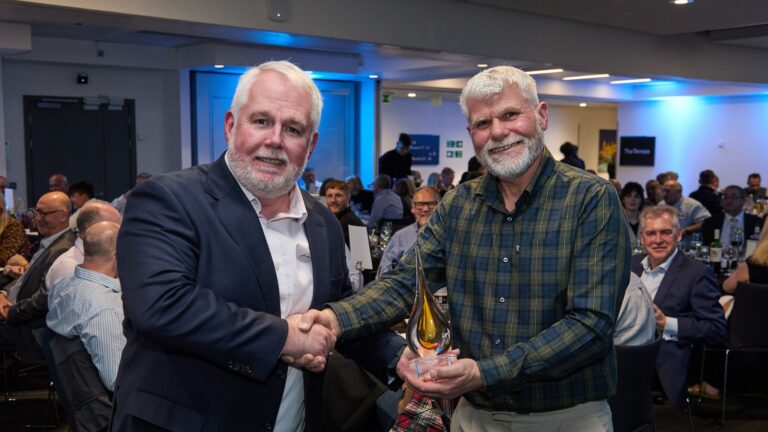
Looking back on my career and where the journey first began, being recognised with a Driver of the Year award and named as an ambassador for my company are certainly among my proudest achievements. It’s a real honour and something I’m incredibly proud of.
Equally rewarding, though, has been the opportunity to train and mentor other drivers throughout my career. Seeing new drivers develop their skills, grow in confidence and become highly capable operators is hugely satisfying. I also enjoy helping experienced drivers adapt to new technologies and processes, particularly as modern vehicles continue to evolve and require different driving techniques and approaches.
For anyone considering a career in the downstream fuel industry, my advice would be simple — be prepared to work hard and take safety seriously. It’s a demanding role that comes with responsibility, long hours and the need for ADR compliance, but it’s also a career that offers variety, challenge and a real sense of purpose.
No two days are ever the same, and if you enjoy a role that keeps you thinking, developing and facing new challenges, then it’s a fantastic industry to be part of.
With more than three decades of experience behind the wheel, Ian’s passion for the industry remains clear. From championing safety and customer service to supporting the next generation of drivers, his story highlights the vital role tanker drivers continue to play in keeping communities, businesses and farms supplied across the UK.
Image courtesy of Ian Walters/Rix Petroleum/UKFIDA