Following on from his ‘A Day in the Life’, Dave shares his thoughts on the rapidly changing transport sector and what the future could hold for the UK’s truck stops.
Opportunities and challenges
“The transport sector is currently going through one of the most significant periods of change I’ve witnessed in my career,” began Dave.
“Conversations that once centred almost entirely around diesel are now, increasingly, focused on alternative fuels such as Hydrotreated Vegetable Oil (HVO), electric vehicles, and how we can best prepare for success in a lower-carbon future.
“As somebody responsible for overseeing multiple truck stop locations across the country, I see both the opportunities and the challenges created by the energy transition every single day.”
Balancing ambition with practicality
While the direction of travel may be clear, Dave believes the transition needs to reflect the realities of operating commercial vehicles on the UK’s roads.
“There is genuine enthusiasm across the sector for reducing emissions and improving sustainability. However, it’s important that changes are practical, and fairly reflect operator and driver realities.
“The harmonious balance between ambition and practicality is something the transport industry must continue to achieve.
“One of the most positive and encouraging developments I’ve witnessed has been the growing awareness and adoption of HVO. For many operators, it provides a straightforward route to reducing emissions without the need for costly vehicle modifications, or significant operational changes.
“From the perspective of a truck stop manager, it can also be integrated into existing fuelling infrastructure seamlessly, making it a realistic option for many businesses looking to begin their decarbonisation journey today, rather than waiting for future technologies to emerge.
“By comparison, the transition to electric and hydrogen-powered HGVs remains considerably more complex. While there is clear potential for both technologies, adoption across the sector is still relatively low. This is largely because the supporting infrastructure required is not yet at the necessary scale.
“Many fleet operators are understandably cautious about moving away from diesel until they have the absolute confidence that reliable charging or refuelling facilities exist across the country.”
Personal experience
The challenges of the transition are not something Dave observes from the sidelines. An EV driver himself, he has first-hand experience of the practical considerations involved in travelling between sites.
“In my role, I experience some of these challenges personally. I drive an electric vehicle and spend a considerable period of my working week travelling between sites, including locations such as The Hollies, Watling Street and Ecclefechan.
“Planning my route around charging facilities is simply a part of the journey, particularly when I’m travelling a longer route where recharging is an absolute necessity. That experience gives me a practical understanding of both the progress being made, and the work still needed to encourage and support wider adoption.
“For truck stops, the challenge is not simply deciding which technology will win favour. Rather, it’s about creating agile sites that can adapt as the market develops.”
Future-proofing the truck stop
That need for flexibility is already influencing investment across the Certas Energy network, with sites evolving to accommodate changing technologies while continuing to meet the needs of today’s drivers.
“Across the Certas Energy network, we are already exploring a range of initiatives designed to support the transition, including increasing the provision of HVO, EV charging infrastructure and the installation of solar power. Investments like these are incredibly important because they help to futureproof sites, while ensuring they remain relevant, operational and instrumental in meeting drivers’ needs today.
“If I could design the ideal truck stop for the future, flexibility would remain at its core. I would strive to ensure every site was ready to accommodate electric charging at scale, with extensive overnight charging facilities capable of supporting commercial vehicles.
“I’d also encourage a greater use of renewable energy generation through the implementation of solar panels, including covered parking areas where the roof itself can contribute to powering the site. Looking even further ahead, there may be opportunities to incorporate other technologies, such as wind, as they become more commercially viable.
“However, there are still significant barriers that need to be addressed. The cost of electrification remains one of the most persistent challenges facing the transport industry today. Upgrading power supplies, installing charging infrastructure and making sites capable of supporting future demand requires substantial investment, and it all takes time.”
A rapidly evolving industry
Dave considers the route to a successful transition.
“While sustainability goals are important, they must be balanced against commercial viability if businesses are to invest with confidence, setting themselves up for success.
“Ultimately, the success of the energy transition will largely depend on understanding the needs of drivers and operators. Throughout my career, I’ve found that the best decisions come from truly listening to customers, and building services around what they actually need, rather than what we assume they need.
“The same principle applies to the transition to lower-carbon transport. The industry is evolving rapidly, and that’s one of the things that continues to excite me about it. New technologies, changing customer expectations and ongoing investment are creating meaningful opportunities to improve both the driver experience, and the environmental performance of our sector.
“The key is making sure the transition remains practical, achievable and focused on delivering tangible, measurable benefits for the people who keep our transport network moving every day.”
For Dave, the future of the truck stop is therefore unlikely to be defined by a single fuel or technology. Instead, flexibility, investment and a clear understanding of customer needs will be central to ensuring these vital sites continue to support the road transport sector as it evolves.
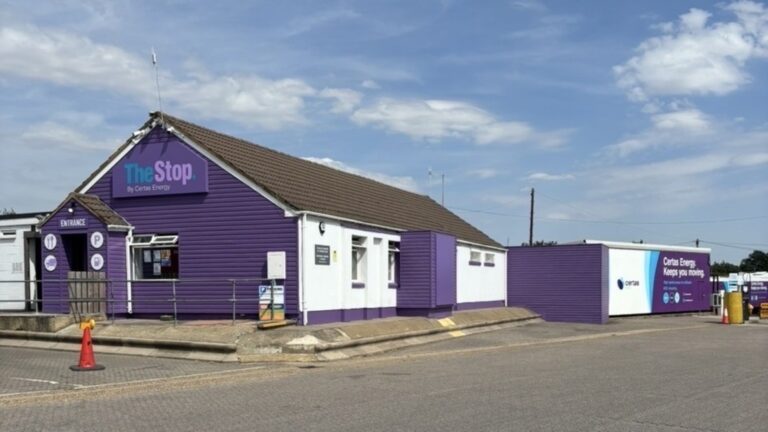
Image supplied by Certas Energy