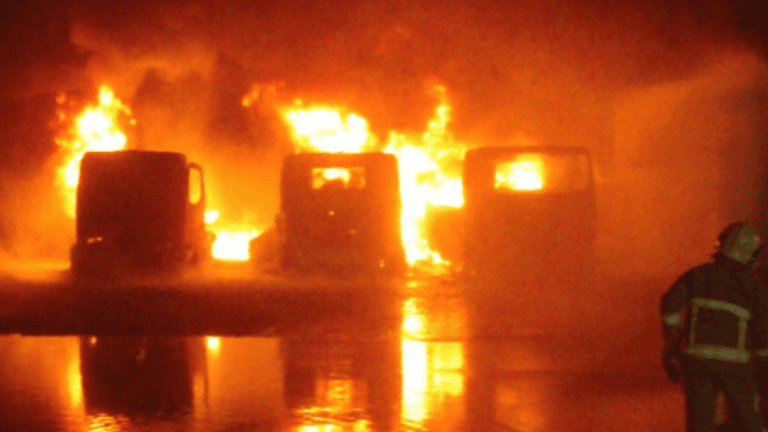
July was the hottest on record, with over two thirds of the UK in drought, and the risk of wildfires high. With exceptionally dry conditions, those working with flammable liquids such as fuel, need to be more vigilant than ever. Stewart Ower, Risk Management & Spill Response Lead for Compass Environmental spoke with Fuel Oil News to share important insight into managing associated risks.
At the depot
With large volumes of flammable liquids stored on site, one event could bring disaster for human health, the environment, your assets and your reputation. Whilst some risks may be obvious and easily managed, such as prohibiting smoking and bonfires on site, others are less apparent:
- Where you park matters: Parking your fleet close together may be space efficient but it brings higher risks of low-speed collisions or manoeuvring incidents. Should one vehicle catch fire or be set alight, the others may fall in a domino effect, wiping out your entire fleet and putting your business off the road. Space the tankers, spread the risk.
- Keep your boundaries clear: Consider the positioning of trees and vegetation in relation to your tank farm – what would happen if a wildfire approached your site? Creating a fire break around your depot can limit the damage from neighbouring wildfire risks.
- An empty tanker can be a safer tanker: Fully loaded tankers parked at the depot overnight could mean disaster if an incident happens out of hours. Keep heating oil and DERV tankers empty when not in use to minimise the risk should an incident occur.
- Limit high risk activities on site: Always conduct a thorough risk assessment and limit work which could cause sparks, for instance hot works – have a hot works permit system in place.
- Assess your office set up: The office is not without risks and should a fire start, the damage could spread to your fuel storage. Ensure your electrical systems are compliant, inspections are up to date and fire extinguishers are regularly serviced.
- Prepare your personnel: Regular fire drills and training are essential and can save lives – don’t skip them. Take this one step further and ensure the fire services are also familiar with your site layout and water supply points.
Some depot incidents are more unpredictable such as lightning strikes or even arson attacks. Having a fire risk management plan and DSEAR Assessment is a must, as is an environmental risk management plan with clear incident response strategies.
On the road
Leaving the depot comes with its own risks. During breaks, ask drivers to choose their spot wisely: with a tanker full of highly flammable liquid, be mindful of parking up next to woodlands, heathland or grasslands which may be extremely dry and vulnerable to wildfires.
Accidents can happen whatever the weather. With the recent New Forest wildfire starting from a van fire, even a breakdown could cause disaster in dry conditions. Should your drivers experience difficulties in transit, from major rollovers to minor breakdowns, ensure they act vigilantly and can identify risks to human health and the environment, avoid smoking near the vehicle and raise the alarm in the most appropriate manner.
Delivering to customers
Once your drivers have safely reached their destination, ensuring your team are trained and well versed in handling potential hazards is critical. Despite government limitations on risky activities such as bonfires and disposable barbecues, there is still a possibility these could have taken place. Watch out for hot embers when considering where to park or the path of the hose and be sure to prohibit smoking near the tanker, hose or oil tank.
When making deliveries, ensure tanks are filled no more than 90% as oil can expand in the heat causing overflow. Plastic oil tanks can be more likely to fail on the first fill following periods of hot weather due to the stress of high heat and sun exposure. With customers looking to fill their tanks over the coming months, brief your drivers to look for signs of damage and if in doubt, don’t deliver.
What if the worst happens?
When a serious fire occurs, having the right support in place can make a significant difference to how effectively the incident and its aftermath are managed.
For fuel distributors in particular, a major fire can quickly develop into a complex event involving emergency services, regulators, neighbouring properties, business interruption and potentially significant financial and reputational consequences.
A sector-specific insurance policy, such as Compass Environmental’s Oilshield Insurance and Risk Management scheme, can help manage the aftermath of a serious incident. With 24/7 incident support, this includes the coordination of elements such as arranging specialist contractors, liaising with regulators and other third parties, coordinating investigations and remedial works, and helping to move the incident through from the initial emergency response towards recovery and resolution.
However, effective risk management starts long before an incident occurs. Good site housekeeping, appropriate fuel storage, effective separation of ignition sources, suitable fire precautions, clear emergency procedures and regular staff training can all help to reduce both the likelihood and potential severity of a fire.
No business can remove risk entirely, but understanding where the vulnerabilities lie, putting sensible controls in place and having a clear plan for what happens if those controls fail can make a considerable difference when the worst happens.
Image credit: Image supplied by Compass Environmental, credit Sky News