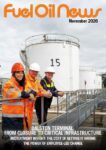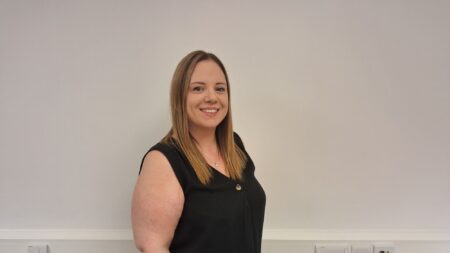
Fuel Oil News spoke with Head of People Strategy & Organisational Development Karen Kelso to look behind the recognition and discover how listening, visible leadership and employee-led change are shaping the working culture across its fuels businesses.
But did the positive picture painted at group level by the recent accolade also hold true within its fuels businesses?
According to Head of People Strategy & Organisational Development Karen Kelso, broadly, yes.
WCF operates businesses across fuels, retail and leisure and, while individual results inevitably vary, Karen says the fuels division sat within a similar range to its other businesses in the employee survey behind the recognition.
“Broadly speaking, we were in range and very similar to the other divisions,” she explains.
For Karen, however, the significance of the recognition lies less in appearing on a list than in what produced the result. “Although external accreditation is wonderful, it isn’t really about that,” she says. “It’s about the effort that’s being put in to ensure this is a great place to work.
“We don’t always have a good day, of course we don’t, but on the whole we do right by our people. What’s particularly nice is that the results come from our own people’s responses.”
You said, we listened
Karen joined WCF seven years ago with a remit to attract, retain and develop people as the group continued to grow. Central to that has been creating ways for employees across ten businesses and a geographically dispersed workforce to be heard.
WCF uses an independent employee survey, run both externally and confidentially, to encourage candid responses. But, as Karen says, gathering feedback is the easy part. “I always say the survey is just the start. It’s what we do with it afterwards that brings the biggest benefit.”
Once results are available, headline findings are shared across the company before being broken down by division and individual business. Fuels managers examine what their own teams are saying, and employee voice advocates also participate in conversations about appropriate responses.
“Not everything people ask for can be delivered immediately,” Karen acknowledges. “We have to be honest about that too.
“But we can say: ‘We’ve heard you. This isn’t something we can do right now, but this is what we can do.’
“It’s about being able to say: you said, we listened.”
Two recent policy changes provide tangible examples.
Employee feedback contributed directly to revisions to WCF’s family-friendly policies, including enhanced maternity provision as well as changes to paternity and shared parental leave, and to the introduction of a standalone menopause policy.
For Karen, the important point is not simply that new policies appeared in the handbook. “We didn’t make a huge fanfare,” she says. “It’s just: okay, we’ve done that now. What else do we need to work on?”
Being present
Fuel distribution operations present very practical communication challenges. Drivers frequently start work long before conventional office hours, spend much of the working day alone and have little reason to access a desk, company email or corporate systems.
Several years ago, WCF introduced an employee app partly to address that challenge, giving staff across the group access to information at the same time and a channel to respond.
Karen says this has helped ensure that everyone has access to information at the same time, particularly during periods when information is changing quickly.
Technology, however, is only part of the answer.
“If I need to be at a depot at 6am, I’ll be there at 6am,” she says. “It isn’t only about words on a screen; it’s about how we actually have a decent conversation.”
That emphasis on visibility extends throughout the leadership structure. “We don’t expect people to come to us,” Karen explains. “If somebody works in Grantham and we’re based in Cumbria, our paths wouldn’t ordinarily cross, so the leadership team has to go to them.
“Being present is extremely important.”
That visibility becomes especially important during periods of uncertainty. The fuel sector has experienced considerable external volatility and WCF has also been managing change within its own businesses, including acquisition and integration.
“You can’t stop the noise externally,” Karen says. “You have to support teams through it and say: yes, it’s a challenge, but we’re here for you. You just have to be human about it.”
Women in fuels
While WCF’s driver workforce remains predominantly male, Karen says women are well represented within its fuels businesses and particularly within leadership and have been for a long time.
Former Managing Director Jo Ritzema spent more than two decades with WCF, and Karen describes a breadth of female representation today “from board level down”.
That visibility matters in an industry still working to broaden the pool of people who consider fuel distribution as a career. WCF also runs an internal leadership development programme across its businesses, providing opportunities for employees to build the skills and confidence needed to progress.
For Karen, however, the strongest evidence comes from the experiences of the women themselves. We spoke to three women working in different roles across WCF Fuels about their own career journeys, the opportunities they have encountered and what they would say to other women considering the sector.
That variety of career paths supports Karen’s broader point that development need not follow a single route – and that opportunities within fuels can extend well beyond the roles with which people traditionally associate the sector.
Taken together, their experiences suggest that attracting more women into fuels is only part of the picture; creating opportunities to contribute, develop and progress matters just as much.
For Karen, that same emphasis on listening and practical support is also reflected in the policies WCF has introduced.
Making difficult conversations easier
The creation of WCF’s menopause policy offers perhaps the clearest example of employee voice influencing change.
Karen freely admits that a standalone policy had not previously occurred to her. Instead, the need emerged through the employee survey, employee voice discussions and WCF’s involvement with the Better Health at Work framework.
Employees and workplace health advocates asked a straightforward question: with women across the business either experiencing menopause, approaching it or supporting somebody who was, why wasn’t there specific guidance?
“My response was: that’s a great question. Let’s look at it,” Karen recalls.
Employees helped shape and review the policy before it was introduced, acknowledging there is no single response to an experience that differs enormously between individuals.
“It isn’t about having a rigid policy where, if you don’t fall into a certain box, we can’t help,” Karen explains. “It’s about being able to have a decent conversation: how are you feeling and what can we do? What can we try or explore?”
That also means ensuring managers are comfortable enough to begin the conversation without believing they need to provide every answer.
“We’re not asking them to be experts on a subject,” Karen says. “It’s about creating open, safe dialogue where somebody feels able to say: ‘I need some help here.’”
The policy is therefore partly about practical support and partly about language – making menopause something that can be discussed normally at work rather than ignored or reduced to humour.
A continuous conversation
Perhaps one of the more revealing comments in our conversation comes when Karen acknowledges that communication still features in employee feedback as something WCF could improve.
Rather than defensive, her reaction is a welcoming: “Okay, tell us how we could do that.”
It sums up an approach in which a good workplace is seen as something requiring continual attention rather than an achievement to be completed.
The latest employee survey is already under way, and Karen does not yet know what it will reveal. Whatever emerges, she expects the same process to begin again. “What feedback have we had and what are we doing with it?” she says. “It’s a continuous thread.”
That thinking is reflected in WCF’s employee-owned structure. Karen describes today’s workforce as custodians, responsible for leaving the business in a better position for the next generation of employee owners.
“Sometimes we have good years and sometimes we have less good years, and that’s okay because we’re in it together. We make decisions for the long term.”
For other businesses, perhaps the most useful lesson behind WCF’s workplace recognition is not particular policies. It is something much simpler – but harder to sustain.
Ask people what they think. Give them confidence to answer honestly. And then demonstrate that somebody was listening.
Three women. Three routes
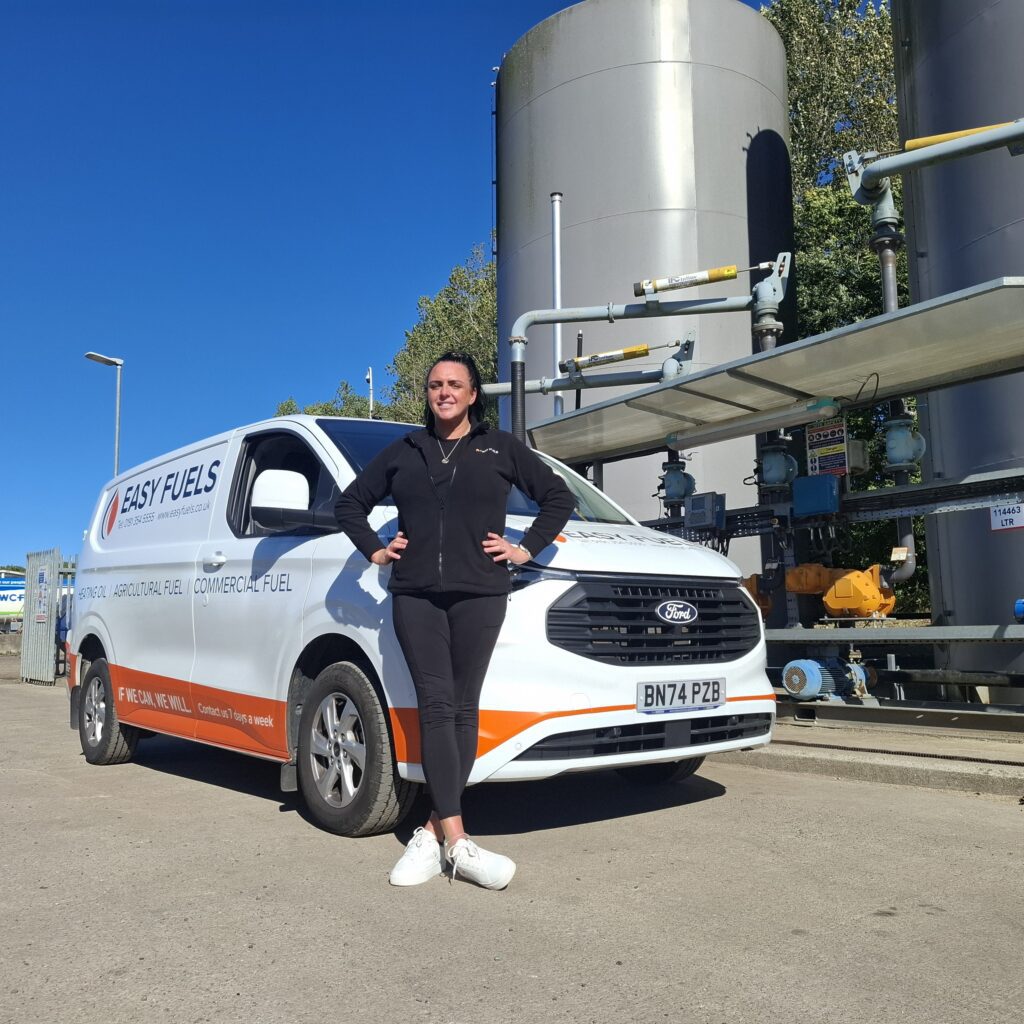
Laura Raffell. Operations Manager, Easy Fuels NE
Laura says support began from her first days in the business. “I made my ambitions and career goals clear from the beginning, and ever since I have been supported with mentoring, guidance and encouragement from my managers and colleagues.”
She is currently working towards an NVQ Level 5 in Operations Management and will soon complete her Transport Management qualification, with working alongside the Transport Manager and Head of Compliance providing further opportunities to learn.
“Every single day I learn something new and interesting – you never stop learning in this industry.”
Laura acknowledges that working in a traditionally male-dominated sector can occasionally bring barriers but says good leadership can quickly help break those down.
“I think the world has changed, and no industry needs to be male or female dominated anymore. Opportunities should be based on ability and attitude rather than gender, and that has had a positive impact on both my experience and personal confidence.”
Her advice to another woman considering fuels is characteristically enthusiastic: “Absolutely go for it, grab every opportunity and be yourself. Let your curiosity run wild. This is a career like no other.
“Yes, there will be hard and frustrating times, like with any job, but the good days, the opportunities and the camaraderie absolutely outweigh them.”
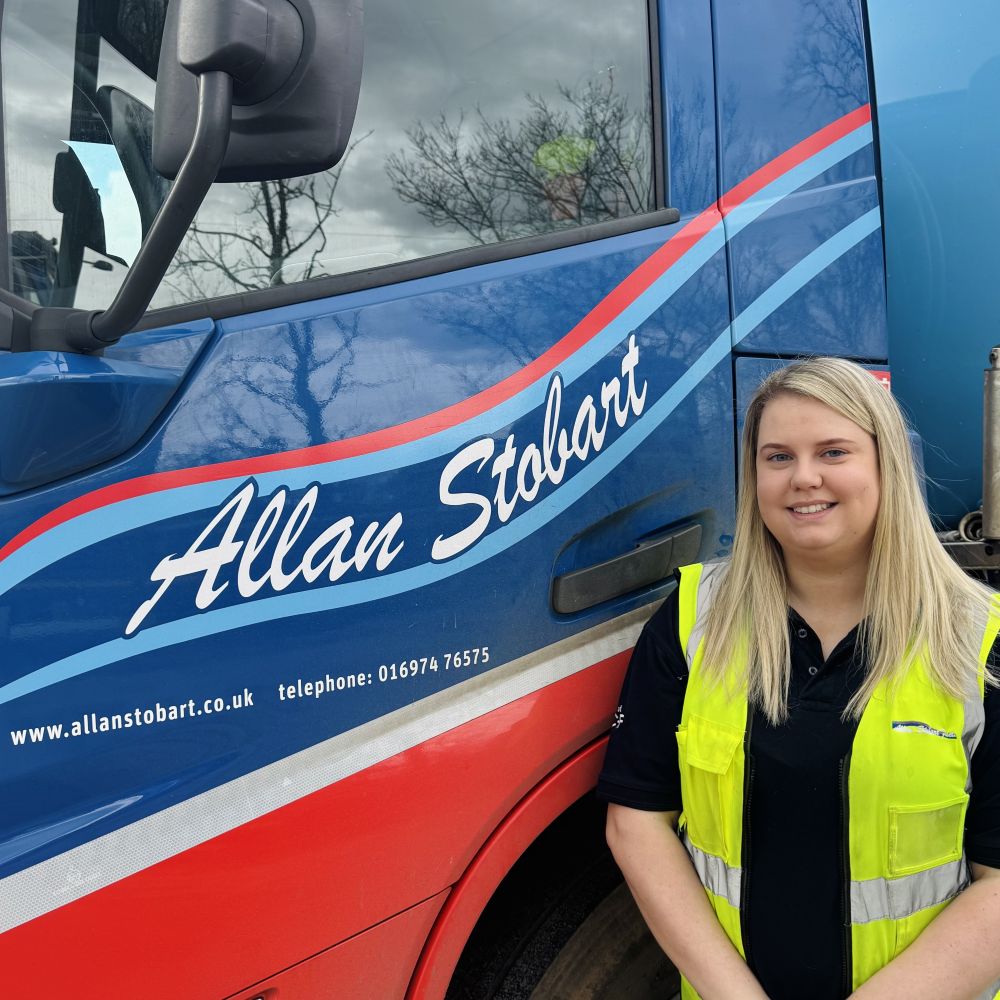
Beth Hindmarsh. Sales Office Manager, Allan Stobart Lubricants & Fuel
In five years in the fuels industry, Beth has progressed from sales coordinator to sales office manager, gaining new skills, broader experience and increased responsibility along the way.
She describes WCF as providing “a stable and encouraging environment where personal development is valued” but also points to employee ownership as an important part of the culture.
“There is a genuine sense of shared purpose, where employees feel invested in the success of the business. Knowing that our efforts contribute not only to the company’s growth but also to the wider employee community creates a strong sense of ownership and pride.”
Beth has also been involved in groups bringing together colleagues from across WCF to look at processes, efficiencies and customer relationships, as well as discussions around systems within the fuels businesses.
“Being able to share ideas, challenge existing ways of working and help shape future improvements has reinforced that employees are trusted to influence positive change within the business.”
Her experience as a woman in fuels has been similarly positive.
“I have never felt that my gender has limited my opportunities; instead, I have been encouraged to take on new challenges, build my skills and progress into roles with increasing responsibility.”
Beth also credits several strong female leaders across WCF with helping shape her own leadership journey.
“Their mentorship has helped build my confidence, develop my skills and shape my approach as a leader.”
For women considering the sector, her message is to look beyond the stereotypes.
“Capability, attitude and a willingness to learn are what truly matter.
“Fuel distribution is a dynamic and essential industry, with opportunities spanning customer service, operations, logistics, commercial management and people leadership. No two days are the same.”
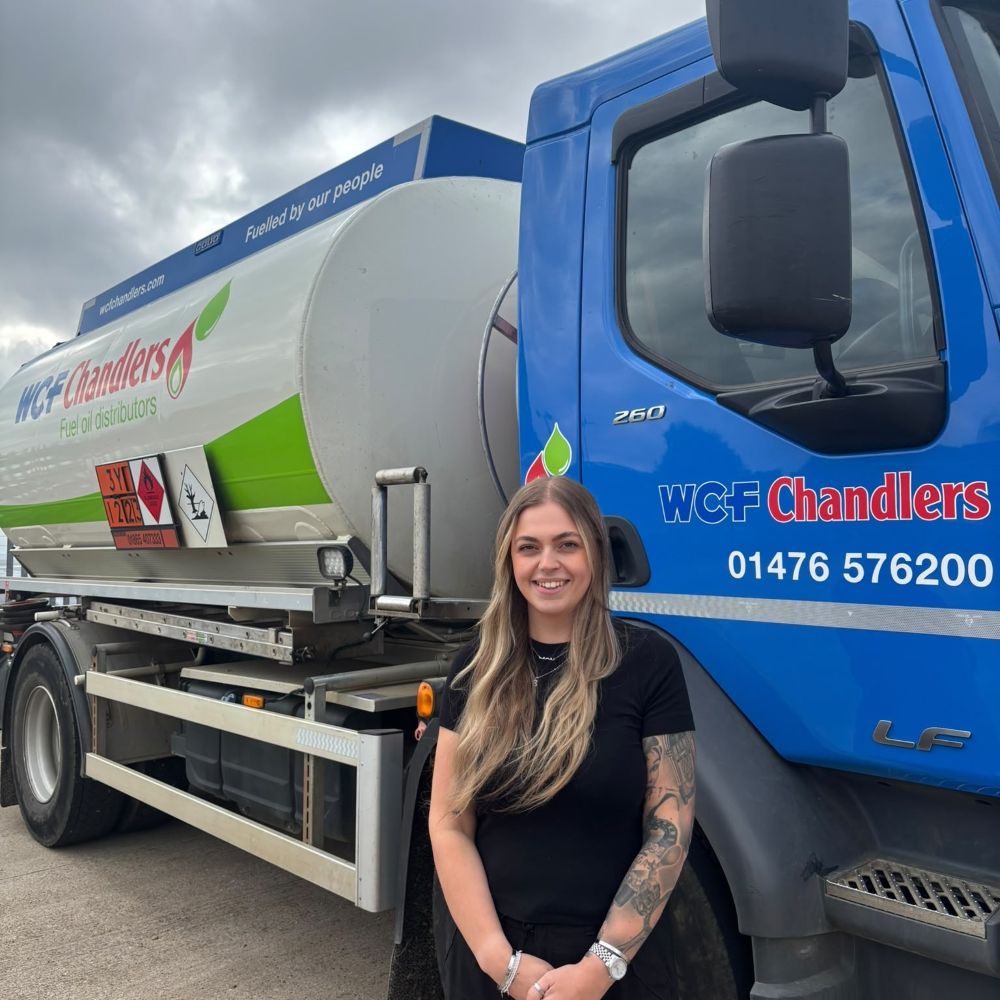
Sophie Kay. Planning Manager, WCF Chandlers
Sophie’s own route through the business demonstrates how a career in fuels can move in unexpected directions.
“I joined WCF Chandlers in sales and have worked my way into my current role as planning manager within transport.”
Along the way she has completed ADR training and was recently given the opportunity to undertake her Transport Manager CPC.
“This has helped me build my confidence and knowledge of the industry.”
Sophie says she has also felt able to contribute ideas about the way the business operates, particularly around delivery planning and prioritisation.
“Being trusted to make decisions and see ideas put into practice gives you a real sense that your contribution matters.”
Rather than finding the industry’s traditionally male profile discouraging, Sophie says it has strengthened her determination to progress.
“I think working in a traditionally male-dominated industry has made me even more determined to progress and succeed in my career. It is great to see more women coming through into roles within the transport and fuel sector.”
And her advice for somebody considering following them?
“I’d say go for it and don’t let the fact that it’s traditionally been a male-dominated industry put you off.
“There are lots of opportunities to learn and progress, and I’m a good example of how you can start in one area of the business and work your way up into a completely different role.”
Image credit: WCF