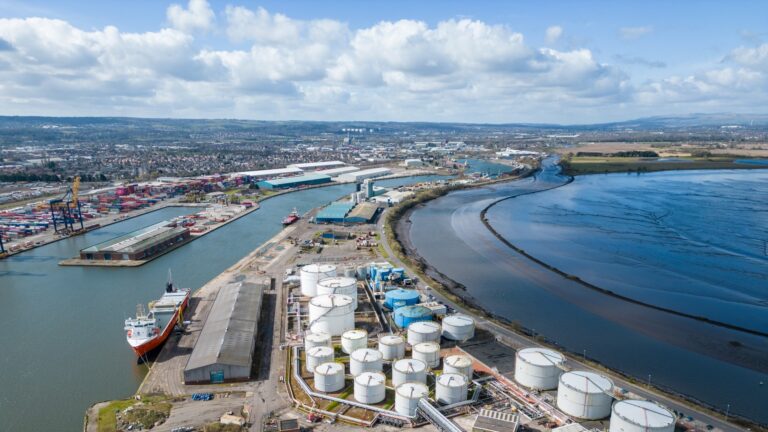
It also offers an insight into how fuel suppliers are adapting to Scotland’s changing supply landscape following the closure of refining operations at Grangemouth.
The company has secured a long-term agreement that makes it the majority tenant at the terminal, expanding its storage footprint and enabling it to supply a broader range of products.
However, discussions with Fuel Oil News suggest the strategic significance of the move lies in the way fuel is now reaching Scotland.
Asked how the closure of the refinery had affected operations, Greenergy confirmed it has fundamentally altered elements of its supply chain.
“Since the closure of the Grangemouth refinery and as Greenergy has increased its tankage footprint in the Exolum terminal, we have changed our fuel supply chain in a number of ways,” said Caroline Lumbard, Managing Director – UK.
“The most important being the size of ships we can use for imports. Bringing in larger ships allows us more supply flexibility, reduces demurrage and creates efficiencies within the supply chain, thus enabling Greenergy to remain competitive in the region.”
The comments highlight the increasingly important role that import infrastructure, storage capacity and logistics efficiency are playing in Scotland’s fuel market as the sector adjusts to life without domestic refining at Grangemouth.
Investing in resilience
Greenergy says the expanded agreement gives the company greater flexibility across its Scottish operations and supports its longer-term commitment to the region.
The company now has access to dedicated storage for standard road fuels as well as gasoil, kerosene and marine gasoil. The significant additional capacity allows for the import of larger cargoes and a reduction in jetty congestion, allowing Greenergy to optimise supply movements, improving operational flexibility.
Image provided by Greenergy