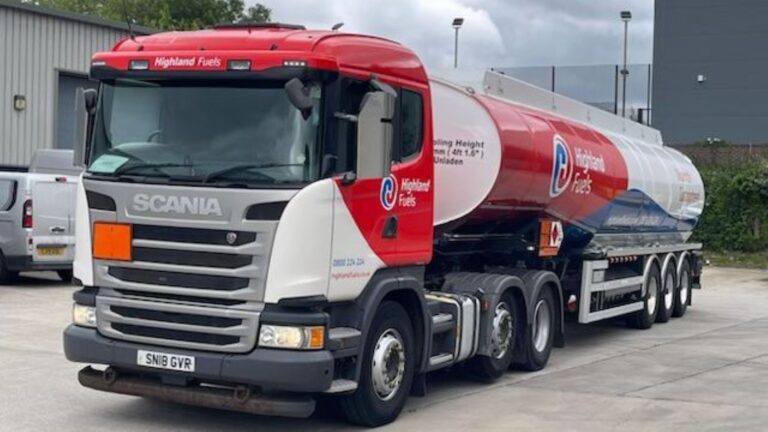
The role of a depot manager carries responsibility across almost every aspect of a fuel distribution operation – from people and vehicles to compliance, safety and the day-to-day decisions that keep a depot running efficiently.
For Highland Fuels, recent internal appointments and management restructuring provided an opportunity to ensure that both established and newly appointed depot managers were working from the same foundations.
The business approached UKIFDA to develop a tailored training programme that would combine the essential requirements of depot management with the realities of Highland Fuels’ own operations.
Creating a common approach
Working with Chris Hutcheson, Operations Director at Highland Fuels, UKIFDA Technical Manager Jon Cox developed a one-day intensive course specifically for the company’s depot management team.
The programme covered four broad areas:
- Operations, including ex-pipe marine and road haulage procedures
- Health, safety and environmental responsibilities
- Regulatory compliance and risk management
- Operator Licence requirements and legal duties.
Rather than delivering these as generic modules, Highland Fuels’ own internal tools, working practices and bulk storage processes were incorporated into the training that was written by UKIFDA’s Jon Cox, with direct input from Chris Hutcheson, for Highland Fuels.
This bespoke approach meant the session could go beyond knowing what the rules require, to explore how those responsibilities translate into everyday decisions at depot level.
Ten depot managers attended the initial session in Inverness and, as the day developed, another benefit of the interactive format became apparent.
Bringing managers from different locations together created an opportunity to compare the way things were being done across the network, discuss common challenges and share experience.
That interaction helped identify where practices could be aligned and gave managers the chance to test their own approach against both industry best practice and the experience of colleagues elsewhere in the business.
Chris Hutcheson says this consistency was an important part of the exercise:
“Our depot managers play a critical role in ensuring the safe, compliant and efficient operation of our business.
“Working with UKIFDA has allowed us to develop a training programme tailored specifically to the realities of fuel distribution, whilst promoting consistency, best practice and knowledge sharing across our depot network.
“The positive feedback from participants confirms the value of investing in our people and supporting their continued development.”
Learning from each other
That feedback, from those taking part, suggests that the value lay as much in discussion as in formal course content.
One participant, Darrin W, highlighted the opportunity for the group to interact and start discussions around topics that could support the day-to-day running of their depots.
For David J, the session provided useful confirmation of existing practice while also identifying areas requiring greater focus. He also valued having “a third-party view of the industry” and greater awareness of forthcoming legislation.
Vicky C similarly found value in testing current working practices against the training, saying the session confirmed that her approach at depot level to truck legalities, roadworthiness and planning was on the right track.
These comments underline a wider benefit of bringing experienced operational managers together for structured training.
Development does not necessarily mean discovering that existing practice is wrong. It can also provide independent confirmation that procedures are working, highlight where greater attention may be needed and expose managers to alternative ways of dealing with familiar operational challenges.
Jon’s delivery was also singled out in the feedback, with participants describing him as clear, thorough and approachable.
His ability to encourage discussion and adapt the content to Highland Fuels’ own operations was particularly well received.
Developing the next generation
The Highland Fuels programme also demonstrates the flexibility of UKIFDA’s training provision. Working directly with member businesses allows course content and delivery to be adapted around individual operational requirements, including company-specific procedures and working practices.
This can range from dedicated in-house training for individual businesses to wider open-enrolment courses, with UKIFDA’s technical specialists bringing current regulatory, compliance and operational experience to the programme.
In this way, the association can support both larger multi-site operators and smaller independent distributors while retaining a common focus on industry standards and competence.
For Highland Fuels, the first session is intended to be the start, rather than the end, of the process. The company plans to introduce annual refresher training, while also developing a pathway for aspiring depot managers.
That latter point is particularly significant in a role where much of the knowledge traditionally associated with depot management has been accumulated through years of practical experience.
Creating a more structured development route offers an opportunity to capture that experience while ensuring future managers also understand the increasingly broad compliance, safety, transport and operational responsibilities that come with the position.
The programme also sits within UKIFDA’s wider training provision. The association describes raising industry standards, sharing best practice and improving operator competence as key objectives of its training activity and already provides Depot Manager and Depot Supervisor courses alongside regulatory and other industry training. It also develops bespoke programmes for individual member requirements.
Following the Highland Fuels programme, UKIFDA is exploring the potential for open-enrolment versions of the Depot Manager course, giving other member businesses access to the training.
For Highland Fuels, however, the immediate value has been closer to home: bringing managers together, creating space to share knowledge and establishing greater consistency in how the people responsible for its depots approach the job.
If you would like to explore the value of an audit for your depot, please contact Jon Cox, UKIFDA: jc@ukifda.org
Image credit: Highland Fuels