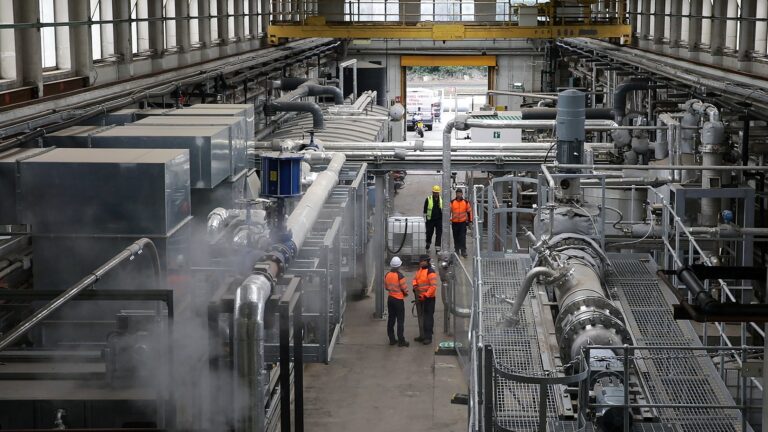
The trials demonstrated continuous stable operation during production runs lasting up to 72 hours, with the company reporting yields above target.
Using softwood residues from timber processing, multiple trials processed up to three tonnes of feedstock per day.
These latest trials build on smaller-scale testing completed in early 2025, and come as Nova Pangaea prepares to raise further investment to progress its first commercial-scale facility.
Expanding the SAF feedstock base
Nova Pangaea’s REFNOVA process converts waste biomass and residues – including wood chips, sawdust and wheat straw – into ethanol which can then be upgraded into sustainable aviation fuel or renewable diesel.
The process also produces biochar as a co-product, which Nova Pangaea says enables permanent carbon capture and can result in an overall carbon-negative production pathway.
The technology is being developed at a time when increasing SAF mandates are creating a need for significantly greater production and a wider range of sustainable feedstocks. Much of today’s commercially available SAF is produced through the HEFA pathway using waste oils and fat – feedstocks whose availability is inherently limited.
The UK SAF Mandate is designed partly to encourage alternative technologies and feedstocks, with the overall obligation increasing to 10% of UK jet fuel demand by 2030 and 22% by 2040.
Project Speedbird
Nova Pangaea is also working with British Airways and LanzaJet on Project Speedbird, a UK Government-supported initiative designed to produce SAF from domestically sourced waste biomass. Under the project, Nova Pangaea plans to develop four UK facilities producing bioethanol from local waste materials for subsequent conversion into SAF.
Stewart Stewart, CEO of Nova Pangaea, said the latest trials had further validated the technology and would support the company’s next stage of development.
“The SAF industry is currently at a critical point. Demand is increasing and supply chain shocks such as in the Middle East show the need to find an alternative to fossil fuels, yet aviation is currently reliant on SAF from a single feedstock, which will not be enough to meet growing SAF demand.
“Nova Pangaea’s tried and tested technology offers a genuine alternative. By tapping into the plentiful supplies of waste biomass, we can boost SAF production – enhancing our energy security and building a new domestic industry that generates jobs and revenues while reducing fossil fuel emissions.”
Further trials are planned next year to refine the design of the first commercial-scale plant.
Nova Pangaea has raised more than £21 million to date from investors including International Airlines Group, PXN Ventures and Mercia Ventures, alongside UK Government funding awarded through the Advanced Fuels Fund.
Image provided by Nova Pangea