When Fuel Oil News spoke to Matt Whitton last summer, Watson Fuels was only months into a significant new chapter.
Following its acquisition by Inspirit Capital, the business faced the considerable task of becoming fully standalone from its former parent while building a new leadership structure, maintaining operational performance and establishing what independence would mean in practice.
Matt was clear about the immediate priorities. Watson Fuels needed to be profitable, independent and operationally sound by the end of 2025. Beyond that lay what he described as a period of enablement, followed by growth.
A year later, he is able to mark those first objectives as achieved.
“We’ve achieved everything we wanted to, perhaps a little bit more,” he says.
Only with the benefit of looking back, he suggests, is the scale of what has happened fully apparent.
“It’s only when you take breath and look back that you realise what’s been achieved.”
The sale completed on 9 April 2025, leaving less than nine months for Watson Fuels to become completely standalone. At the same time, the company needed to complete its senior leadership team and ensure the newly independent business was operating profitably.
There has also been a rebrand, the establishment of a new head office, changes to the organisational structure and development across areas including wholesale, fuel cards, lubricants, national accounts, specialist fuels and new business streams.
“It was definitely easier said than done,” Matt acknowledges. “We’ve had to work some hard yards to achieve what we’ve achieved.”
Local where it matters
One ambition from our previous conversation was particularly memorable: for Watson Fuels to become a local distributor that just happened to have national coverage.
Matt believes that is now becoming reality.
“As of 1 July, Watson Fuels now has local distributors that happen to have national coverage,” he says. “We have local teams that are empowered to make quick, effective and ultimately local decisions.”
Watson Fuels has a relatively small central function that provides support across finance, technology, marketing, customer experience, supply, operations and people, while commercial responsibility and customer relationships increasingly sit closer to its depots.
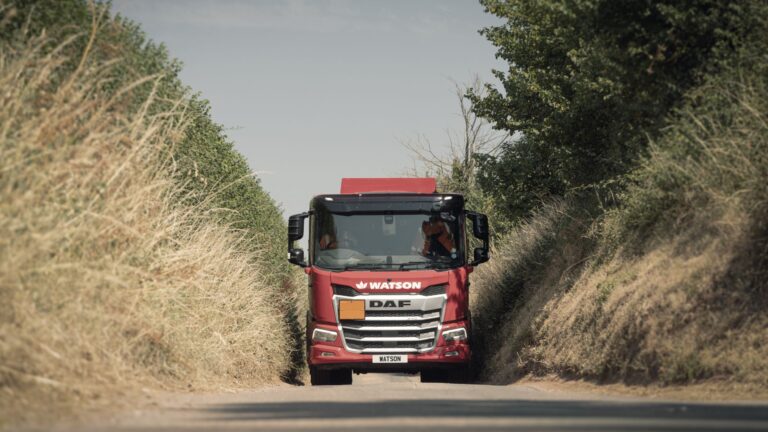
In the traditional “red truck” business, which operates around 200 vehicles nationally, depot-based teams are bringing selling, planning and delivery together locally. The objective is to combine national capability and governance with the ability to respond differently to customers in different markets.
“We create the ability to be more entrepreneurial and to be different and to react differently depending on what the customer wants,” Matt explains.
It is an interesting model at a time when businesses across the sector are taking differing views on the balance between centralisation and local decision-making.
For Matt, the reasoning comes back to a fundamental challenge facing any distributor: “We are selling a commodity,” he says. “There’s not really a differentiator within any commodity. The differentiator comes in the service.”
From customer service to customer experience
That focus has prompted another change in language which Matt believes reflects something more substantial.
“I think 12 months ago I was quite possibly talking about customer service,” he says. “It feels like a nuance, but it’s a very clear change. We have moved from customer service towards customer experience.”
The distinction is between dealing effectively with an issue when it occurs and considering the entirety of the relationship. “It’s not just about responding when something goes wrong. It’s about making every interaction with Watson Fuels easier and more valuable.”
Asked whether customers are experiencing the difference, Matt acknowledges that there is still work to do before Watson Fuels can demonstrate this conclusively.
Many of the structural changes are relatively recent, and Matt describes current feedback as encouraging but largely anecdotal. The company is putting measures in place to provide more objective evidence.
“Come back in 12 months and I’ll be able to demonstrate the positive changes,” he says.
That willingness to put another marker in the ground echoes our conversation a year ago.
Choosing the path
Perhaps the most significant evolution in Matt’s thinking is the move from being good at reacting to disruption towards becoming less dependent on events outside the company’s control.
The past year has provided plenty of practice in reacting.
Macroeconomic events, disruption in the Middle East and domestic supply challenges have unfolded while Watson Fuels has simultaneously been reshaping its own business.
Matt is keen to stress that this level of responsiveness is not new. “Watson Fuels has always had an excellent team that, when events happen, reacts really well.”
What has changed is the ambition to complement that capability with greater control over the direction the company takes. “We can’t be reliant on events, whether it be a conflict in the Middle East which affects global pricing or, frankly, whether it’s the weather. We have to have more control of our own destiny.”
He repeatedly returns to a simple philosophy: comply, mitigate risk, take opportunity.
It has informed Watson Fuel’s response to recent market challenges, but increasingly, it is also shaping the growth strategy.
The goal, Matt says, is to be “a proactive business, one that chooses its path rather than simply reacting to events”.
There is a striking parallel here with changing customer expectations. As businesses seek to anticipate and manage risks within their own supply chains rather than simply respond when something fails, Watson Fuels is attempting to apply the same principle to itself.
Growth – but not at the expense of the core
For Watson Fuels, greater control of its destiny means growth and diversification, but Matt is careful to distinguish that from moving away from the company’s traditional markets.
“We’re still there to support our loyal customers who need kerosene in the winter and gas oil for farming, who we’ve worked alongside for many years.”
Growth includes using greater local entrepreneurial freedom to develop the red truck business, while continuing to grow areas such as fuel cards, specialist fuels and wholesale.
The wholesale business is one area Matt highlights as having developed significantly, providing continuity of supply not only for Watson Fuel’s own distribution operation but, where appropriate, for other distributors.
Alongside that organic development are new propositions.
WatsonOne, launched to offer a more integrated approach to fuel assurance and resilience for customers with business-critical energy requirements, is one example.
For Matt, its significance extends beyond the service itself. “Through WatsonOne we’ve created something from scratch. It’s already underway. It didn’t previously exist.”
It is, in other words, evidence of what Watson Fuels believes its new structure can enable.
There will be other opportunities, although Matt remains deliberately non-committal on exactly where those might take the company.
“I don’t think anything is ever off the table,” he says.
There are, however, boundaries. Any new proposition must meet a customer need and, importantly, “feel like something that a distributor would do”.
That qualification matters. The ambition is not diversification for its own sake, but to broaden the value a distributor can provide around its existing capabilities, infrastructure, relationships and expertise.
People behind the platform
For all the emphasis on structure and process, people repeatedly return to the conversation.
Matt describes Watson Fuels as now having a “right-sized” and simplified structure with fewer layers between decision-makers and those closest to customers. Governance remains important, but its purpose is to allow expertise to translate more quickly into action.
The people proposing change are increasingly expected to own its delivery too and the theme of empowerment also extends to recruitment.
Overall colleague numbers have reduced since the transformation journey began, but Watson Fuels has been recruiting into the new structure. Matt sees particular value in combining experienced industry people with those arriving from outside the sector.
“We’re getting that really healthy mix of new views as well as the understanding of how the industry operates.”
What does he want those people to experience?
Fulfilment, rather than simply enjoyment, is the word he now chooses. He wants colleagues to bring curiosity to their roles, make decisions and approach challenges pragmatically.
Those characteristics are increasingly important as distribution businesses face a market in which agility and judgement can matter as much as scale.
Part of the energy solution
That uncertainty is especially apparent in the longer-term energy transition.
Despite the events of the past year, Matt says his view of the trajectory has not changed. “I’ve for quite some time now been a believer that our industry is firmly part of the solution.”
Rather than identifying a single technology or fuel as the answer, he advocates what he calls the “and” word.
“We need liquid fossil fuel and liquid renewable fuel and hydrogen and electricity and wind power and solar.”
For the liquid fuel distribution sector, he sees existing infrastructure as a significant advantage.
Much of it is currently moving fossil liquid fuels but, he argues, can also provide a route to market for renewable liquid alternatives without requiring the scale of infrastructure investment seen in some other parts of the energy system.
That flexibility also reduces the risk of making major investment decisions against an uncertain policy backdrop.
It is another example of the wider theme running through his thinking: retain what works, create flexibility and remain ready to respond when opportunities emerge.
A wider industry role
Matt now has an additional perspective from which to consider those opportunities, having recently become Vice President of UKIFDA.
The appointment came, he says, after a call from UKIFDA President and Highland Fuels Managing Director Stephen Rhodes.
“It took him about three minutes to convince me that I should put my name forward.”
Although still early in the role, Matt says it is already providing “a different lens through which to see the sector”.
He believes UKIFDA has become an increasingly important and effective industry voice and sees an opportunity for the association to be central both to protecting customers and to demonstrating the sector’s role in energy transition.
The same philosophy he applies within Watson Fuels could, he suggests, apply more broadly.
“The sector needs to be ready to be fleet of foot. The philosophy of comply, mitigate risk, take opportunity doesn’t have to apply just to businesses, but to the sector in general.”
Only just getting started
A year ago, Matt ended our conversation with the tantalising warning: “Spoiler alert – there’s more to come.”
Some of it has now arrived.
But when asked whether Watson Fuels has finally reached the point he was describing then, the answer suggests this is less an ending than another beginning.
“We’ve only just got started,” he says.
The platform is now in place to grow the traditional distribution operation, fuel cards, specialist fuels and wholesale, while creating the ability to move into new areas.
And when Fuel Oil News comes back in another twelve months?
Matt hopes the anecdotal evidence of a successful transformation will have become measurable. “I’d like to be able to demonstrate that we have a fulfilled colleague base and that the experience of doing business with Watson Fuels makes our customers happy.”
Then comes a familiar smile in his final words: “And, obviously, there might be more to come.”
Image credit: Watson Fuels