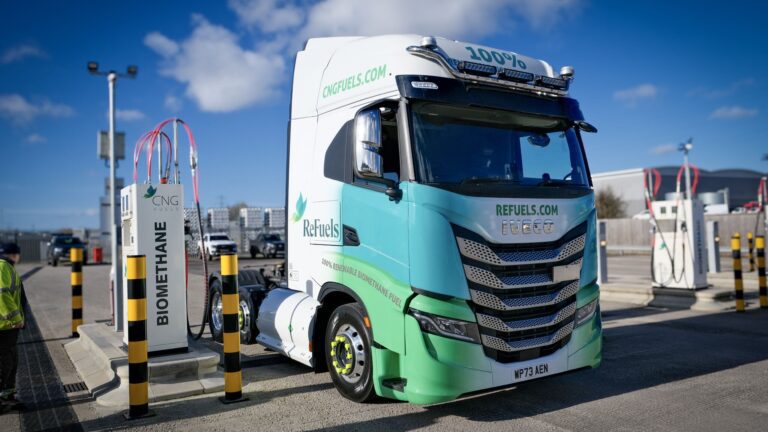
CNG Fuels now expects more than 8,000 CNG-powered HGVs to be operating on UK roads by the end of 2030, with its largest customers providing visibility towards that level.
More than 900 additional trucks are expected to join fleets over the next 12–18 months. The anticipated growth is being matched by investment in refuelling infrastructure, with three new high-capacity stations currently under construction. Magor is due to open in October as the network’s 17th station, while new facilities at Swindon and Carlisle are also being built.
Together, the three sites are expected to increase CNG Fuels’ network refuelling capacity to more than 14,000 HGVs a day.
Building capacity for alternative fuels
The figures were reported as ReFuels, which owns 40% of CNG Fuels, published its results for the first quarter of its 2027 financial year.
Bio-CNG volumes dispensed across the network increased 8% year-on-year during the quarter, while CNG Fuels more than tripled adjusted EBITDA to £4.9 million.
Philip Fjeld, CEO and co-founder of ReFuels, said the company was seeing growing demand from fleet operators and was expanding infrastructure in response: “We expect more than 900 new CNG trucks on the roads over the next 12–18 months, and our largest customers provide visibility to 8,000 CNG HGVs by end-2030.”
ReFuels argues that Bio-CNG can offer fleet operators greater energy resilience as well as lower fuel costs and emissions than diesel and HVO.
While fuel choices for heavy transport continue to evolve, the scale of infrastructure investment is an indication of the increasingly diverse mix of technologies being deployed to decarbonise road freight.
ReFuels’ longer-term target is to build sufficient capacity to serve 20,000 HGVs a day by the end of 2028, putting infrastructure in place ahead of the anticipated expansion in CNG-powered fleets.
Image from Refuels