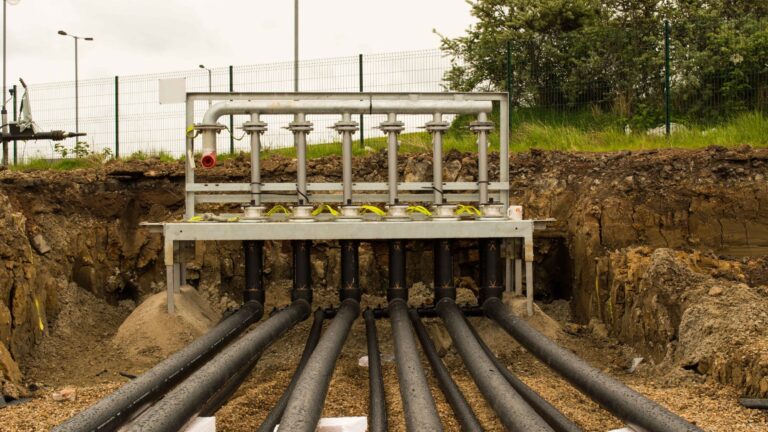
For fuel distributors, however, the question is not simply whether customers will want HVO. It is also what a changing fuel mix means for the infrastructure already used to receive, store, load and deliver product.
What makes HVO attractive is also what makes the infrastructure question easy to overlook. With its similarity to mineral diesel in use, it can be tempting to assume that introducing it into an existing distribution operation will be equally straightforward.
In many cases, much of the infrastructure may indeed remain perfectly serviceable. But that does not mean the transition should happen without careful consideration.
André Godinho, Product Marketing Manager at fuel infrastructure specialist Berrys Technologies Limited, considers what the move to future fuels means for existing fuel infrastructure
HVO as a fuel in transition
Hydrotreated Vegetable Oil is a paraffinic diesel produced from renewable feedstocks including used cooking oil, animal fats and agricultural residues.
Unlike FAME biodiesel, it is a pure hydrocarbon and does not carry the same water absorption characteristics. It also offers good storage properties and lower particulate emissions.
For operators looking for a drop-in replacement for mineral diesel, those characteristics make a compelling case for HVO in certain applications.
But, from a distributor perspective, HVO is also useful as an early example of a much broader consideration.
The fuel mix is changing. As distributors respond to demand for HVO and potentially other products in future, the infrastructure that has traditionally been configured around a relatively limited number of fuels may be required to accommodate greater diversity.
The question therefore becomes not simply: Can our existing infrastructure handle HVO?
It is: How adaptable is our infrastructure as the products we handle continue to evolve?
Adapt rather than replace
There can be an assumption that preparing for alternative fuels means wholesale replacement of existing infrastructure.
That is not necessarily the case.
A significant proportion of existing depot infrastructure can potentially be assessed, cleaned and adapted for new fuel types without starting from scratch. The same applies to forecourt sites. Tank integrity, pipework condition, containment systems and fill and vent arrangements can all be reviewed against the requirements of the product being introduced.
For many distributors, targeted upgrades may prove both technically appropriate and commercially preferable to major replacement programmes.
The important point is not to assume either that existing equipment must be replaced or that it will automatically be suitable. The starting point is understanding what is already there.
Depots that have operated successfully for many years may have perfectly serviceable assets, but the suitability of those assets for a changing product mix cannot be established without proper assessment.
Looking across the distribution chain
The transition to new fuels does not remove operational risk – in some respects it introduces new considerations.
For a fuel distributor, infrastructure extends well beyond the storage tank.
The journey starts with access to product and the arrangements for receiving or collecting it, continues through depot storage and loading, and ends with the tanker fleet delivering it to the customer.
Introducing an additional fuel therefore needs to be considered across that whole chain.
At depot level, tanks, pipework, fill points, vents and containment all require consideration. HVO has different solvent characteristics from standard diesel and, while many modern materials are compatible, older components – including some flexible connectors and seals – may require closer examination.
There is no universal answer. Suitability needs to be assessed site by site.
Where additional capacity is required, above-ground storage can also be considered alongside existing underground arrangements. For businesses uncertain about how future demand will develop, the ability to add or adapt capacity may offer useful operational flexibility.
The same broader thinking applies beyond the depot.
A distributor introducing another product also needs to consider how it will move through its loading and delivery operation and how effectively different products can be identified and kept separate.
Product integrity becomes increasingly important
As the range of fuels being handled increases, so too does the importance of product identification and procedures designed to prevent cross-contamination and mis-delivery.
A tanker may deliver HVO on one journey and mineral diesel on another. The more products moving through a distribution operation, the greater the need for clarity over what is being loaded, transported and delivered.
For distributors, that makes product integrity an issue across the complete operation rather than simply at the storage tank.
It means considering how products are allocated within the fleet, how deliveries are managed and how clearly the fuel is identified throughout the process.
Labelling is an important part of that picture. Appropriate product identification supports regulatory compliance, but it also reduces operational risk by helping ensure that the correct product reaches the correct customer.
As fuel diversity grows, seemingly simple disciplines around identification and handling become increasingly important.
Building flexibility into investment decisions
There is also a commercial question.
Few distributors can justify rebuilding infrastructure every time the fuel mix changes. Nor would that necessarily be the best use of capital.
The challenge is therefore to make investment decisions that meet today’s needs without unnecessarily restricting tomorrow’s choices.
For a distributor considering HVO, that might mean assessing whether existing capacity can be converted, whether additional storage would be more appropriate or whether retaining flexibility between products has greater long-term value.
There will not be one answer that suits every business.
Demand profile, existing assets, available space and the range of products handled will all influence the decision. What matters is that infrastructure investment is considered strategically rather than reactively.
Retrofit, undertaken following proper assessment, is not necessarily a compromise. In many cases it may be the more intelligent investment.
A distributor that understands the condition and capability of its existing assets is better placed to decide where expenditure is genuinely required – and where existing infrastructure can continue to earn its keep.
Start by understanding what you have
The practical starting point is a structured infrastructure review.
That means looking beyond a routine visual inspection and establishing the condition and specification of tanks, pipework, containment, fill and vent arrangements and associated infrastructure.
For long-established depots, some assets may have been in service for decades. An assessment may confirm that they remain suitable. It may also highlight components that should be addressed before a new product is introduced.
Either outcome provides something valuable: information on which to base the next investment decision.
It also shifts infrastructure management away from waiting for equipment to fail and towards understanding what assets are capable of supporting as the business evolves.
Preparing for more than HVO
Perhaps the most important point is that HVO is unlikely to be the final infrastructure question facing fuel distributors.
It represents one stage in a broader transition in which businesses may be required to handle a changing range of fuels, specifications and customer requirements.
That makes flexibility increasingly valuable.
The distributors best positioned for that transition may not necessarily be those with the newest infrastructure. They may instead be those that understand their existing assets, know where their limitations lie and invest selectively to preserve options for the future.
Tanks, pipework, loading equipment and delivery fleets rarely make the headlines. But they determine how readily a distributor can respond when the market changes.
The fuel transition therefore makes infrastructure more than something to maintain.
It makes it a strategic asset.
André Godinho is Product Marketing Manager at Berrys Technologies Limited, a Birmingham-based supplier of fuel infrastructure solutions. With over 15 years of experience across the fuel and energy sectors, he works with operators across the UK and internationally on infrastructure specification, product development, and market strategy.
Image credit: Berrys Technologies Ltd